

Want to buy your first MIDI keyboard and don’t know where to start? We will help you!
With so many keyboards to choose from, it’s easy to get lost. But don’t worry: in this article, we’ll give you a few tips on how to find the most suitable MIDI keyboard for your needs. Once you know what to look out for, it’s not that difficult!
What is a MIDI keyboard?

A so-called MIDI keyboard controller, often referred to as a MIDI keyboard or master keyboard, is a keyboard for controlling other devices via MIDI. The MIDI keyboard does not make any sound. Instead, it transmits information via MIDI about which keys are played at what time and at what volume. This data is then interpreted by the connected devices and converted into sounds.

What is a MIDI keyboard used for?
The big advantage of a MIDI keyboard is that you can use it to control all your hardware and software instruments from a single keyboard. This is why MIDI keyboards are often used in the studio to control software instruments and desktop synths. There are also compact MIDI keyboards that you can connect to your laptop or iPad while travelling. A MIDI keyboard can also be useful on stage, for example if you want to control several synths from a single keyboard.
What functions does a MIDI keyboard offer?
The most basic MIDI keyboards offer little more than keys and a USB port, which transfers MIDI data to the computer and usually also supplies power to the keyboard. In most cases, however, you’ll also find wheels or touch strips for pitch bend and modulation, as well as a sustain pedal jack. A basic MIDI keyboard like this is often sufficient if all you want to do is record MIDI tracks in your DAW.
However, many MIDI keyboards also offer additional features for specific applications. For example, you’ll often find drum pads that you can use to play and program beats and launch clips and samples. Assignable faders, rotary knobs, and buttons are also often available. You can map these to different functions, for example to control the mixer of your DAW or the parameters of your software synths. Transport buttons (play, stop, cycle/loop etc.) are also very nice to have. Some MIDI keyboards come with pre-configured presets for popular DAWs, so you don’t have to assign the controls manually.

Other MIDI keyboards are optimized for controlling hardware instruments on stage. For this application, it is essential that a MIDI output in the traditional 5-pin DIN format is available in addition to USB, so that you can connect hardware devices directly. MIDI keyboards for live use also often offer multiple programmable keyboard zones, allowing you to split the keyboard between different sounds and devices.
Which sizes do MIDI keyboards come in?
MIDI keyboards are available in various sizes from 2 octaves (25 keys) to the full piano range (88 keys). The most common sizes are 25, 49, 61, and 88 keys. The same model is often available in different sizes so that you can find the right compromise between portability and the required keyboard range.

Compact MIDI keyboards with 25 or 37 keys fit in your hand luggage and can accompany you wherever you go. Some particularly tiny models are equipped with narrower mini or slim keys, which are harder to play, but make the keyboard even more travel-friendly.
Most MIDI keyboards have semi-weighted synth-action keyboards. This is ideal for playing a wide range of different sounds. However, models with a weighted hammer action can also be found, particularly on high-quality models with 88 keys.
Which MIDI keyboard is right for me?
To find the most suitable MIDI keyboard for you, think about what exactly you want to use it for. Do you simply need an input device to record MIDI tracks in your DAW software? Then, a basic MIDI keyboard without a lot of bells and whistles is often sufficient. Do you also want to control the DAW mixer or the parameters of software synths? Then look out for models with additional controllers such as faders and knobs and, ideally, pre-configured presets for the DAW of your choice.
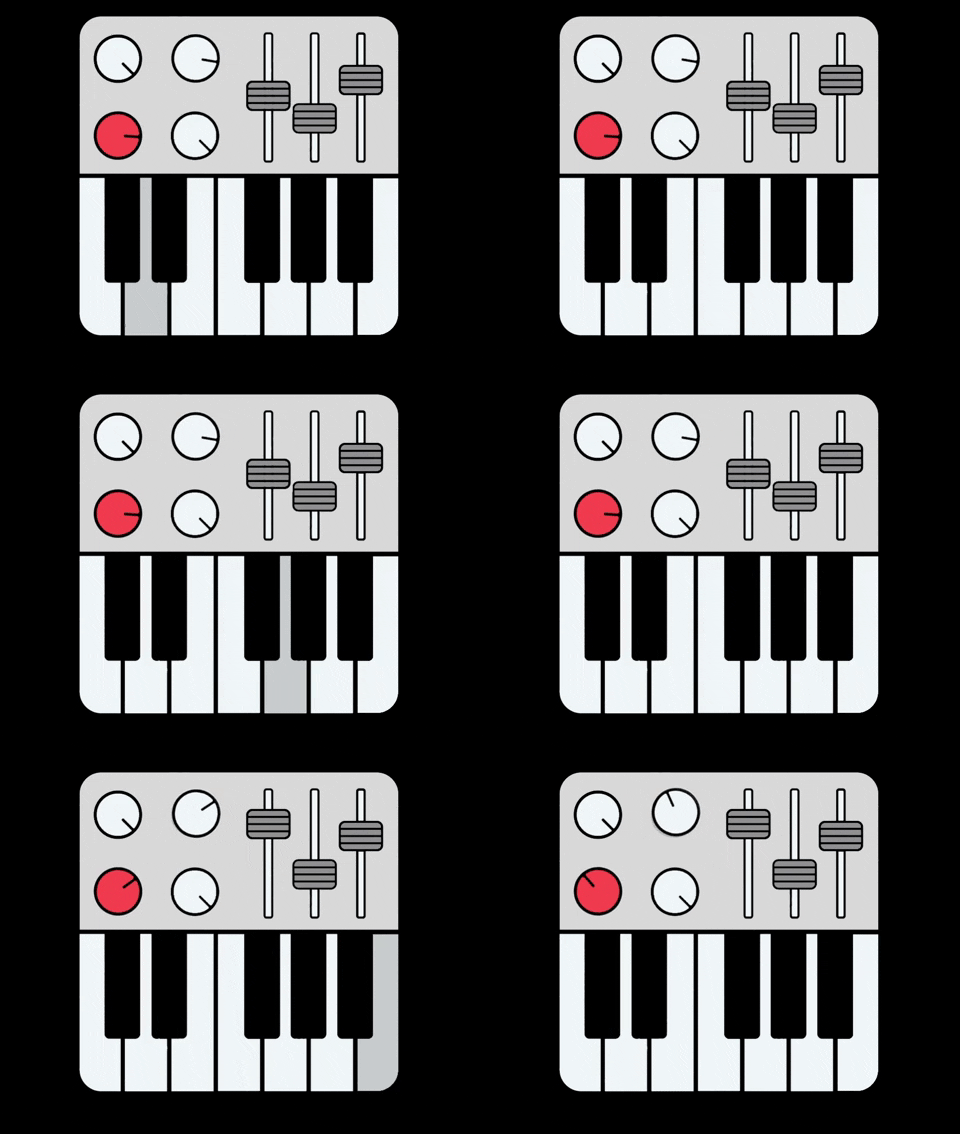
For this purpose, it’s also a big plus if the MIDI keyboard supports the NKS standard, which lets you control a wide range of compatible software instruments without manually assigning the controls. Or are you looking for a compact MIDI keyboard to make music on your laptop while travelling? Then, a 25-key model that is powered directly from the laptop via USB is the right choice.
Basic MIDI keyboards
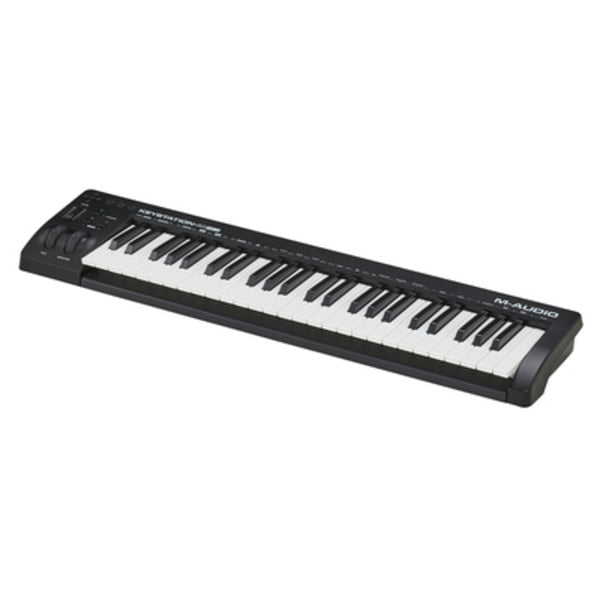
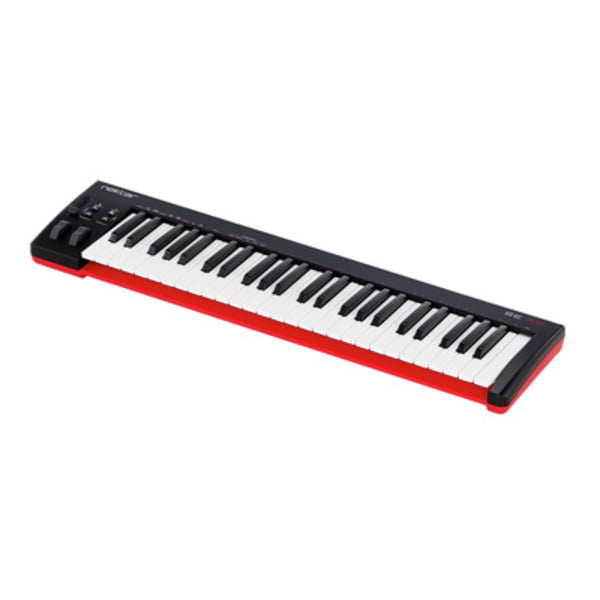
Basic MIDI keyboards such as the Swissonic EasyKey 49, the Nektar SE49, or the M-Audio Keystation 49 MK3 are ideal if you mainly need some keys for playing software instruments and can do without additional features. They offer the essential functions such as velocity-sensitive keys, pitch bend, modulation, and a sustain pedal jack, but not much more. Tip: Some of these MIDI keyboards are also available in other keyboard sizes.
M-Audio
Keystation 49 MK3
Nektar
SE49
MIDI keyboards with extended functions for DAW control
Do you want to control things such as the DAW mixer or parameters of software synths? Then you should choose a MIDI keyboard with additional controls such as faders, knobs, and drum pads, e.g. the Arturia KeyLab Essential MK3, Native Instruments Komplete Kontrol A49, or M-Audio Oxygen. All of the aforementioned keyboards support the NKS standard for easy control of software instruments. Some of them are also available in different keyboard sizes.
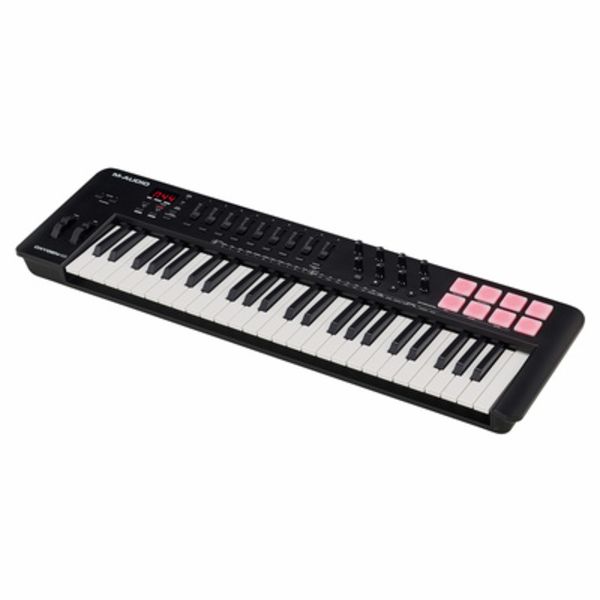
M-Audio
Oxygen 49 MK5
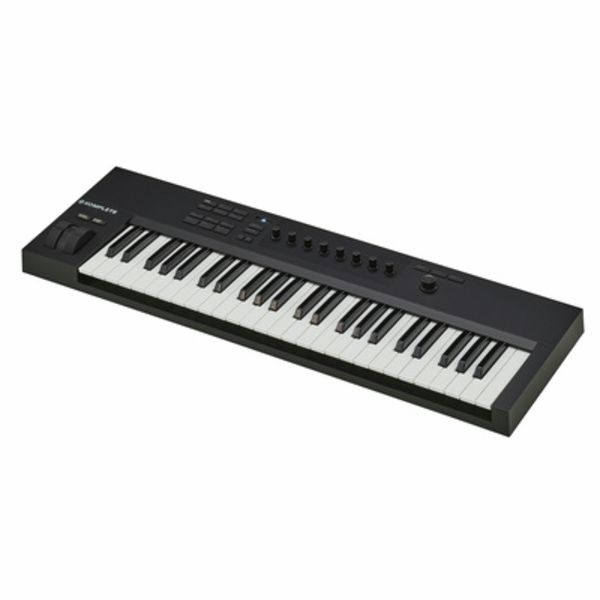
Native Instruments
Komplete Kontrol A49
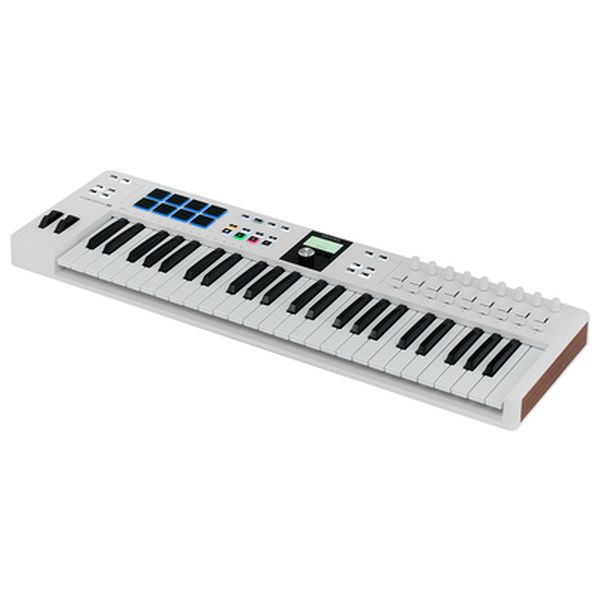
Arturia
KeyLab Essential 49 MK3 White
Portable MIDI keyboards for travelling ✈️
MIDI keyboards such as the AKAI Professional MPK Mini MK3, Arturia MiniLab 3, or Novation Launchkey Mini MK4 are ideal if you travel a lot. Even some of the smallest MIDI keyboards offer additional features such as DAW integration, drum pads, and programmable controllers – perfect for sessions on the go.
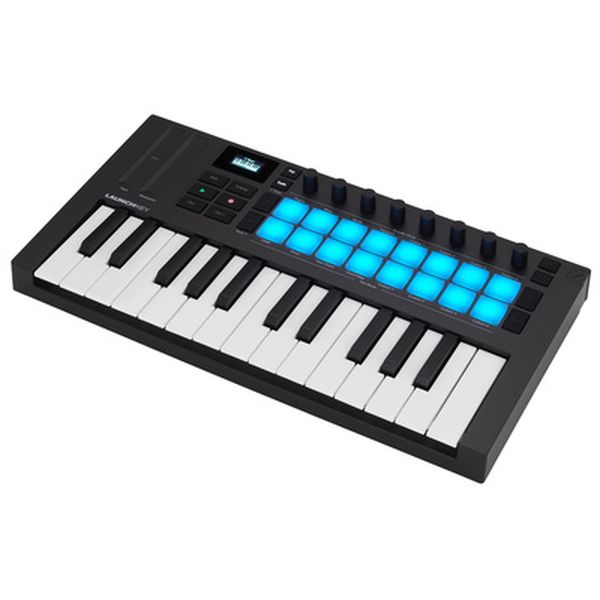
Novation
Launchkey Mini 25 MK4
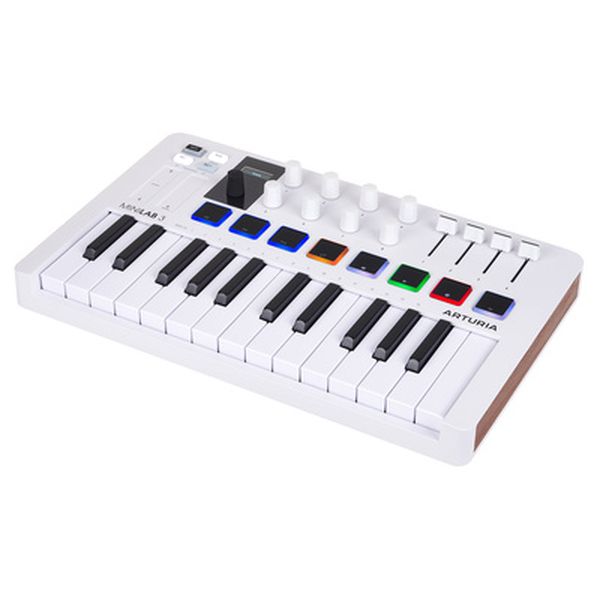
Arturia
MiniLab 3 White
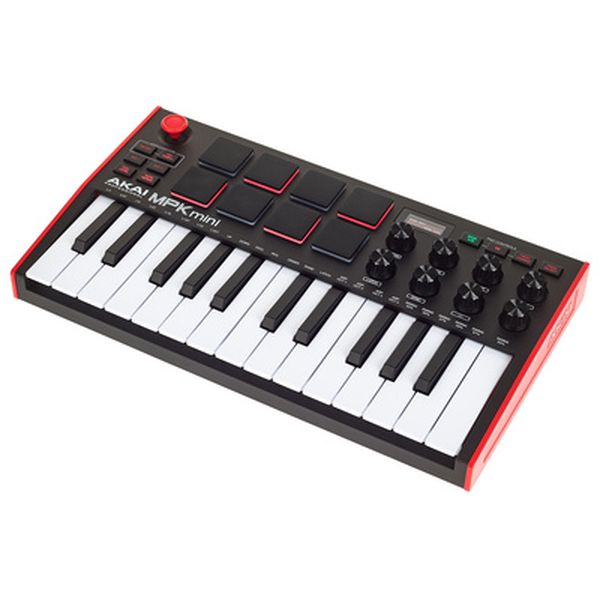
AKAI Professional
MPK Mini MK3
MIDI keyboards with 88 hammer-action keys 🎹
A MIDI keyboard with 88 keys is the right choice if you play the piano a lot or are looking for a full-size controller for your studio. Models such as the Arturia KeyLab 88 MK3, Studiologic SL88 MK2, or M-Audio Hammer 88 offer hammer-action keybeds that provide a playing feel very close to that of a piano.
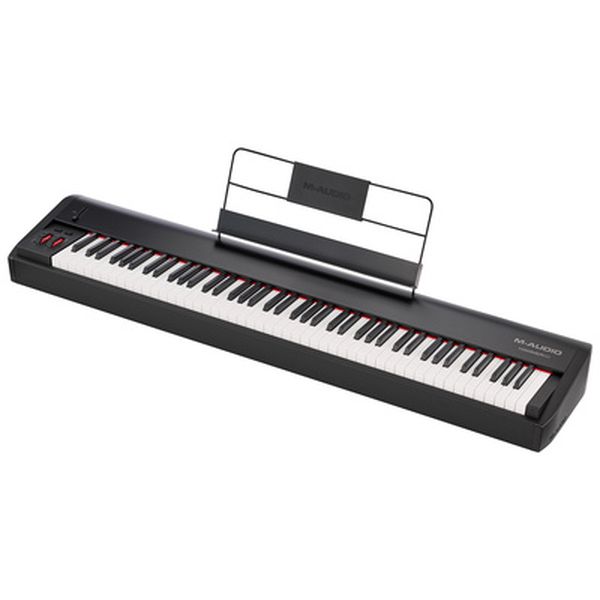
M-Audio
Hammer 88
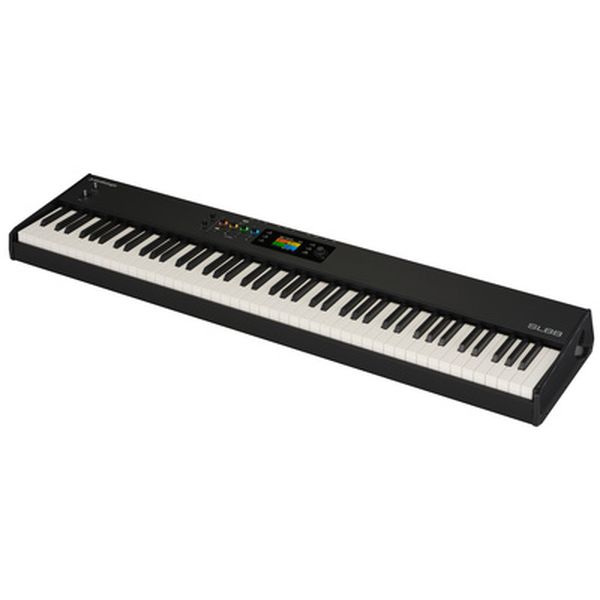
Studiologic
SL88 mk2
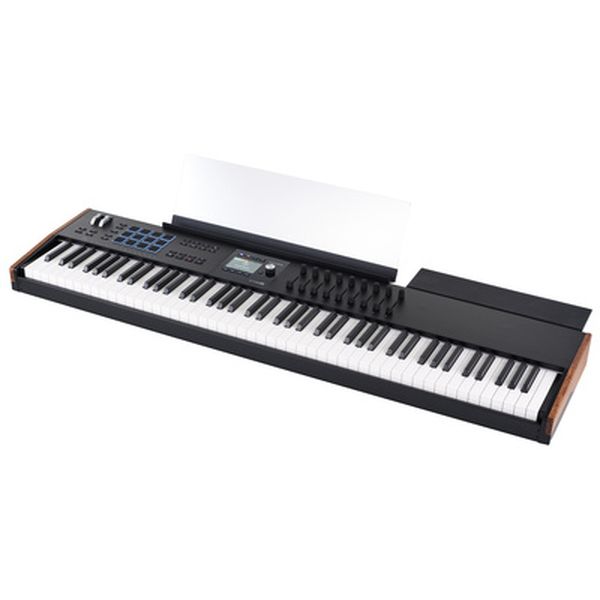
Arturia
KeyLab 88 mk3 Black
How to find the right MIDI keyboard: your experiences 🫵
With this information, finding the right MIDI keyboard should be no problem for you. Do you already have experience with MIDI keyboards and have other tips? Then let us know in the comments!








Comments 0
No comments yet.