



What actually makes a good DJ? Certainly their musical knowledge, their mixing skills and – where needed – their hosting skills too, as well as the ability to build a set with a strong sense of dramaturgy. But in the end, a successful night stands or falls on whether the DJ responds to the audience and leads them. “Read the crowd!” is the golden rule!
As a DJ becomes more popular, or is even perceived as an artist, I can impose my style – and therefore my set – on the audience more readily and without too many compromises, but still not dictate it blindly. Because even at major festivals there is a risk of failing to connect if the pre-produced DJ set simply does not strike a chord with the audience. A flat atmosphere in the crowd shows itself less in people leaving the site and more in bored faces and fixed stares at mobile phones.

It is much more difficult for a DJ to play an open-format set in an unfamiliar setting with a manageable number of guests. This is where professional experience and intuition are needed in order to fill the dancefloor and read the audience as follows:
Reading the audience as a DJ: Tips
1. Watch how people come and go on the dancefloor depending on the music you are playing. This allows you to draw conclusions for how to develop your set further, including which styles of music you should favour or avoid.
2. Assess the mood. Are people dancing without emotion, perhaps constantly looking at their phones? Then they may simply be staying on the dancefloor out of convenience. By contrast, a smile on their face, energetic dancing, clapping, raised hands and loud singalongs all show that you have absolutely nailed it musically. This is, of course, where your entertainment skills come in, so that you can interact with the audience and bring the atmosphere to its peak.
3. Pay attention to the guests’ gestures and facial expressions. Looking into the crowd can definitely sting if people are signalling with a thumbs-down, shaking their heads, covering their ears or making a throat-slitting gesture that the wrong song is playing. Isolated reactions can be ignored, but if they come together with a drop in energy or people leaving the dancefloor, you should respond.
4. If guests keep coming to your DJ booth with music requests, this may also point to an imbalance between your taste and that of the audience. So rethink your set strategy and adapt it.
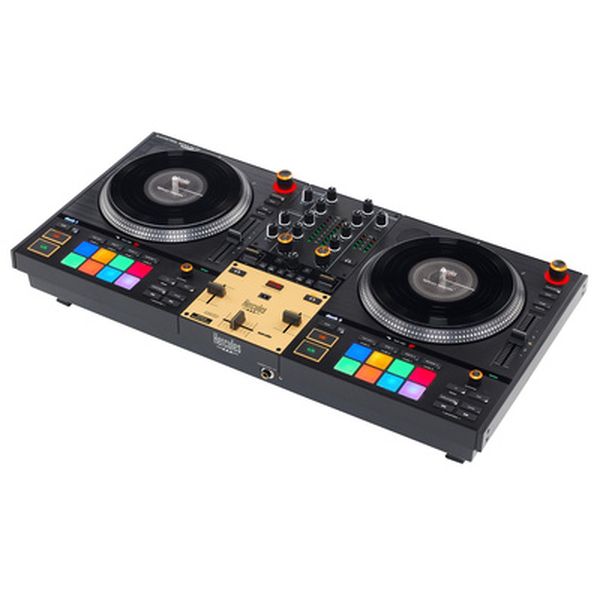
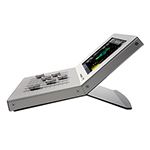
Hercules
DJ Control Inpulse T7 Premium
Reading the audience as a DJ: Always stay one step ahead!
5. Always stay one step ahead and lead the audience. Do not always play exactly what everyone expects. Be bold enough to take a chance now and then, and then reflect objectively on whether it landed or fell flat. Depending on that, you can take risks and create a night to remember – or just keep rolling out a safe but forgettable set.
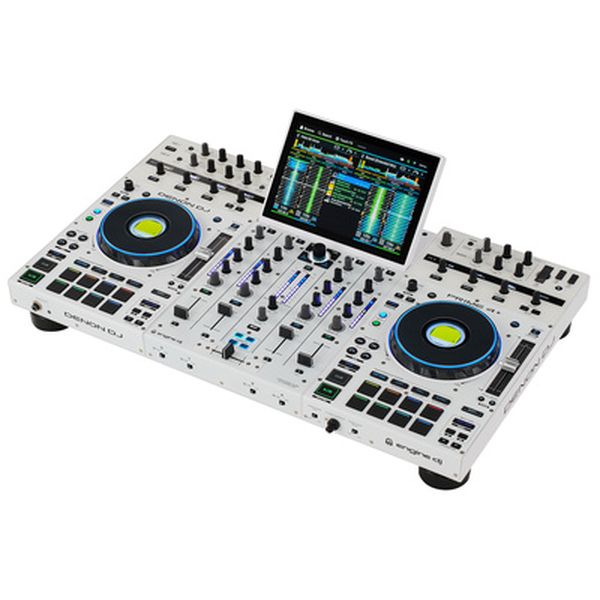
Denon DJ
Prime 4+ White
The ability to read the audience strengthens your self-confidence and enables you to lead the night successfully. But at the beginning of a party there is not much to “read”, especially as you should have a plan for the set and your interaction with the audience regardless of the criteria mentioned. So check the situation according to the following points:
Reading the audience as a DJ: How many people are there at the start of the event?
6: Filling a dancefloor requires a certain number of guests in the venue. If you start the set too early and possibly play the wrong tracks, you will fill the bar more than the dancefloor. Before the official musical starting signal, the venue should already be at least one third to one half full. If people are already gathering around the dancefloor or even on it, and people at the bar are moving to the beat, then your crowd is ready to dance.
7. If the evening follows a musical theme or even a specific genre, you already have a clear idea in advance of where the journey is heading. However, at events such as 90s or 2000s parties, the musical spectrum is still very broad, meaning you can still miss the mark even within that era. The same applies to vague, genre-based events such as a “techno party”, which leaves plenty of room for interpretation. Accordingly, the key is to try out different genres and observe how people respond.

Reading the audience as a DJ: Pay attention to the age of your guests
8. Younger people tend to prefer more modern music, while older audiences lean towards music from their youth, although these assumptions cannot be fully generalised. After all, Generation Z also loves the 80s and 90s. If you are playing to a predominantly older crowd, adapt your music style accordingly. Do not shorten songs inappropriately, as this can be taken badly. There are classics with iconic solos or bridges that guests are eagerly waiting for. If you cut these songs short with your mix, you risk falling out of favour with the audience.
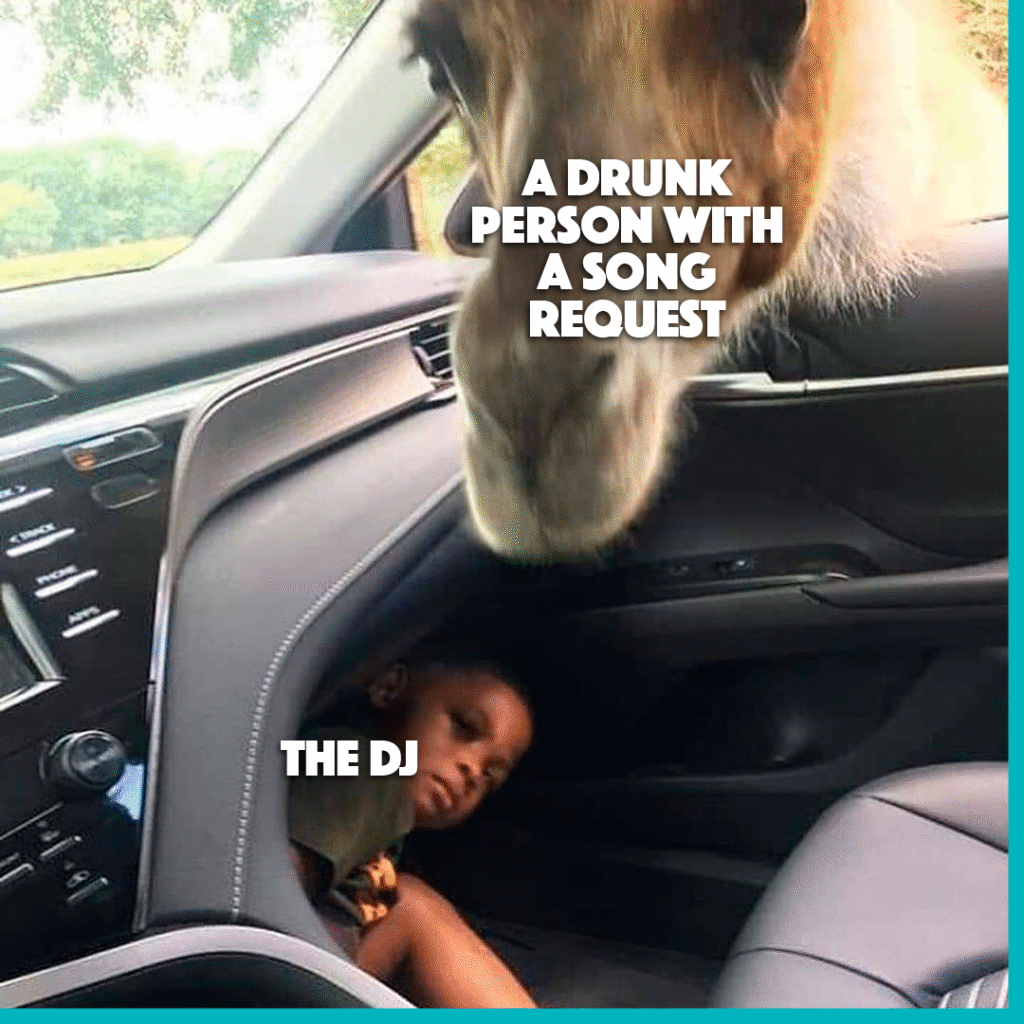
9. If the venue is particularly large and crowded, so that it takes time to get from the bar to the dancefloor, do not fire off hits in rapid succession. Instead, give people the chance to actually reach the dancefloor. If guests fight their way from the bar to the dancefloor only to arrive just as you transition to the next track, this leads to frustration and will ultimately kill the vibe.
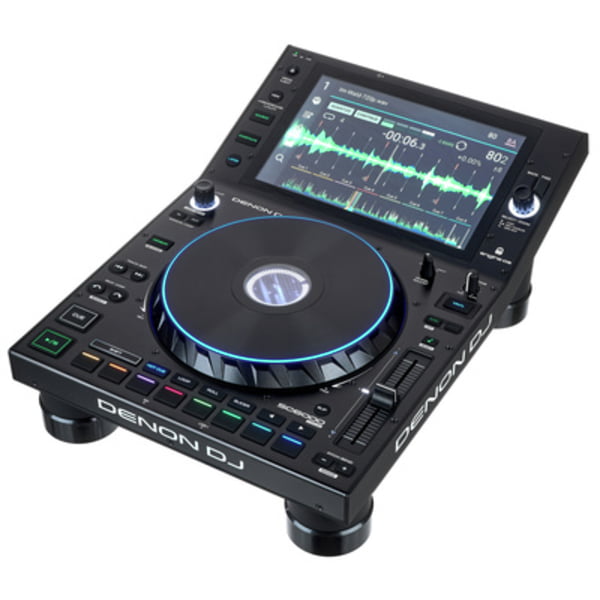
Denon DJ
SC6000 Prime
Reading the audience as a DJ: The critical mass
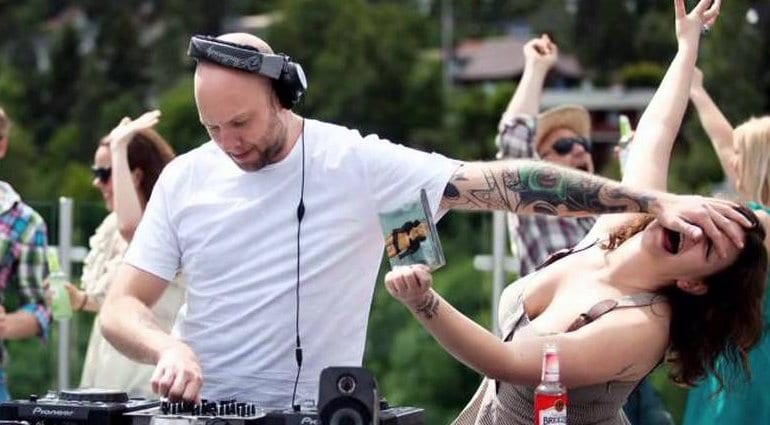
10. A dancefloor being more or less full is part of the risk of DJing. However, it must not drop below a critical mass that triggers a mass exodus. A kind of herd instinct kicks in, fuelled above all by the fear of suddenly being alone and watched on the dancefloor. If 80 per cent of the guests leave the dancefloor, it does not necessarily mean you did something wrong. Rather, you need to react quickly with a different track to turn things around and avoid losing the remaining 20 per cent.
Reading the audience as a DJ: Why musical variety matters
Once you have found your groove and hit the mark with a packed dancefloor, keep an eye on how long you have been riding that wave. If the tempo stays too fast for too long, the audience will eventually leave the dancefloor out of exhaustion—just as they would with a very slow, sleep-inducing style. You should also think ahead when DJing: do not wait until the dancefloor is already emptying before initiating a change, but act when your intuition tells you the time is right.
Reading the audience as a DJ: Healthy circulation
You should encourage a regular but subtle flow between the bar and the dancefloor. After all, every dancer will want to head to the bar at some point, and vice versa. A drastic change in style risks temporarily emptying the dancefloor, which is not only awkward but also harder to recover from. Transitions between styles should therefore be subtle and also take the bar into account. This prevents boredom and keeps the event lively for longer.

Reading the audience as a DJ: How to tell what the crowd really wants
Have you already had experience reading a crowd? Do you have any additional tips? Let us know in the comments!
This is a translation of an article originally written by guest writer Dirk Duske for the German t.blog.










Comments 0
No comments yet.