


Universal Audio UAFX OX Stomp Dynamic Speaker

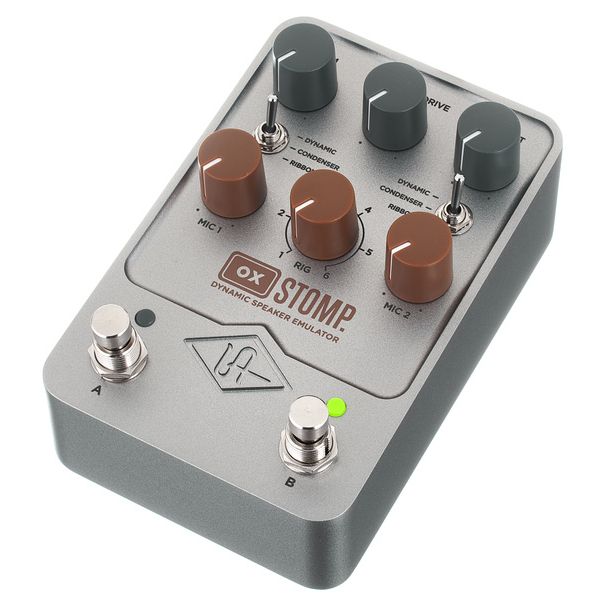
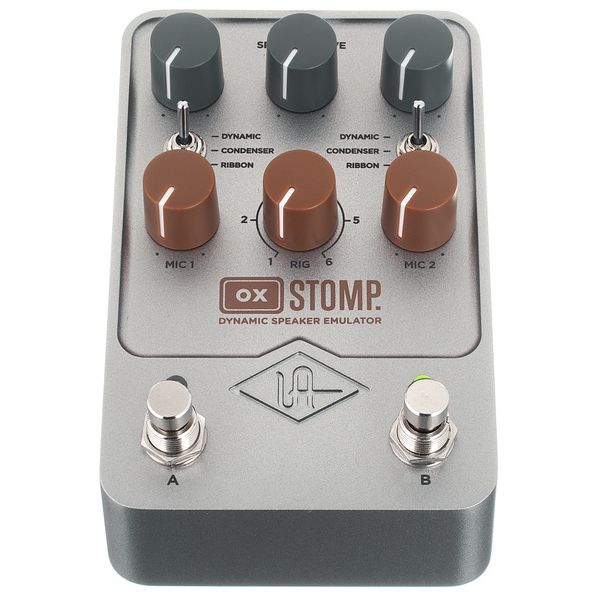
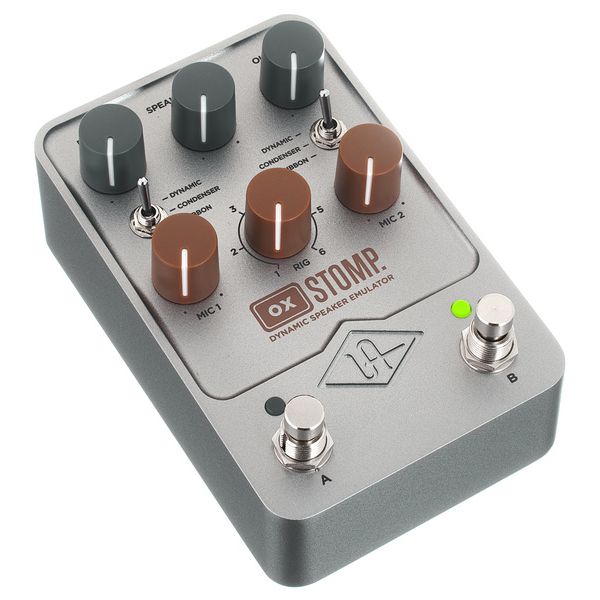


Effect Pedal for Electric Guitar
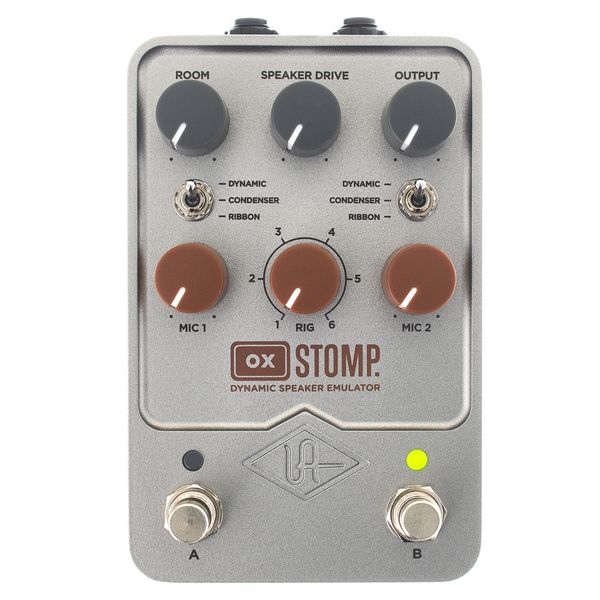
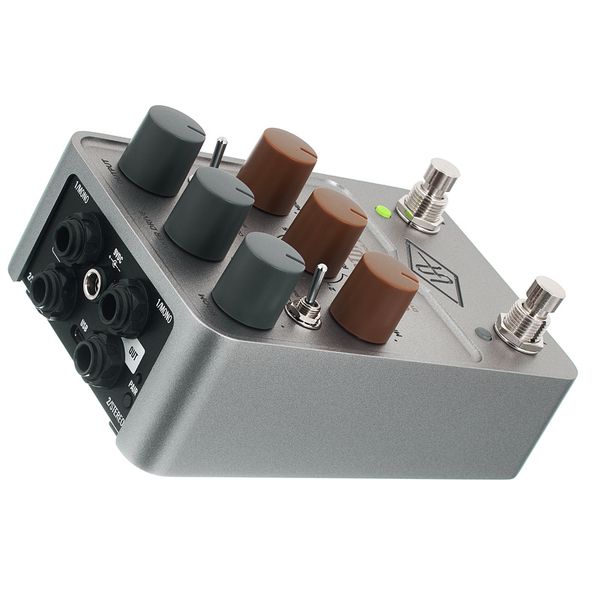
- Stereo guitar pedal with Dynamic Speaker Modeling with 22 speaker cabinets, six vintage microphones and full-featured effects such as 1176 compression, plate reverb, chorus, flange, stereo delay (dual, crossover, ping-pong) and 4-band EQ with high and low cut filters via the UAFX Control App
- Authentic speaker modelling, including speaker breakup, drive and cone cry
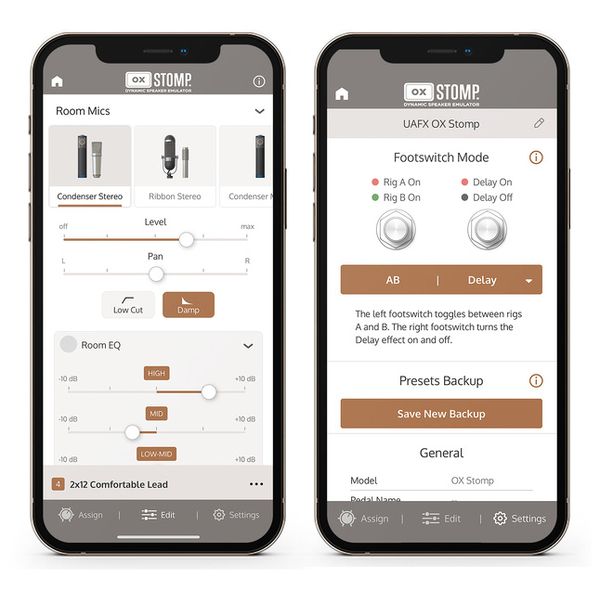
- UAFX Control app for fine-tuning microphones, effects and footswitch configurations
- Silent switching
- Buffered Bypass
- Analogue dry through
- Bluetooth
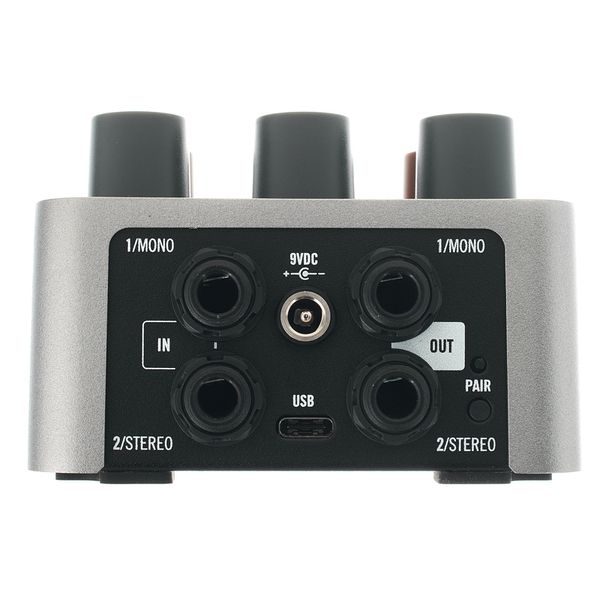
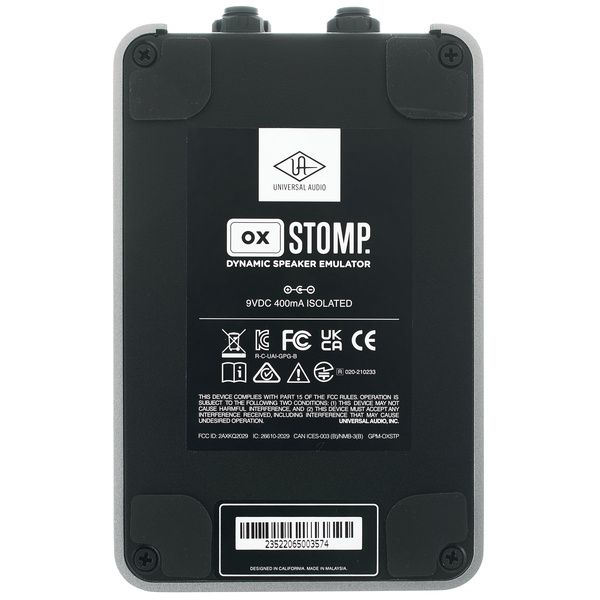
- Power supply via 9 V DC power supply unit (not included, suitable power supply unit: art. 543322)
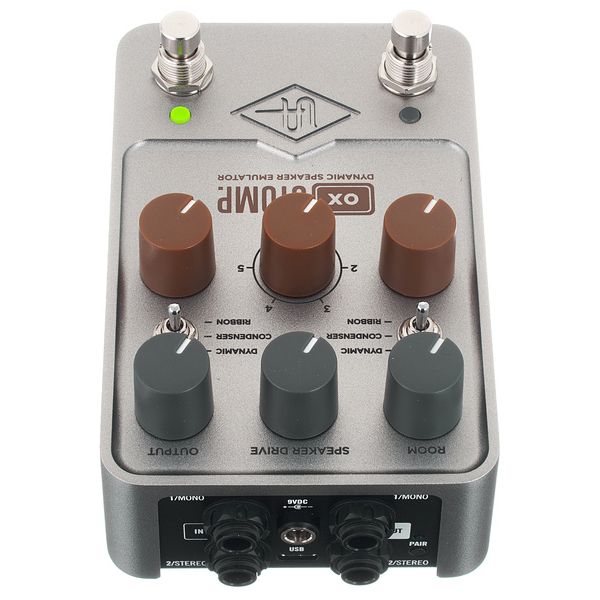
- 2 Line/instrument inputs: 6.3 mm jack mono (L/R stereo)
- 2 Line outputs: 6.3 mm jack mono (L/R stereo)
- USB Type-C for updates via computer
- Dimensions: 9.2 x 6.5 x 14.1 cm
- Weight: 0.588 kg
-
Available since October 2023
-
Item number 576137
-
Sales Unit 1 piece(s)
-
Effect Types Speaker Simulation
Pedal-sized cab simulation
The Universal Audio UAFX OX Stomp Dynamic Speaker brings the proven speaker simulation of the OX Amp Top Box into a compact pedal format, without integrated load resistance. Multiple speaker types are available, each captured with two virtual microphones, adjustable room ambience, and optional effects for detailed tonal shaping. The OX Stomp makes pedalboards, preamps, and modelling amps sound convincingly full, whether used live for sound reinforcement or in the studio. Stereo inputs and outputs, two onboard presets, and extended configuration via Bluetooth and the free UAFX Control app round off this flexible and professional solution.

)
Dynamic and versatile
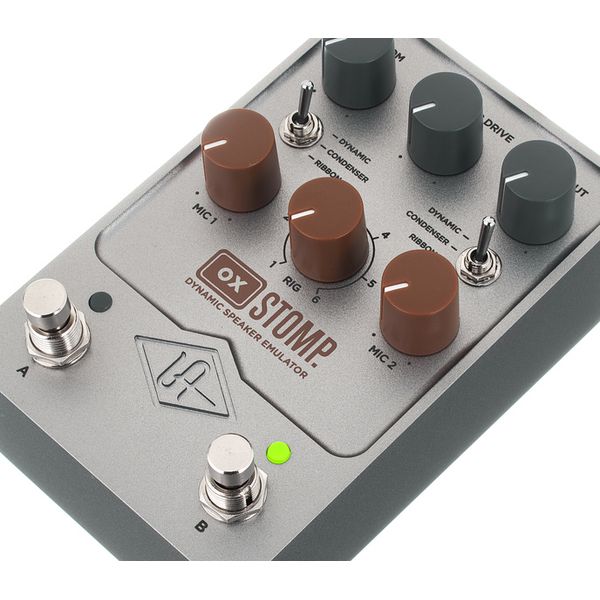
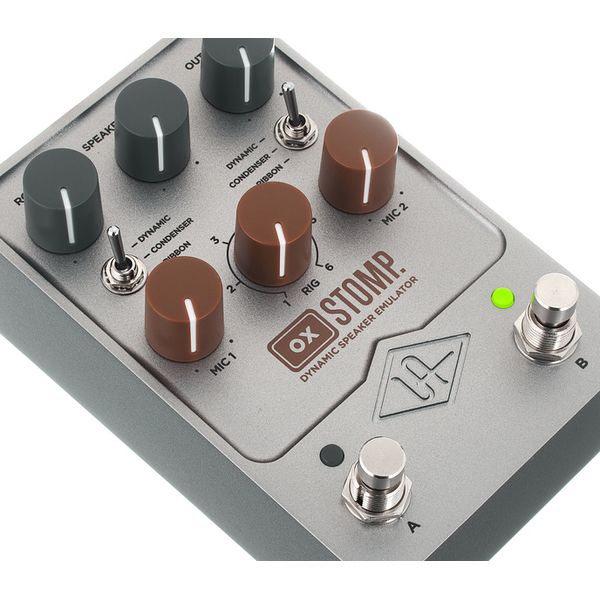
The Universal Audio OX Stomp Dynamic Speaker relies on dynamic speaker simulations rather than static impulse responses, offering 22 speaker types ranging from 1x10" to 4x12" along with six microphone options for each configuration. Speaker distortion, room ambience, tone shaping, and dynamic processing can all be added to fine-tune the sound and create a more realistic playing experience. Six preconfigured rigs are accessible directly from the pedal, with quick control over dual mic levels, microphone selection, speaker saturation, room sound, and overall output level. Two footswitches allow easy switching between presets, while the UAFX Control app unlocks deeper parameter access and comprehensive rig management.
)
Plenty of speakers, microphones and much more
The Universal Audio OX Stomp Dynamic Speaker is aimed at players seeking a highly versatile speaker simulation without load resistance, offering extensive sound shaping through 22 speaker types ranging from Jensen to Celestion, from open to closed designs, and from small to large cabinets. Each microphone channel provides a choice of Shure SM57, Neumann U67, Royer Labs 121, Sennheiser MD 421, AKG C414, Beyerdynamic M160, or a direct signal, all of which can be shaped, balanced, and positioned in the stereo field using dedicated equalisers. Room ambience can also be finely adjusted through microphone selection and EQ, after which the signal passes through an additional equaliser, an emulation of the 1176 compressor, plus delay and plate reverb effects. The finished sound is saved as a rig, accessible via the pedal’s footswitches and stored across six available rig slots.
)
About Universal Audio
Few manufacturers can draw upon a wealth of audio engineering experience comparable to that of Universal Audio. The company's founding father Bill Putnam, along with his friend Les Paul, have an admirable reputation as trend-setting music producers and developers of legendary analogue studio technology. Putnam recorded Chuck Berry, Muddy Waters, and Sarah Vaughan, and was Duke Ellington's favourite sound engineer. He developed the famous 1176 Peak Limiter and distributed the Teletronix LA-2A level amplifier. This earned him a posthumous "Technical Grammy Award" in 2000. In 1999, Putnam's sons, Bill Putnam Jr. and James Putnam, re-founded Universal Audio, transferring their father's analogue vision and craftsmanship to the digital music world. Their product range includes audio interfaces, dedicated DSP farms, and a variety of plug-ins, as well as analogue hardware devices.
Perfect for the pedal board and recording
Whether placed on a pedalboard, behind a preamp or modeller, or connected to the direct output of an amplifier, the Universal Audio UAFX OX Stomp Dynamic Speaker delivers a flexible and reliable solution with consistently high sound quality. Musicians can recall multiple rigs in both live and studio situations, making it easy to give their sound a different character on the fly. Variable room ambience, 1176 compression, several EQ stages, delay and modulation effects, and plate reverb provide extensive tools for refining the final sound and delivering it in stereo. The OX Stomp's configurable footswitches allow artists to switch instantly between complete setups or activate individual effects, while the app enables quick and convenient reconfiguration at any time.
In the spotlight
Modeling – made by Universal Audio
Universal Audio is a leading player in modeling studio technology, effect devices, and tube amplifiers. The circuitry of often rare originals is meticulously measured, down to individual components, capturing specific values and characteristics. The result is a virtual digital model that faithfully recreates the sound traits of the original, including the effects of its controls and switches. Depending on the device being modeled, other defining elements and accessories are also incorporated.
)

Accessories & matching items
Compare options
-
Universal Audio Miscellaneous Guitar Effects at a glance
-
Display Miscellaneous Guitar Effects from € 300 - € 400
-
Go to product group Miscellaneous Guitar Effects
-
Go to product group Guitar and Bass Effects
-
Go to product group Guitars and Basses
-
Show manufacturer details for Universal Audio
-
Universal Audio Guitars and Basses at a glance