
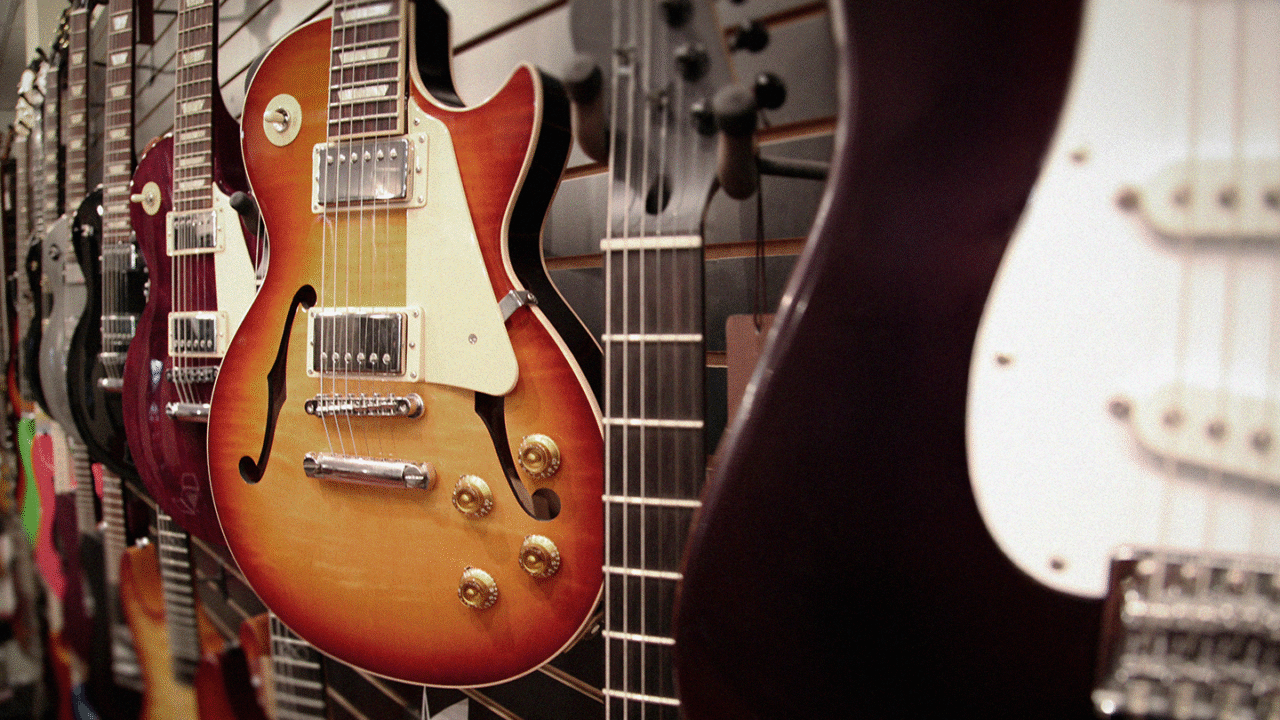

You’ve decided that now is the time: you want to learn to play the guitar. More specifically, the electric guitar. The idea of playing your first riffs on a real electric guitar is simply irresistible.
But when you look at the range of guitars available online, you quickly realise that the selection is huge. That’s where we can help!

With so many different shapes, pickups, neck profiles, and features to choose from, and prices ranging from under 100 quid to five-figure sums, the selection often seems overwhelming for beginners. But don’t panic!
This guide will teach you everything you need to know to choose your first electric guitar without getting lost in technical details or spending unnecessary money.
1. First, think about what style of music you want to play
If you have a rough idea of the style of music you want to play on the guitar, you’re already a step ahead. This will help you narrow down the sound, pickup type, and shape of the guitar.
But don’t worry – as a beginner you don’t have to commit to one style. Many guitars are flexible enough to play different styles. But having a rough idea helps narrow down your choices.
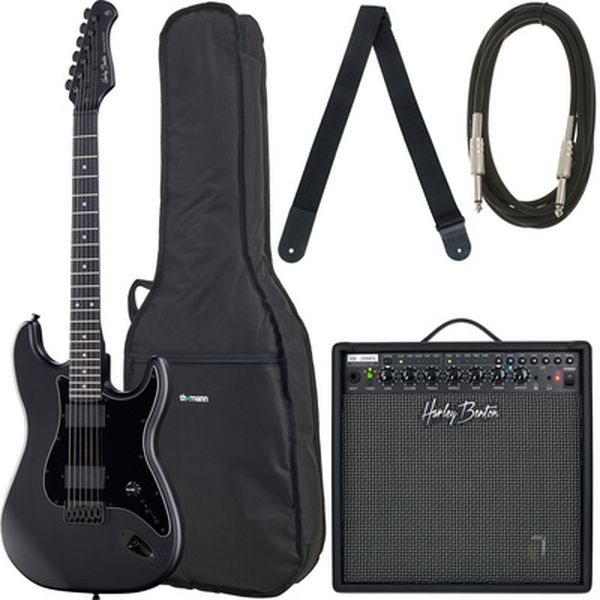
Harley Benton
ST-20HH Active SBK Bundle
Rock & Metal
Guitars with humbucker pickups are often the first choice here. They deliver fat, warm sounds that really pack a real punch when distorted. For metal, active humbuckers with higher output are often required.
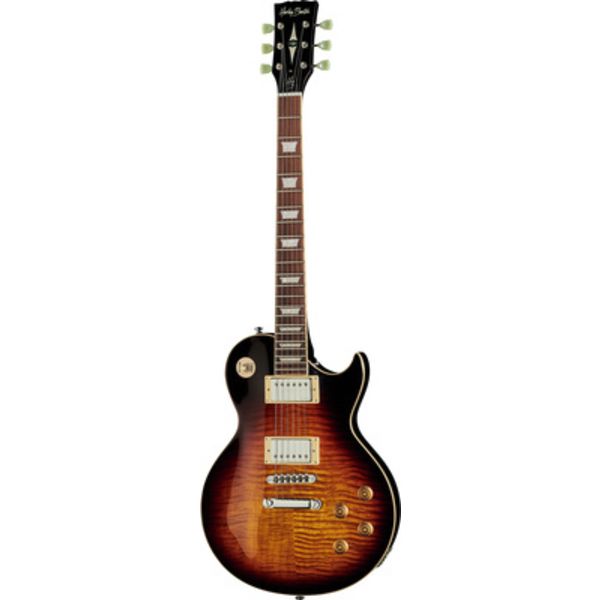
Blues & Classic Rock
Single-coil pickups provide the typical clear, bluesy sound. Strat or Tele models are particularly popular here.
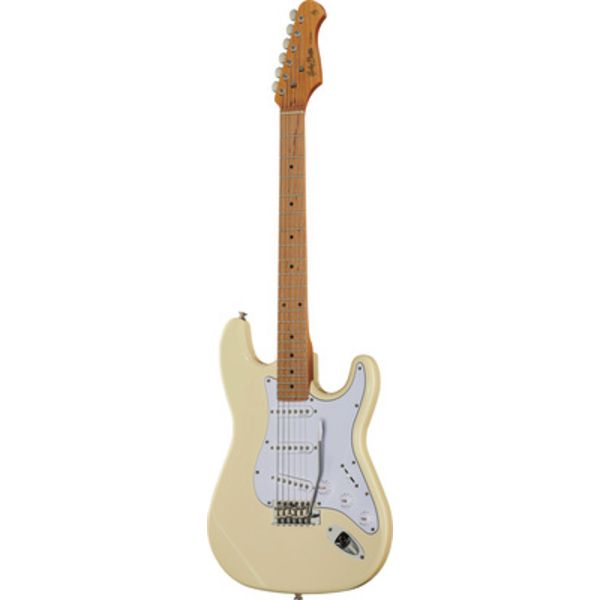
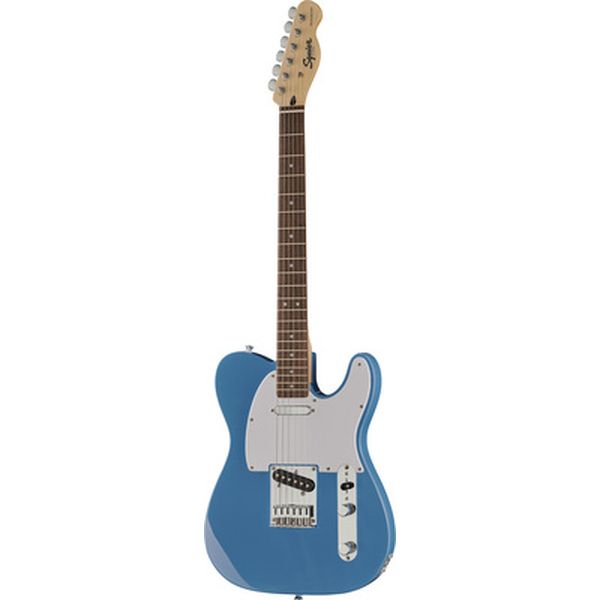
Pop & Indie
Versatility and originality are key in these styles. Guitars with a mix of single-coil and humbucker pickups are advantageous, and indie bands often favour guitars that deviate from standard models.
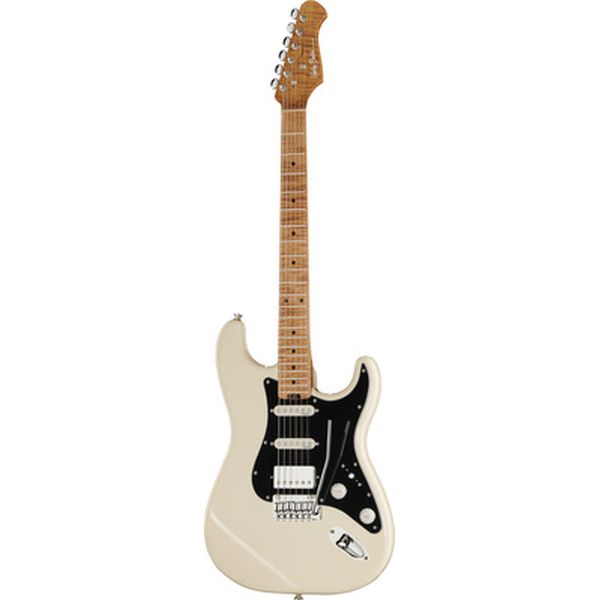
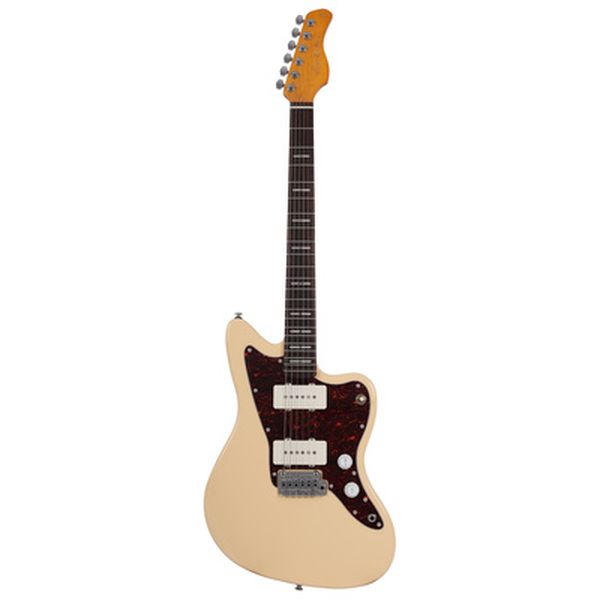
2. Body & Neck – Comfort Comes First
The body shape, type of wood, and neck define the guitar’s sound, but they’re also the main points of contact with the player. Therefore, the feel of the instrument should be just right.
Neck & Body Size
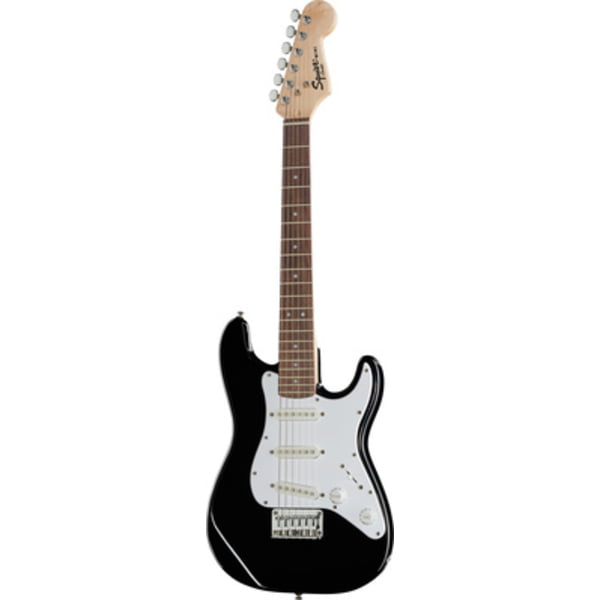
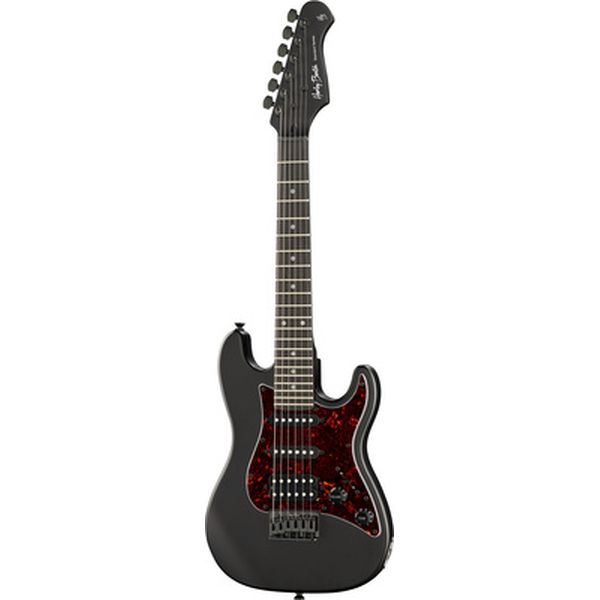
For younger players (approx. 6–11 years old), there are so-called short-scale instruments with a shorter neck scale and a smaller body. This makes fretting much easier. A normal Stratocaster has a scale length of 648 mm, whereas short-scale instruments range from around 480 mm to 580 mm.
Neck Profile & Width
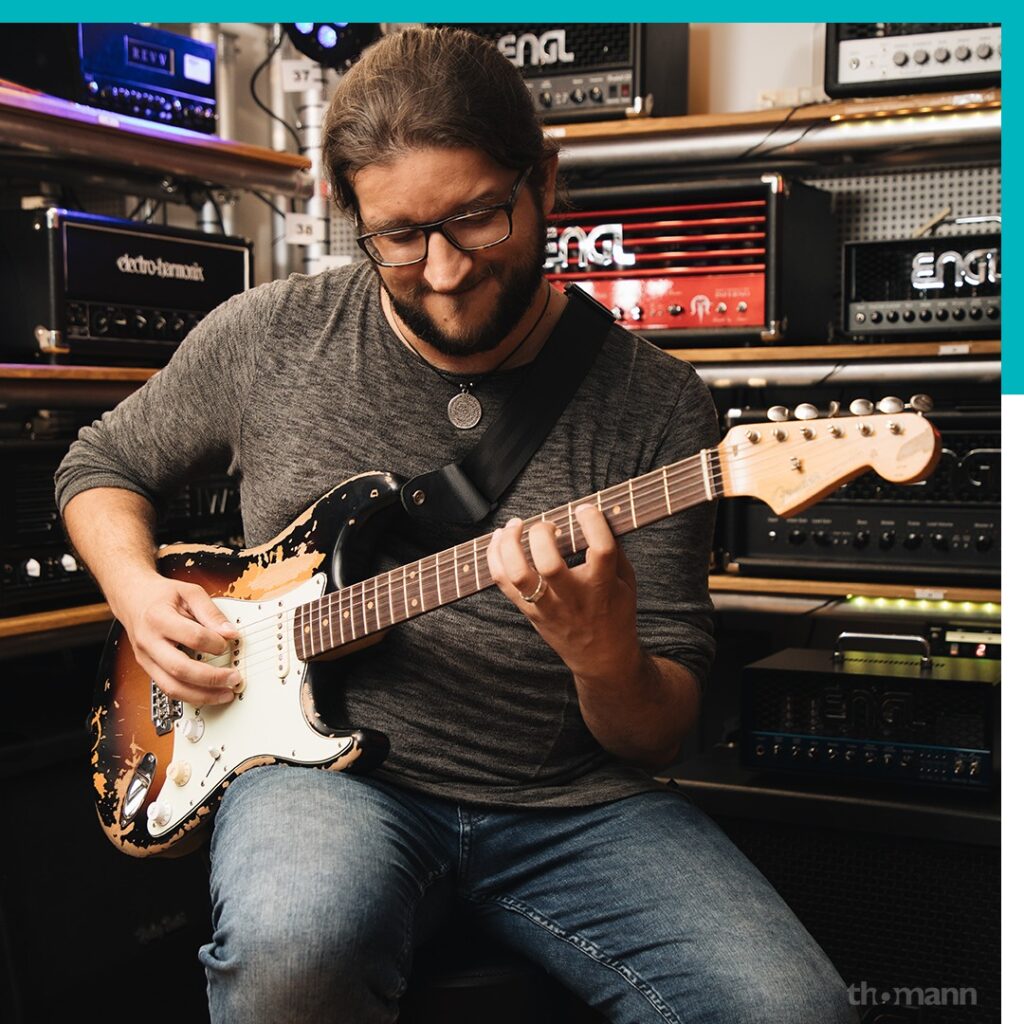
As a general rule: thin necks are often easier to manage for smaller hands or beginners, while wider necks are better for fingering chords because the strings are slightly further apart. With electric guitars, there are hardly any differences in neck and fretboard widths. What matters more is the neck thickness. A slim neck is better suited for beginners or those with small fingers; if you have larger hands, try a guitar with a thicker neck.
Body Shape & Weight
Make sure that the guitar is comfortable to play while sitting and standing, and that it fits comfortably against your body. Some guitars can be quite heavy (over 4 kg), which can be uncomfortable during long practice sessions while standing. If you can’t find any weight information for your preferred guitar online, feel free to call our guitar specialists – they can tell you very quickly whether a guitar is light or heavy.
3. Pickups – the Sound Makers
The pickups have a significant influence on the sound of your guitar. There are four main types:
- Single coil: bright, clear, and assertive sound. Perfect for funk, blues, indie, or pop.
- Humbucker: warm and rich. Ideal for rock, metal, and all styles requiring a higher degree of distortion.
- P90: These are “fat” single coils, and they sound like it. They can have the clarity and highs of regular single coils, but with the warmth and punch of a humbucker. A great all-rounder for everything from blues and pop to rock.
- Active pickups: very precise, high output. Often popular with modern metal bands.
Many beginner guitars feature a combination of single-coil and humbucker pickups, which makes them very versatile. Use the humbucker for distorted sounds and the single-coil(s) for clean or slightly crunchy sounds.
Harley Benton
ST-20HSS Standard SBK Set
4. String Action & Playability
The string action (how high the strings sit above the fretboard) affects how easy or difficult the guitar is to play. If the string action is too high, it will be difficult to fret the strings. Conversely, if the strings are too low, they’ll buzz while playing. In practice, this is rarely a problem, because many electric guitars allow for adjusting the string action individually for each string. The neck angle can also be adjusted. If you’re unsure, it’s best to have this done by a professional.
5. Budget & Accessories
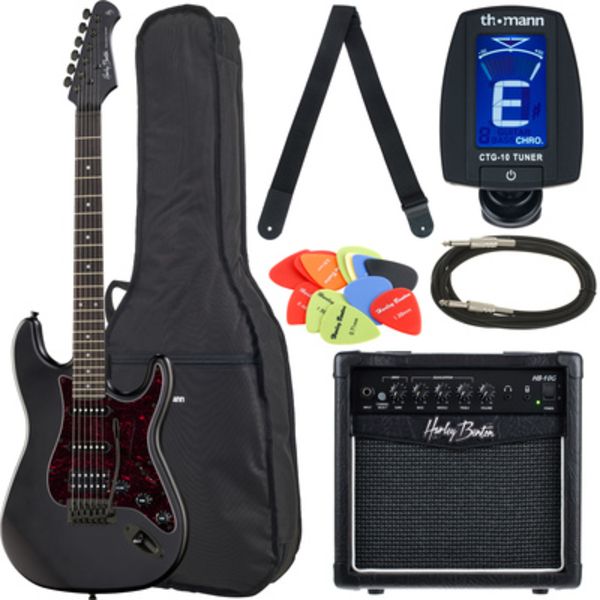
Your first electric guitar doesn’t have to be expensive. Sure, quality pays off, but you don’t have to spend €2,000. The €150-400 range is perfectly fine for a beginner’s guitar. But remember that you’ll also need additional accessories: an amp, cables, a strap, picks, a tuner, and a guitar bag.
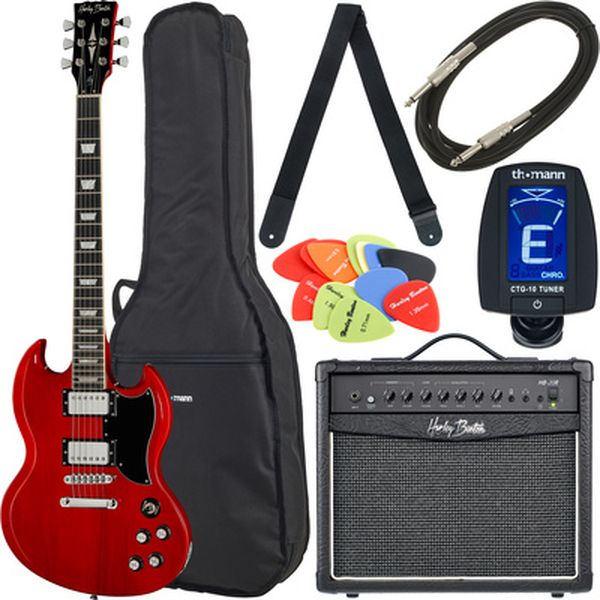
Harley Benton
DC-580 CH Vintage Serie Bundle
Tip: A complete guitar set (guitar + amp + accessories) is also a great starting point, as it includes everything you need to get started, with perfectly matched components.
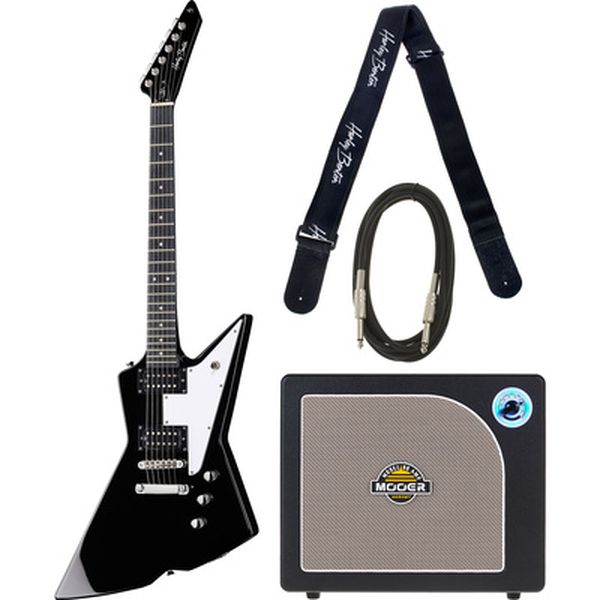
Harley Benton
Extreme-76 BK Classic Bundle
6. Popular Guitar Models
Here’s a brief overview of the most important electric guitar models:
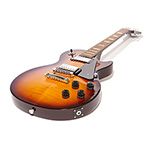
Les Paul
An electric guitar with a warm, full sound and rich sustain – ideal for rock and blues. It usually has two humbucker pickups and a single-cut body (one cutaway).
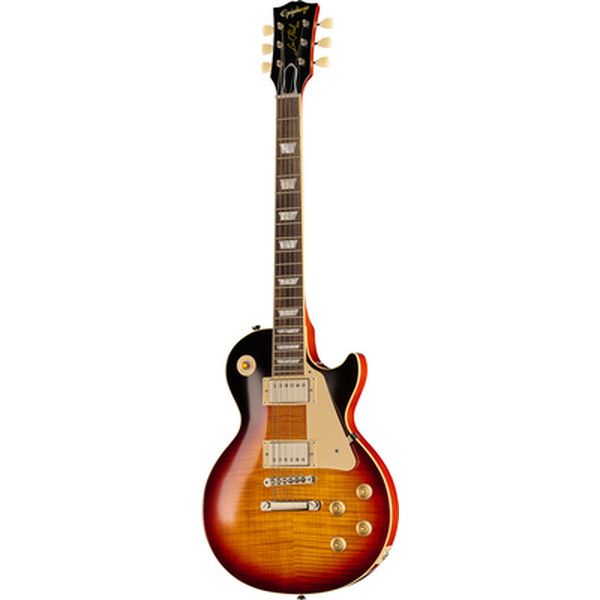
Epiphone
1959 Les Paul Standard WBB
Stratocaster
Visually striking with its offset cutaways, it’s known for its clear, bell-like tone and versatile sound thanks to its three single-coil pickups. Its ergonomic design and vibrato system make it an icon of rock and pop.
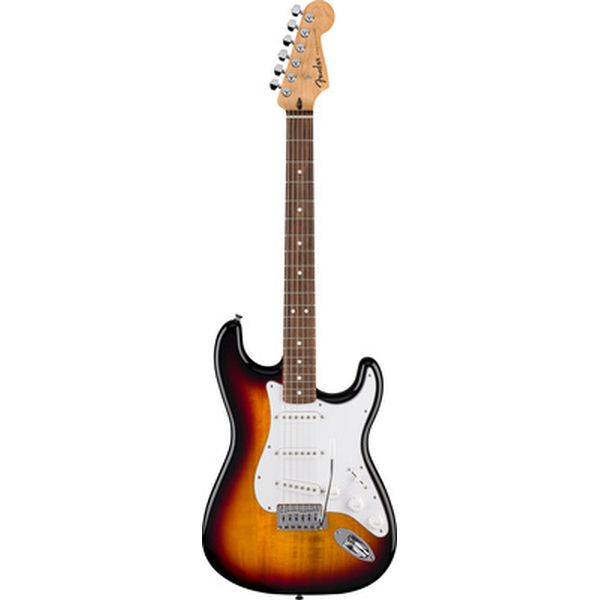
Fender
Standard Strat LRL WPG 3TS
Telecaster
The Telecaster is a simple, robust guitar with two single coils and a bright, wiry sound. It is particularly popular in country, rock, and indie music for its characteristic “twang”, a very mid-focused sound.
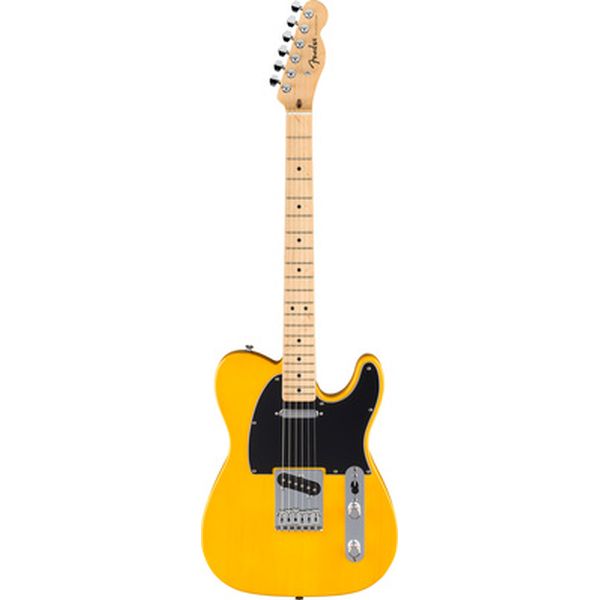
Fender
Standard Tele MN BPG BTB
SG
The SG has a thin, lightweight body and a sharp, assertive sound. It’s often used in classic and heavy rock – Angus Young from AC/DC is probably the most famous SG player.
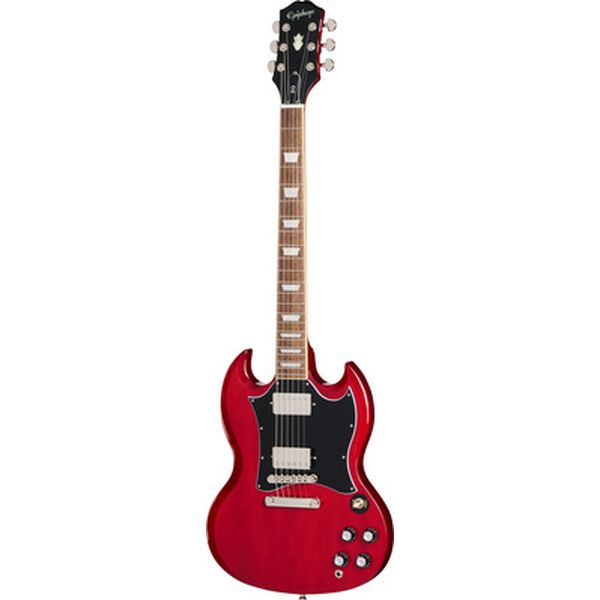
Epiphone
SG Standard Cherry
Hollow-body guitars
These models are also known as semi-acoustic guitars. They’re hollow inside, similar to an acoustic guitar, and have a warm, resonant sound. Most popular in jazz and blues.
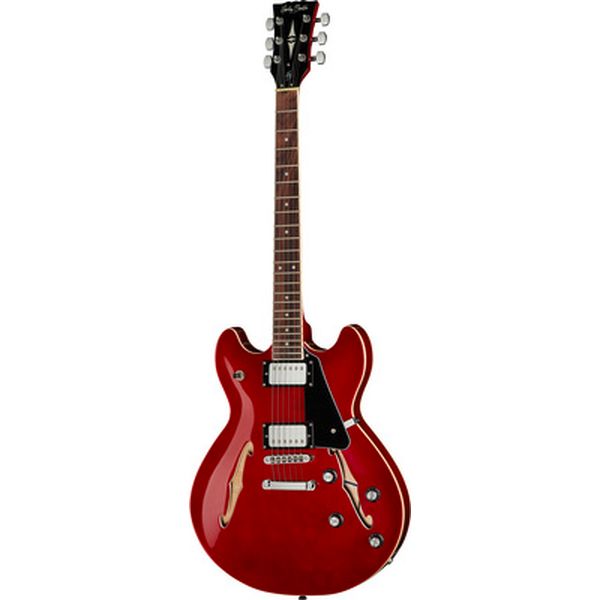
Harley Benton
HB-35 CH Vintage Series
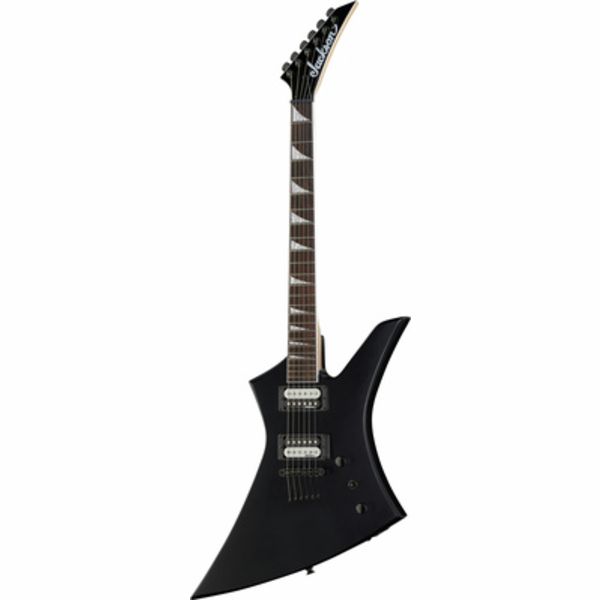
Heavy guitars
Designed for metal and heavier styles, often with active humbuckers for an aggressive sound with high distortion. Usually with very distinctive, angular shapes.

ESP
LTD KH-202 BLK Kirk Hammett
Conclusion
Your first electric guitar is more than just an instrument – it’s your gateway to a whole new world. It should be comfortable, sonically versatile, and suit your style. Be sure to check out different models – maybe you can even try out a friend’s instrument to get a feel for it. By the way, we offer a 30-day return policy on all items, so you can take your time to get to know the guitar at home.
Any questions? Feel free to leave us a comment or contact our sales staff on any product page using the “Need help?” button!
Electric Guitars at Thomann
Want to browse our full range yourself? Just click the link above!
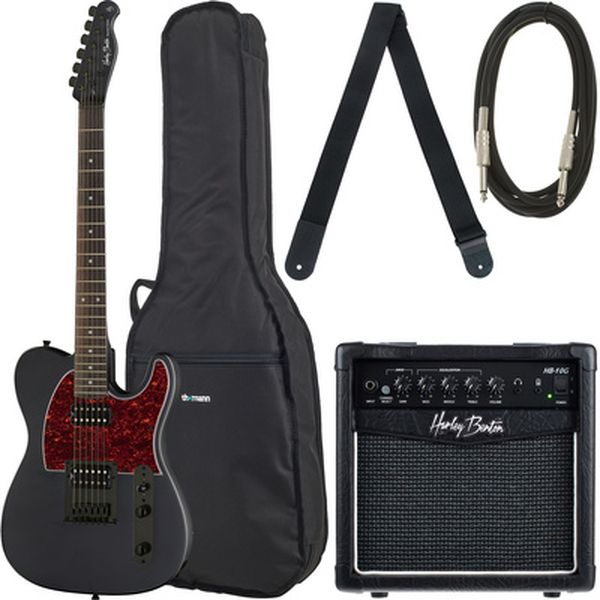
Harley Benton
TE-20HH SBK Standard Bundle 1
Buying Your First Electric Guitar: Questions & Advice
Still have questions? Drop us a comment anytime or contact our guitar specialists directly on any product page using the “Need help?” button! All advice is completely free and non-binding.
Click here for all our contact options if you’d prefer to call.
You’re also very welcome to visit us in person and try out guitars at the Thomann store in Treppendorf!

Buying Your First Electric Guitar: Your Feedback & Tips
Already a guitarist with tips for beginners? Or want to share your own first-guitar story? We’d love to hear it in the comments!











Comments 1