






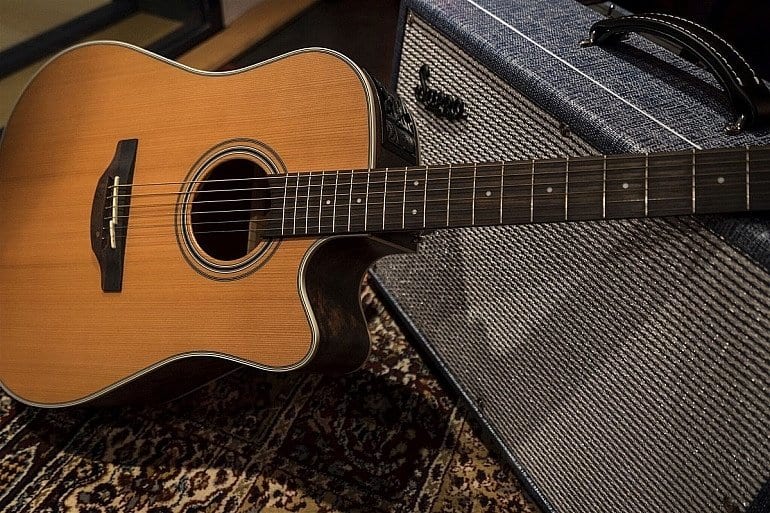

More than 100 years ago, a new shape emerged from the basement of a company in Boston. Few people may had realized that a game changer was born, and a century after, almost every musician in the world would identify himself with the legendary dreadnought acoustic guitar.
Name and History

The Dreadnought guitar (or “dread”) is certainly an iconic instrument. Found in every kind of music genre (particularly in pop and country music), it started its life as the favored tool for country musicians. Like many unexpected innovations, the dreadnought shape is a mixture of great ideas, uncommon requests and… astral convergences.
The name comes from a British battleship that was a turning point in terms of innovations during the first years of ‘900, becoming the first ship known to have destroyed a submarine. The dreadnought was huge, imponent and masterful, the main characteristics that were poured into the guitar’s design.
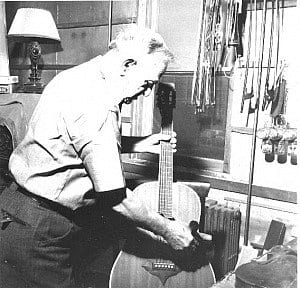
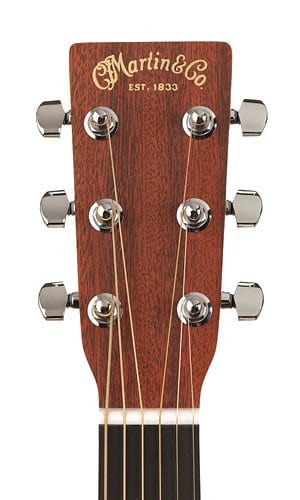 Martin is the first name bond to the Dreadnought guitar, because they provided the name. Surprisingly, the first models didn’t sport the Martin logo and were produced by the Oliver Ditson Company around 1916. It all started when Harry L. Hunt, manager of the Ditson company, visited Martin’s laboratories in Nazareth. John Deichmann, a senior luthier, used to keep a prototype of his instruments by his workbench. And Harry saw the future: a big, bold and squared acoustic guitar, that John designed and used as an Hawaiian instrument, keeping it on his legs and playing it horizontally with a metal slide. Guitarists at that time were struggling to be heard, as the Spanish guitar, due to his gut strings, was not as loud as a banjo. Steel string guitars were born to solve this crucial problem. Oliver asked John to build a “normal” version of his prototype, using a spruce top instead of mahogany to obtain a brighter sound, the Dreadnought was born. Production as “Martin” officially started many years later, as Martin remained skeptical despite the huge success of the guitar, and finally released the D-1x (mahogany bottom and sides) and D-2x (rosewood bottom and sides), both with a spruce top, in 1931.
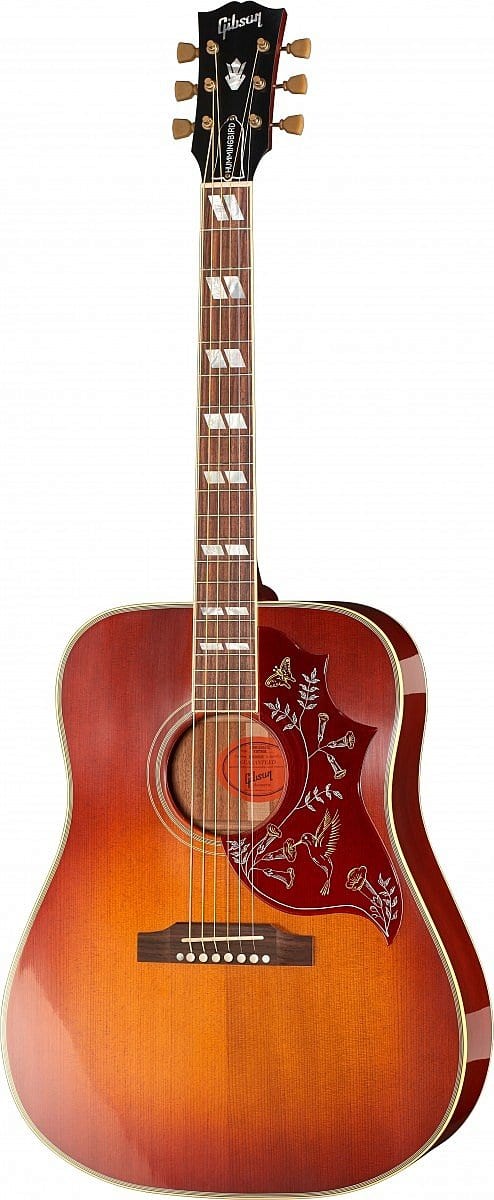 Gibson responded with the introduction of the Jumbo in 1934, without much success , and consequently the Hummingbird, in 1960, gaining consent from many western and country musicians. This Gibson alternative has always been aesthetically more refined, with vine inlays, big block fret markers and the famous Gibson headstock. They also produced the J45, a performant and famous model that is dreamed by several collector all over the world.
 From that moment, thanks to the licensing that Martin gave to all the manufacturers, virtually every guitar builder made his own version of the Dreadnought shape. Amongst the various options, Taylor made a name for his superb crafted instruments, a trademark sound for every rock, pop and country guitarist. Their 510, 410 and 610 models are highly ranked among professional guitarists. And there’s place for cheaper, but equally well crafted, alternatives such as the 110E and 110CE .
-

- Keith Richards (Rolling Stones)
-

- Thom Yorke (Radiohead)
-

- Eric Clapton
-

- Kurt Cobain (Nirvana)
This year marks the 100th birthday of the first Martin models, and the company just released the D-222 models, along with a documentary called “The ballad of the Dreadnought“, that pictures the life of this fantastic model, from his early years until modern days.
Features & Popular models
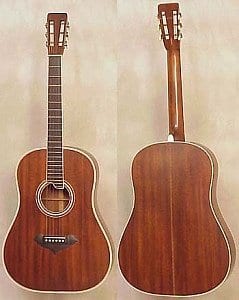
The main characteristics of the first Dreadnoughts are still present to this day: Mahogany on back and sides and spruce tops, 12 or 14 frets “clear to the body” (that means that the neck joint is attached to the body at the 12/14th fret) and a bigger body compared to guitars that were made until then.

The dreadnought had to be reinforced in order to not snap under the extremely powerful tension provided by the steel strings. While classical guitars were built on a transverse bracing until that time – pieces of wood structurally glued under the guitar top – the acoustic guitar was developed on the X-brace system, crossing the pieces of wood like shown in the figure on the right. As for the neck, the reinforcement came under the form of the truss rod introduction, a metal bar that is put inside the neck, under the fretboard, that keeps the neck straight and can be adjusted if the neck is bowing too much due to tension. Virtually every acoustic and electric guitar offered these days has a truss-rod.
 The sound produced by a dreadnought acoustic guitars is full,rich and very present in the lower mids and bass frequencies, but without the mud. Mid frequencies are pleasing to the ear, and highs are never shrill. Overall, the sound can be described as just “right”, beautifully balanced and pleasing to the listener’s ear.
It’s hard not to recognize it, as this instrument was (and is) featured on countless records and songs. Is it perhaps the most recognizable instrument sound in existence? We think so.
The two most recognizable models in the dreadnought history are certainly the Hummingbird, built by Gibson in Bozeman, Montana – and the D-28 (or HD28), built by Martin in Nazareth, Pennsylvania. Being both very fine and highly crafted instruments, we won’t talk about quality differences, as they are built excellently. However, they are not the same in look, feel and sound ?
 Martin D28
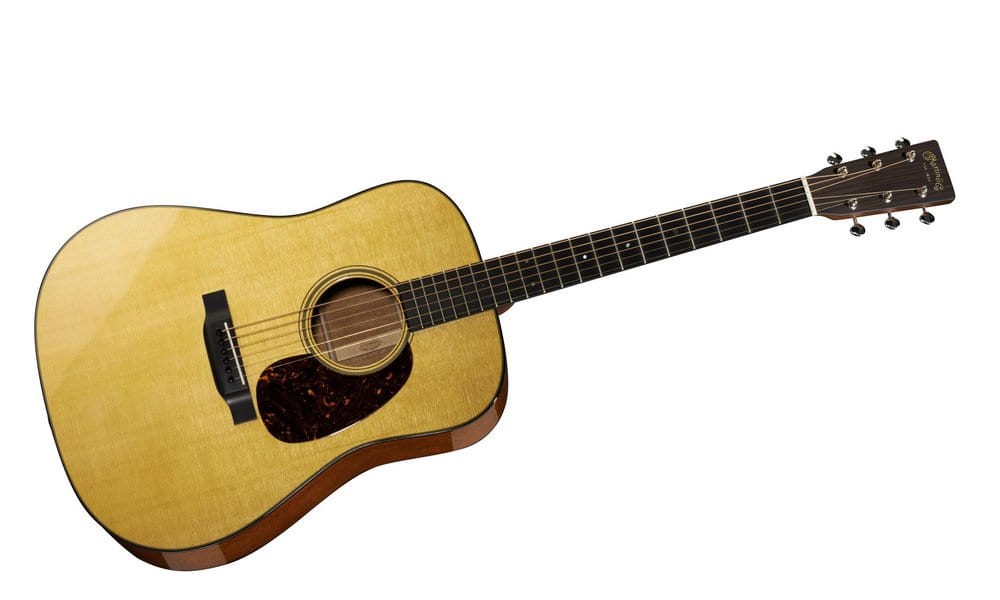
Aesthetically, the guitar is very plain and simple. Apart from the wood combinations we were talking earlier, very few cosmetic appointments were made to the guitar. The inlay markers are dots, the wood is beautiful and polished, and there is no particular ornament on the instrument. Build-wise, it’s definitely heavier (it’s rosewood, after all!), with a narrower neck that makes flat picking and fretting a little bit easier, particularly for small-handed players. The sound is really punchy and full, making it appropriate to be played without a human voice.
 Gibson Hummingbird
The Gibson is a lighter instrument, as its built with mahogany sides and back. The spruce top is beautifully figured and ornamented with the over-sized pickguard, which shows the famous hummingbird inlay. Normally, the Hummingbird comes in a light cherry color, opposed to the natural wood offered on Martin guitars. The neck is broader, allowing for more interplay for fingerpicking players. The Hummingbird’s sound was developed around the human voice, thus having bass and treble emphasized. It’s a perfect instrument to accompany yourself or play rhytm.
Harley Benton D-120CE BK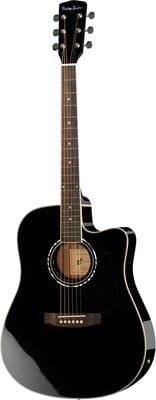
A cool alternative from Harley Benton is represented by the D-120CE BK. Instead of using rosewood for the sides, a cheaper but equally performant mahogany is used. The shape is a single cutaway, much easier to play in the higher register, where the last frets are located. Ideal for players who love to solo on an acoustic. The bridge is made of rosewood, like the fretboard, which sports the classic dot inlays. A timeless classic, offered in a modern gloss black color.
Taylor 110e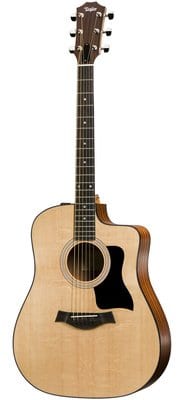
Taylor holds a special place in the heart of guitarists. Recognized as one of the most successful acoustic guitar builder, Taylor always delivered quality without compromises. And that remained true to their 100 series, such as the superb 110e. The back and sides are made of sapele, a lighter variant of Mahogany, and the fretboard is made of ebony. With a solid Sitka spruce top and modern Piezo system, the Taylor sounds as lush as it looks. The sound produced by this instrument is very well balanced and usable for every type of musical expression.
Takamine GD93CE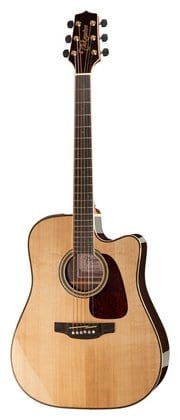
Takamine, whose headquarters are located in Japan, builds really beautiful acoustic guitars. The GD93CE sports a single cutaway design, while retaining the same characteristics of the traditional dreadnought design. The fretboard is marked with rosette abalone inlays, and features a stunning gold hardware. Due to the single cutaway design, you will retain more high end whilst maintaining a good bass response.
Other popular models
-
- Guild D-150 Nat Westerly
-
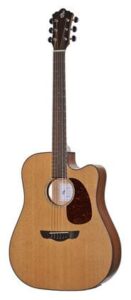
- Harley Benton CLD-30SCM-CE SolidWood
-
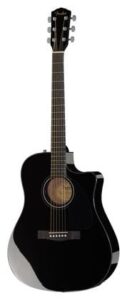
- Fender CD-60 CE BK
-
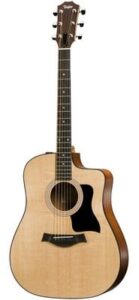
- Taylor 110ce
Today, brands such as Guild, Harley Benton, Takamine, Cort, Yamaha, Fender, Ibanez and many others are offering several dreadnought-shaped guitars.
Final words
Acoustic guitars have always been the songwriter’s choice when writing masterpiece songs. There’s a special alchemy that flows behind your fingers and the fingerboard when you embrace a good wood, and the inspiration is just a few chords away. Let your creativity flow, lay down some chords, sing some melodies and start writing your heart out.
Tell us about how your acoustic guitar complements your playing and writing style!










Comments 0
No comments yet.