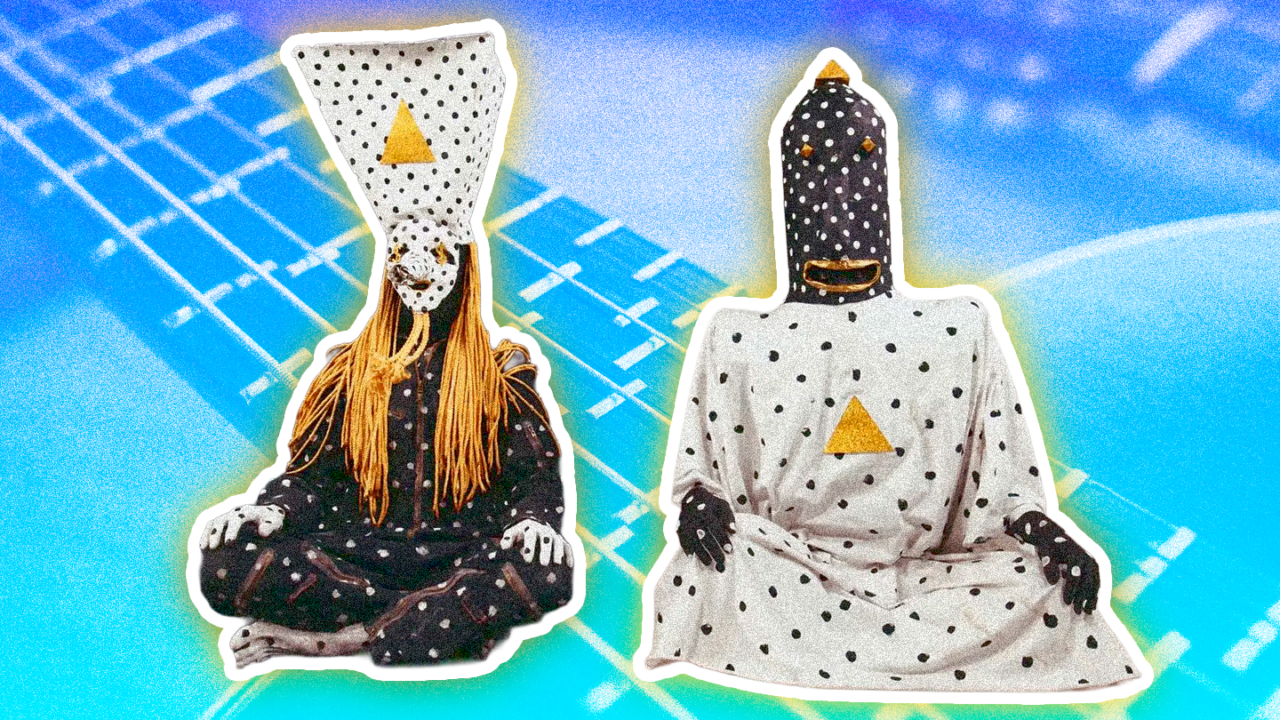

We’re going to take a look at microtonal music — whether you’re a fan or more sceptical, you couldn’t have missed the hype around Angine de Poitrine (which we’ll refer to here as ADP to avoid having to repeat ad nauseam that perfectly incongruous and Dadaist name). The half-hour live session filmed for American radio station KEXP has reached six million views on YouTube, each individual track comfortably approaches the million mark, and Rick Beato’s video on the subject is nearing two million. With figures like these, it’s likely that one or more of your musician friends have already sent you their music. But beyond the buzz surrounding the duo — always welcome for a band this eccentric and fiercely removed from the traditional music business — it’s also an opportunity to highlight the very concept of microtonality, an idea that guitarists have barely explored and yet one that opens up vast sonic landscapes.
Microtonal Music – Double Angine
A quick catch-up for those who haven’t been following: Khn de Poitrine and Klek de Poitrine are respectively the guitarist and drummer of the duo ADP. They are from Quebec (hence the name), and that’s about all we know about them, as they perform masked and reveal no details about the humans behind the characters. They are cartoonish figures dressed in black-and-white polka dot patterns, matching their set and instruments, with oversized heads and a signature pyramid hand gesture. Their music follows suit: since forming in 2019, ADP have been crafting instrumental math rock. Khn builds the different layers of each piece live on bass and then guitar using two loopers, all with the hypnotic, repetitive patterns and odd time signatures typical of progressive rock.
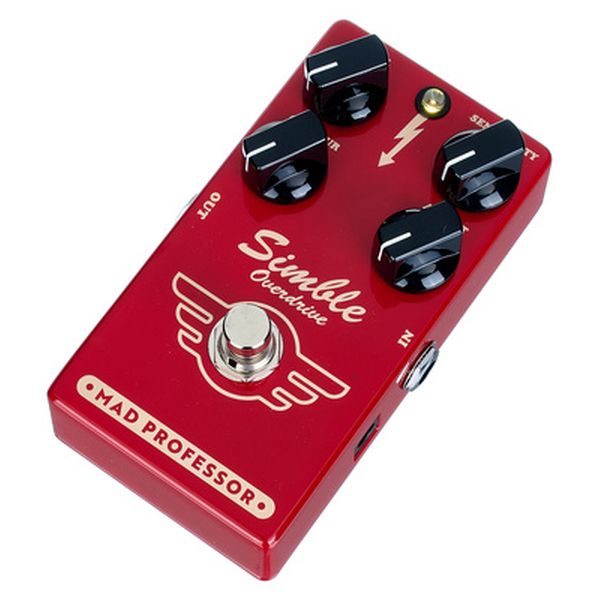
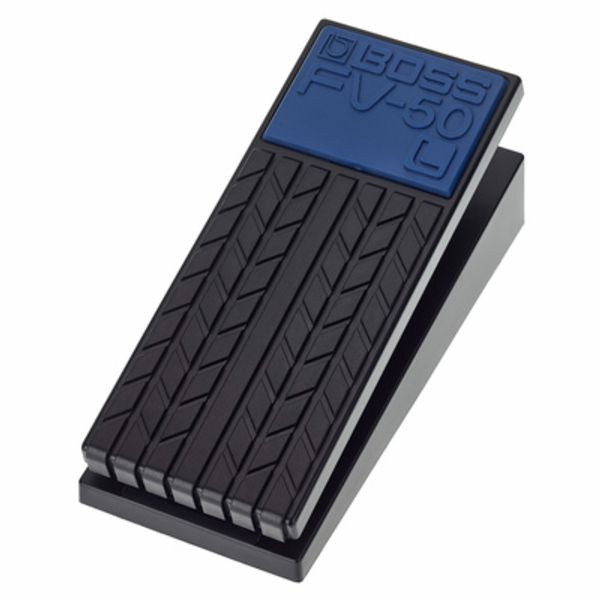
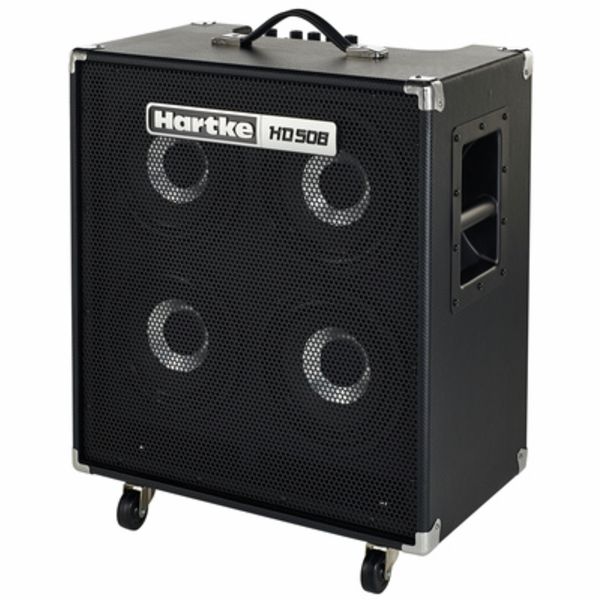

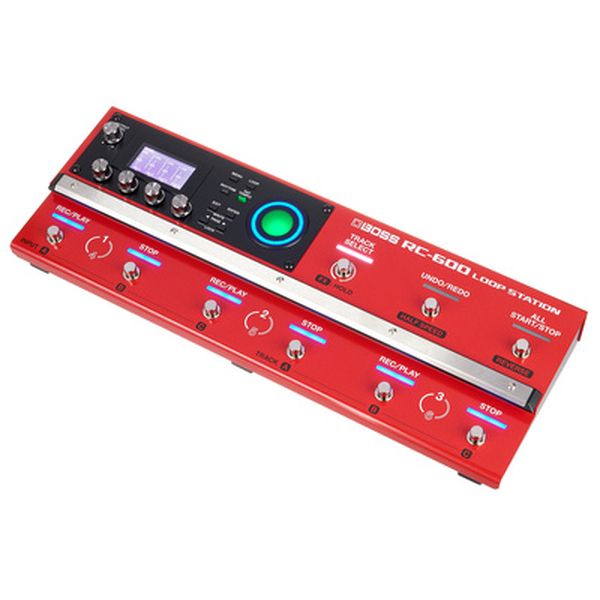
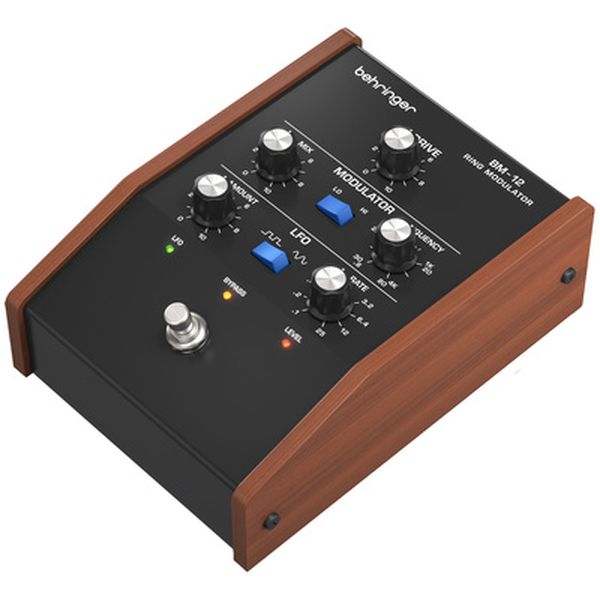
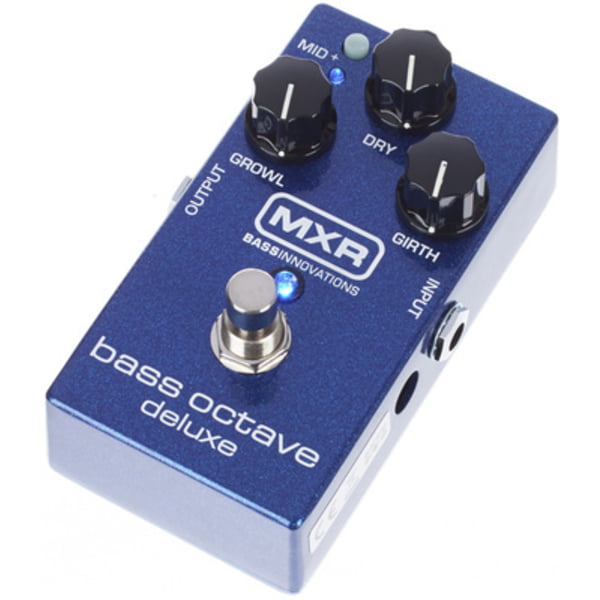
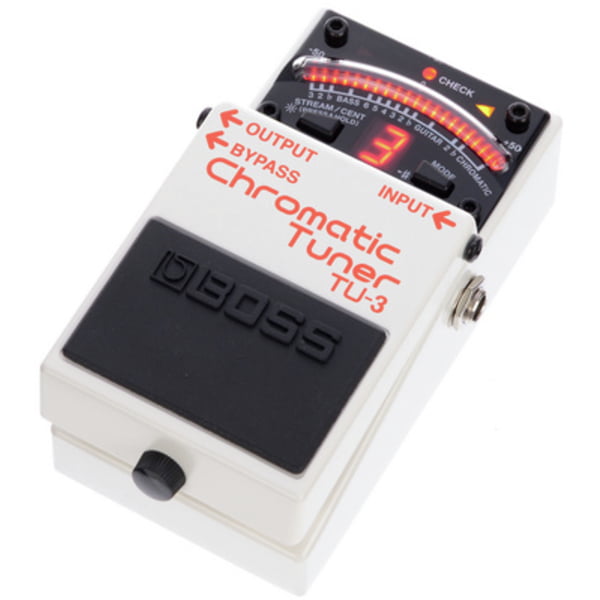
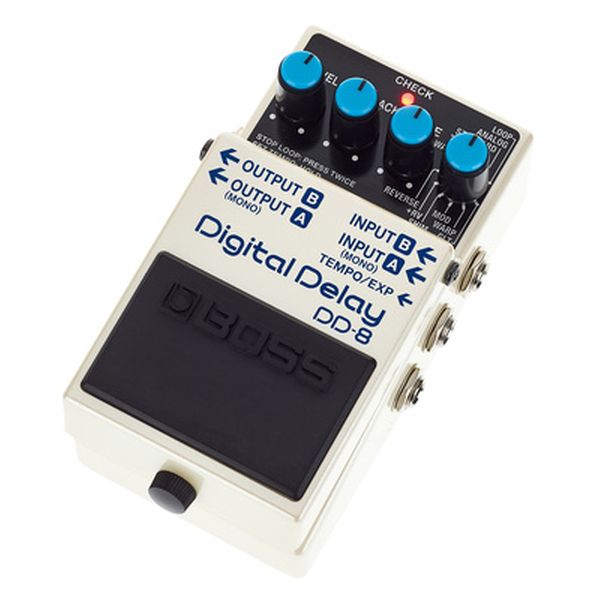
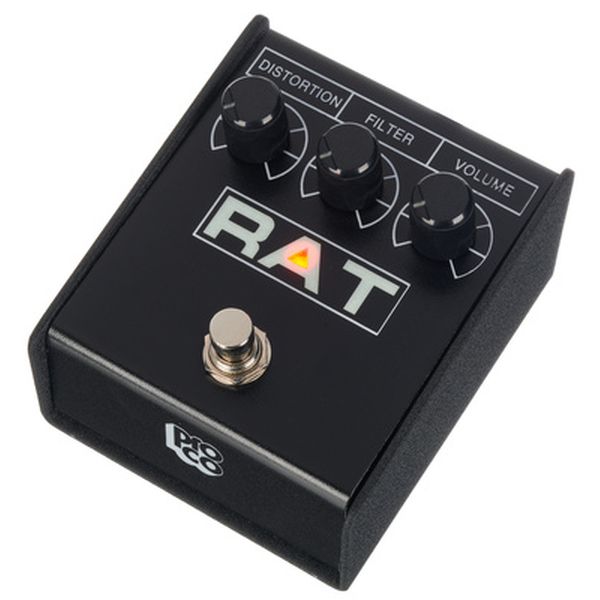
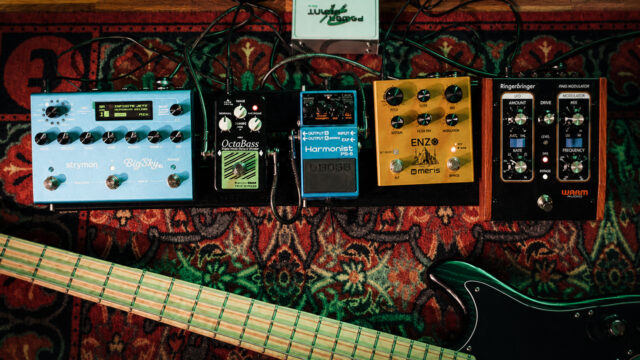
And to bring all of this to life, you need suitably unconventional gear: on Khn’s pedalboard you’ll find two Boss RC-600 loopers forming the backbone of his approach, unusual effects like a Moog Ring Modulator and an MXR bass octaver, alongside ultra-classic staples such as a Boss TU-3 tuner and DD-8 delay, a RAT distortion and a Mad Professor overdrive, not to mention four Boss expression pedals. The whole setup feeds into two separate amps for bass and guitar — a Hartke HA2500 head on one side and a Roland Jazz Chorus JC-120 combo on the other — both very clean and neutral platforms, allowing maximum tonal shaping upstream.
Between the Notes
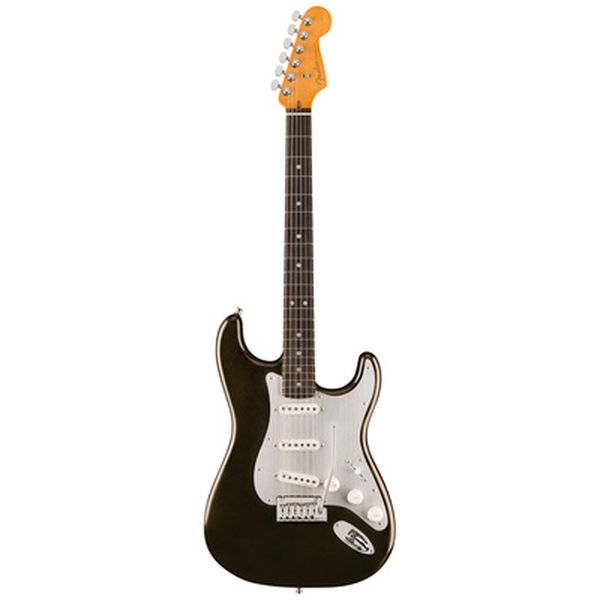
But the most striking aspect of ADP is of course Khn’s double-neck guitar, and more specifically its fretting. In Gaël Liger’s excellent video (Le Son Dans Les Doigts), we learn that luthier Raphaël Lebreton opted for a basswood body for its light weight, a maple neck, and stainless steel frets (a logical choice to avoid having to refret 54 frets across two necks!), along with oversized phosphorescent position markers and coloured side dots to avoid getting lost on stage — especially through a mask. The guitar side is heavily inspired by a Fender Stratocaster with an ebony fingerboard, such as the American Ultra, while the bass side echoes a Precision Bass with an ebony fingerboard, again drawing from the American Ultra range.
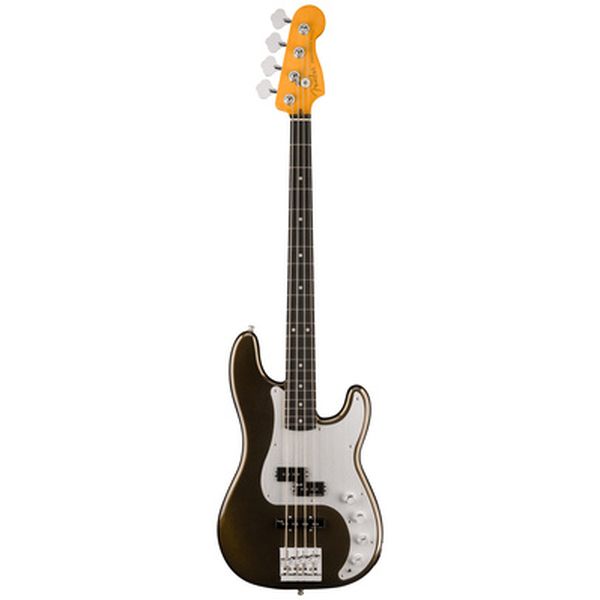
But then there are those frets, which divide the octave into 24 microtonal notes. In our Western musical tradition, the octave is divided into twelve equal notes — what we call equal temperament. Except there are notes between those notes, and that’s where microtonality comes in. Between G and G sharp, there is G half-sharp, and between A and A flat, there is A half-flat. The octave is thus divided into twenty-four equal notes, giving access to all the notes in between the notes.
A Poorly Kept Secret
This 24-note equal temperament system is the one chosen by ADP, but it had already appeared in the work of Australian band King Gizzard and The Lizard Wizard, who released a full microtonal rock album in 2017, Flying Microtonal Banana. Dig a little deeper and you’ll find many musicians who have explored the concept: artists such as Maddie Ashman, Zhea Erose, or Jacob Collier, to name just a few of the more recent ones. Steve Vai, in addition to his extensive collection of Ibanez JEM guitars, owned a microtonal guitar which he gifted to Jacob Collier “because he’ll know what to do with it”. French composer Ivan Wyschnegradsky was already writing Quatre Fragments for two quarter-tone pianos as early as 1918 — a piece that requires one of the two pianos to be tuned a quarter-tone higher than the other, in order to achieve a 24-note scale with two performers.
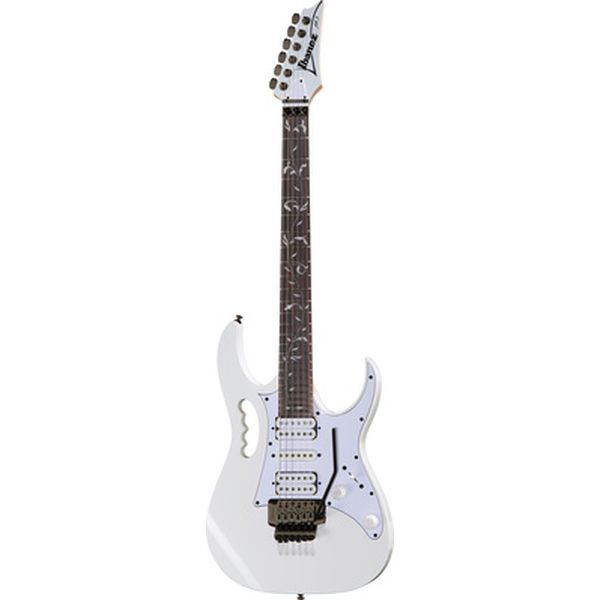
Ibanez
JEMJR-WH
The idea is therefore nothing new, and it also appears in modern lo-fi hip-hop, where microtonality lends an ethereal quality to melodies.

Trend or Revolution?
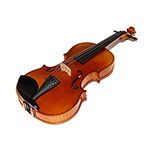
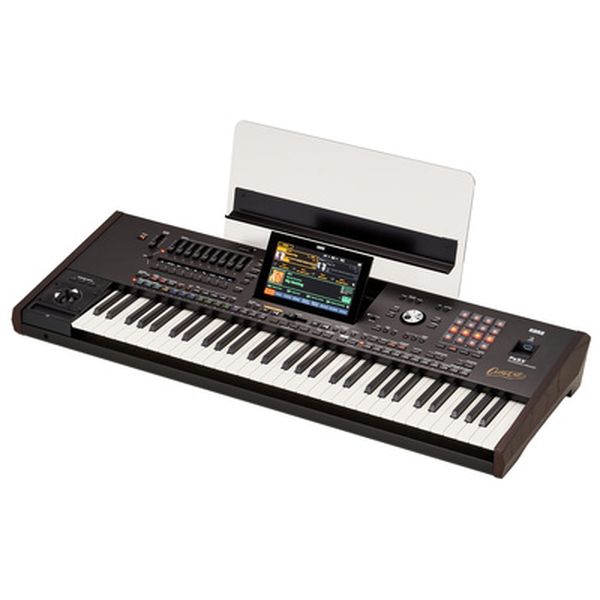
You don’t need a dedicated instrument to play microtonal music — it’s enough that the notes aren’t fixed by keys or frets, as on a violin, trombone, or clarinet. Even a MIDI keyboard or virtual instrument can easily be configured so its notes are not tempered. Some instruments are even designed specifically for non-tempered musical traditions, such as the Korg PA-5X 61 Oriental, which includes quarter tones and other intervals typical of Arabic music.
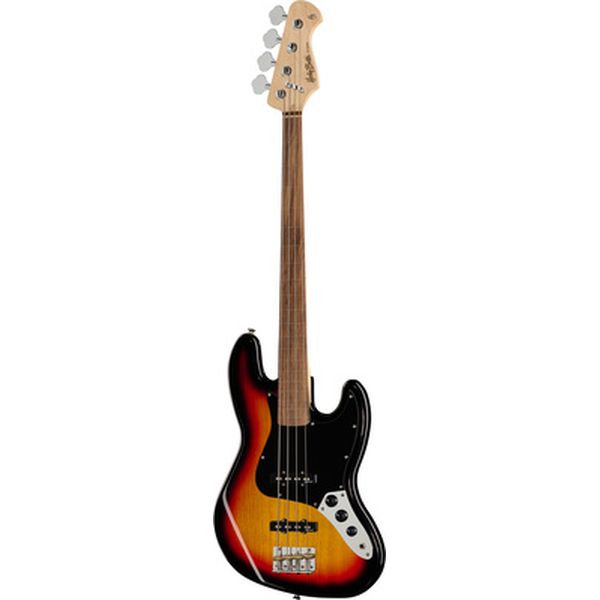
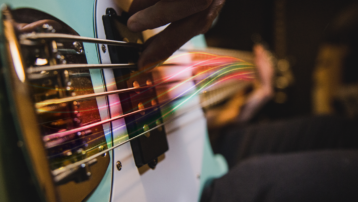
On guitar, there are two ways to access the notes between the notes without visiting a luthier to add extra frets: slide playing (bottleneck) and bends. Without even realising it, you’re already playing microtonally when you play blues, where bends aren’t always meant to reach a full semitone. But to completely break free from fixed pitches, there’s also the fretless guitar option. This is more commonly found in basses — even at very low price points, such as the Harley Benton JB-75FL — but it’s not impossible that the ADP trend will push some manufacturers to explore fretless guitars as well. Nor is it out of the question that some clever builders may soon start offering microtonal guitars. At that point, what will really matter is hearing what musicians do with them. As always, an instrument only exists through the music it enables.
This article is an adaptation of a piece originally written by Julien Bitoun, who is credited as the author of the original French t.blog article.








Comments 0
No comments yet.