
Overdrive pedals are among the most important and popular guitar effects and are inextricably linked to the sound of the electric guitar. But how did the overdrive pedal actually come about, and how does it differ from boost, distortion, and fuzz? Let’s explore the rocky road from the first distortion stompbox to the modern overdrive pedal.
The birth of the distorted electric guitar sound in the ‘50s and ‘60s
The history of the distorted electric guitar sound is closely linked to a series of coincidences. Strictly speaking, it began with the deliberate misuse of guitar and studio equipment. People probably first heard distorted electric guitars in the early 1950s, when guitarists began turning up their (at that time still rather low-powered) tube amps to full volume. Although the resulting tube distortion was an unintended “side effect” from the engineers’ point of view, it quickly gained popularity.
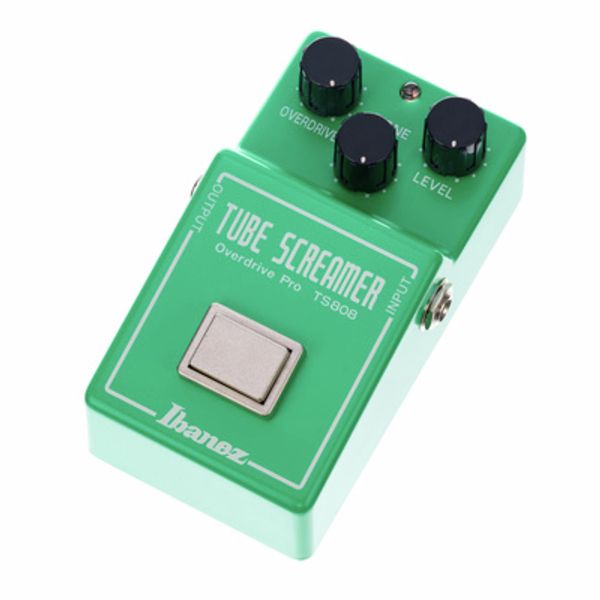
Ibanez
TS808
The 1951 single “Rocket 88” by Ike Turner and Jackie Brenston featured a strangely buzzing electric guitar. Allegedly created using a perforated guitar speaker, this sound is considered by many to be the birth of guitar distortion. There is a similar story behind the guitar sound on “You Really Got Me” by The Kinks from 1964. Here, a guitar speaker is said to have been deliberately tampered with using razor blades or knitting needles.
Ike Turner/Jackie Brenston – Rocket 88
The Kinks – You Really Got Me
However, the most significant anecdote dates back to 1961 and ultimately led to the invention of the distortion pedal. During the recording of Marty Robbins’ song “Don’t Worry”, there was a problem with the preamp section of the mixer channel. Due to a lack of time and alternatives, the defective channel was used anyway. The result was a strangely gnarly, fuzzy bass sound, which can be heard in the solo from 1:26 onwards.
Marty Robbins – Don’t Worry
Glenn Snoddy, the sound engineer at the session, was so fond of the sound of the defective channel strip that he decided to recreate the broken preamp as a handy stand-alone version. And so, the Maestro FZ-1 Fuzz-Tone was born. A year later, a certain Keith Richards stumbled across one of these boxes and famously used it for the intro to “(I Can’t Get No) Satisfaction” in 1965.
The Rolling Stones – (I Can’t Get No) Satisfaction
Together with the Sola Sound Tone Bender (1965) and the Arbiter Fuzz Face (1966), the Maestro Fuzz contributed significantly to shaping the style of rock music in the late 1960s, with prominent users including Jeff Beck, Jimi Hendrix, and Jimmy Page. Strictly speaking, the first distortion pedals were fuzz pedals that had little in common with the sound of an overdriven tube amp. The invention of the overdrive pedal would take almost another decade.
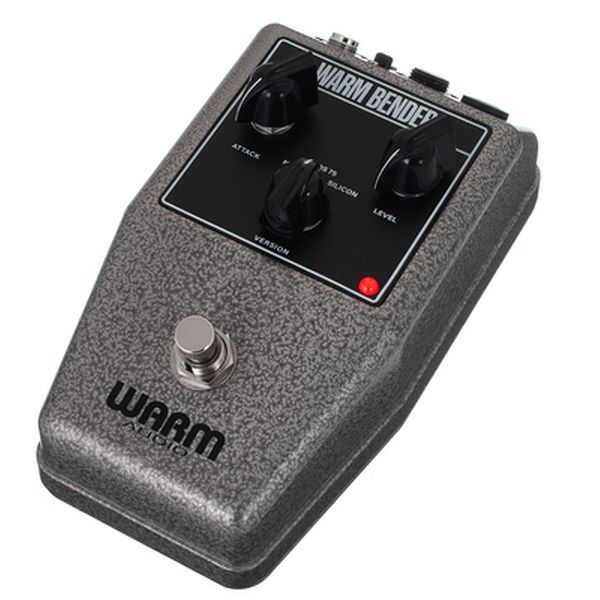
Warm Audio
Warm Bender Fuzz
Warm Audio Warm Bender – A modern interpretation of the Tone Bender
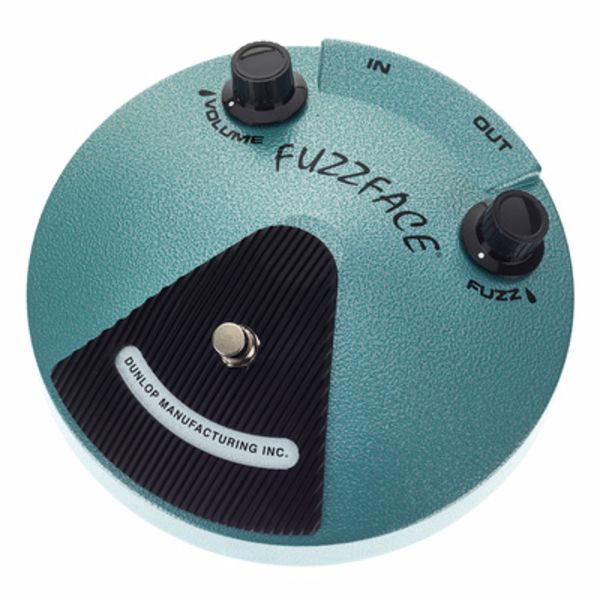
Dunlop
JH F1
Dunlop JH F1 FuzzFace – Jimi Hendrix in a Box
From fuzz to boost to distortion: guitar distortion in the 1970s
With the rise of rock music in the late ‘60s and early ‘70s, guitarists began to crave more and more distortion. Powerful tube amps from Vox, Fender, and Marshall were capable of filling large halls and arenas. However, the only way to distort these 50- and 100-watt behemoths was to overdrive the power amplifier. The result was a relatively low degree of distortion from today’s perspective, coupled with deafening volume.
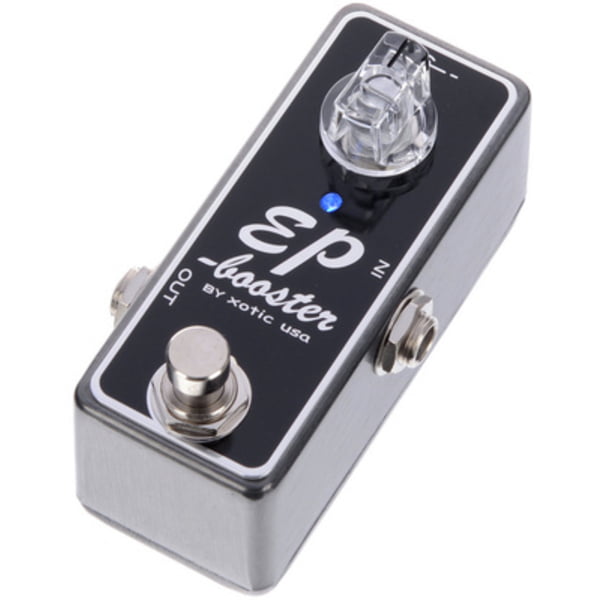
Xotic
EP Booster
Xotic EP Booster – a replica of the legendary Echoplex preamp
Fuzz pedals could produce more distortion, but also altered the basic sound of the guitar. So musicians looked for ways to amplify (“boost”) the guitar signal itself to produce more tube saturation. In the late ‘60s and early ‘70s, the preamps of tape echoes such as the Echoplex EP-3 were often used for this purpose. The LPB-1 from Electro Harmonix, which came out in 1968 and is still available today, is considered the first clean boost in pedal format.
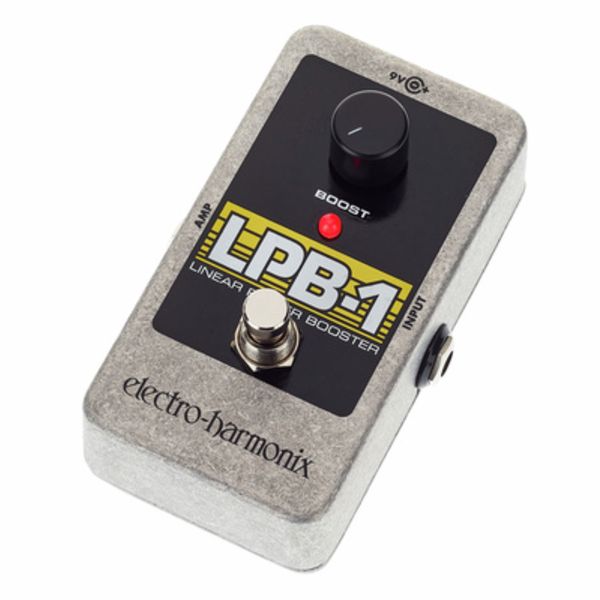
Electro Harmonix
LPB-1
The veteran – the Electro Harmonix LPB-1 Booster
Around the same time, the circuits of floor pedals were refined to produce milder, more harmonic kinds of distortion. Classic pedals such as the MXR Distortion + (1974), Boss DS-1 (1978), and ProCo Rat (1978) saw the light of day. Many of these circuits already covered a wide range of distortion levels and were closer to the sound of overdriven tube amps than the earlier pedals.
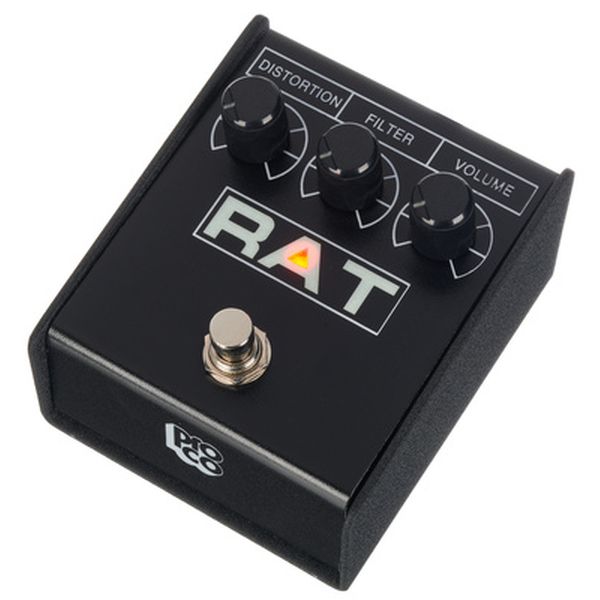
Proco
Rat 2 Distortion
Timeless distortion classic – the ProCo Rat
The birth of the overdrive pedal in the late 1970s
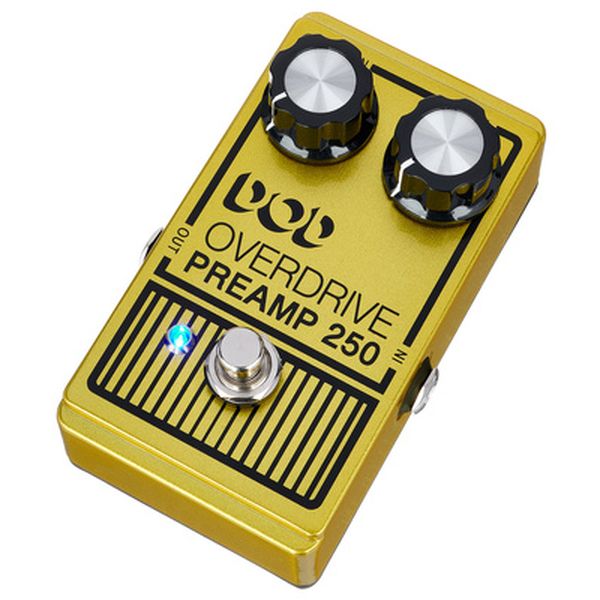
The question of which was the first overdrive pedal is, of course, a matter of controversy, as the boundaries between boost, overdrive, and distortion remain fluid. Nevertheless, the Boss OD-1 (1977) and the DOD 250 (1978) are considered the first of their kind, not least because of the word “overdrive” in their names.
A reissue of the DOD 250 Overdrive Preamp
Both pedals only had gain and level controls and were capable of both boosting the guitar signal and generating distortion of their own. Unlike many distortion pedals, these circuits relied on so-called “soft clipping”. This type of overdrive provided a softer and more compressed type of distortion and sounded more “authentic” to many guitarists than fuzz or distortion pedals.
Digitech
DOD Overdrive Preamp 250
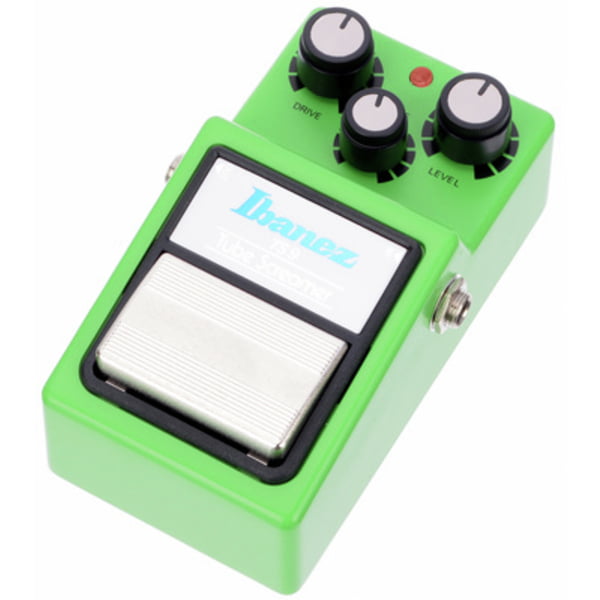
In addition, overdrives worked particularly well when paired with already distorted amps. Hardly any other pedal is more significant in this context than the Ibanez Tubescreamer from 1979, which is still considered the blueprint for a variety of overdrive circuits today.
The bright green cult pedal – the Ibanez Tubescreamer
The Tubescreamer sound is characterized by a boost in the mid frequencies with a simultaneous attenuation in the bass, which allows the guitar to cut through the mix better in many situations. With its blend of mild distortion and high boost capacity, the Tubescreamer became the faithful companion of many renowned blues, hard rock, and metal guitarists and shaped the sound of the electric guitar just as lastingly as the first fuzz pedals.
Ibanez
TS9
Harley Benton
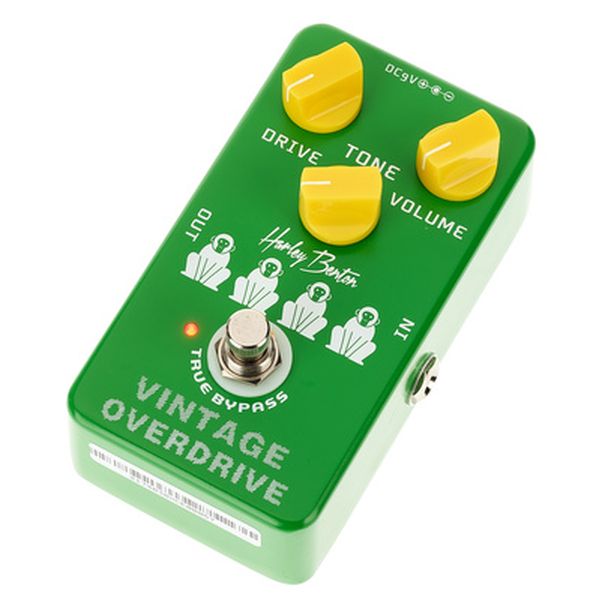
Vintage Overdrive
“Transparent,” “dynamic,” “amp-like” – overdrive then and now
Even though the first overdrive circuits are still very popular today, the world of distortion has not stood still since the late 1970s. Today, the term “overdrive” covers a wide variety of pedals in the low to medium gain range, some of which have little in common with the classics.
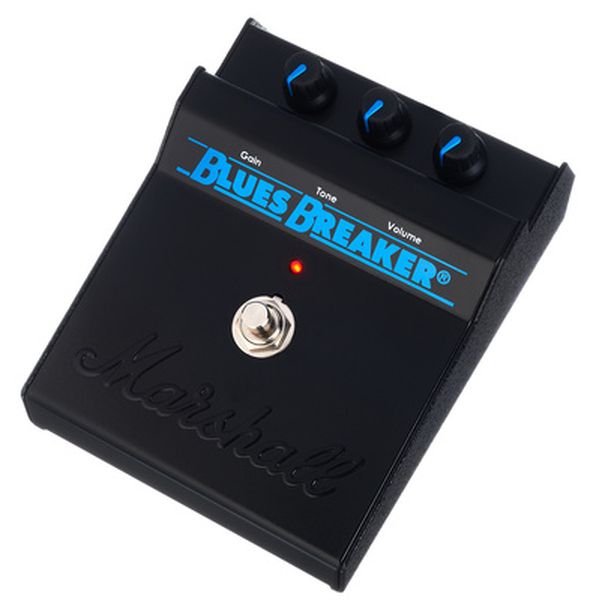
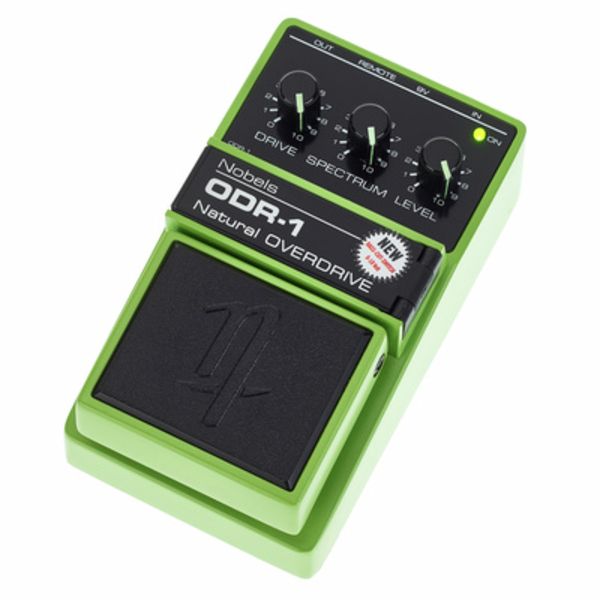
In the 1990s, a number of modern classics were added, such as the Klon Centaur (1990), Marshall Blues Breaker (1991), and Nobels ODR-1 (1993), which were able to replicate the dynamic behavior of an overdriven tube amp much more authentically than the first overdrives.
Marshall
Bluesbreaker
The reissue of the famous “Transparent Overdrive” – the Marshall Bluesbreaker
Nobels
ODR-1 BC
A must-have for many Nashville session players – the Nobels ODR-1
Many guitarists today swear by overdrive sounds that are as unadulterated (transparent) as possible and some have a slew of different stomp boxes on their pedalboards for all situations. However, the influence of the first overdrive pedals is still omnipresent, and even the most forward-thinking guitarist will sooner or later come across a Tubescreamer. In retrospect, the development of the overdrive pedal can be described as one of the great style-defining inventions in rock history.
Overdrive Pedals: Your Feedback
Which overdrive classics are on your pedalboard? Let us know in the comments!









Comments 0
No comments yet.