

For those who rock out on stage with the constant fear of tripping over any cables, it might be time to go wireless! From affordable entry-level models to solid mid-class or powerful professional models … nowadays there are suitable wireless systems for every budget. Often the models only differ in their working frequencies, but because there has been a lot of movement in the allocation of permissible frequencies over the last few years, you may have been wondering: What do these terms mean? What radio frequency should I use? And how do they differ? Find the answers in this article 😉
From “Diversity” to “Lavalier” – Basic terms
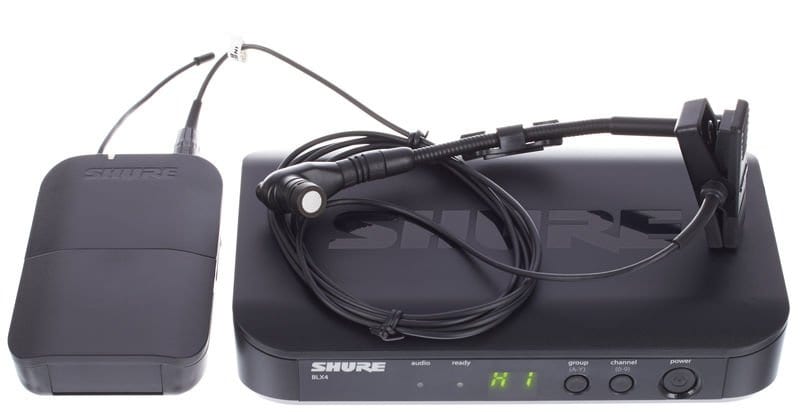
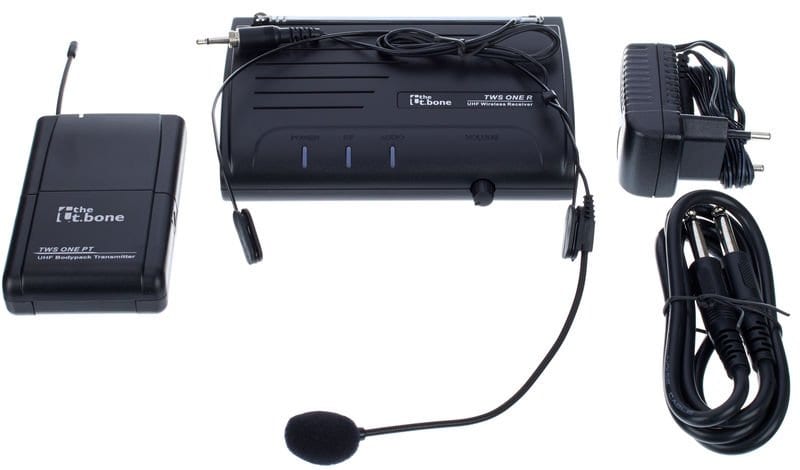
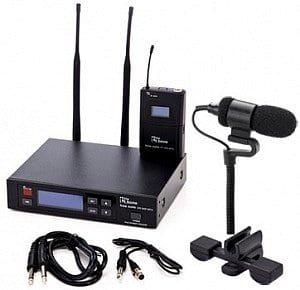
Wireless audio transmission systems rely on radio transmission instead of cable connections. Two components are needed: a transmitter that picks up the signal from a source (microphone or instrument) and sends it to a receiver, which receives the signal. This is called “radio link”. All clear so far?
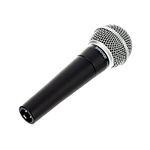
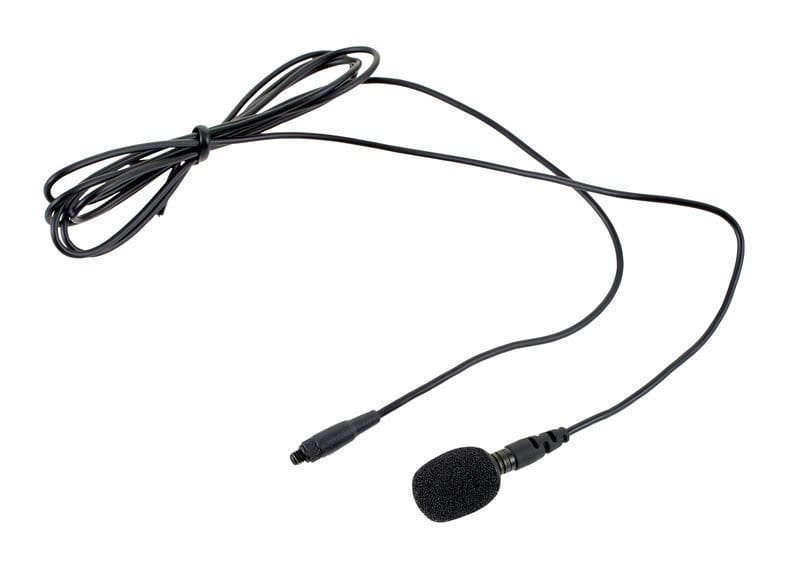
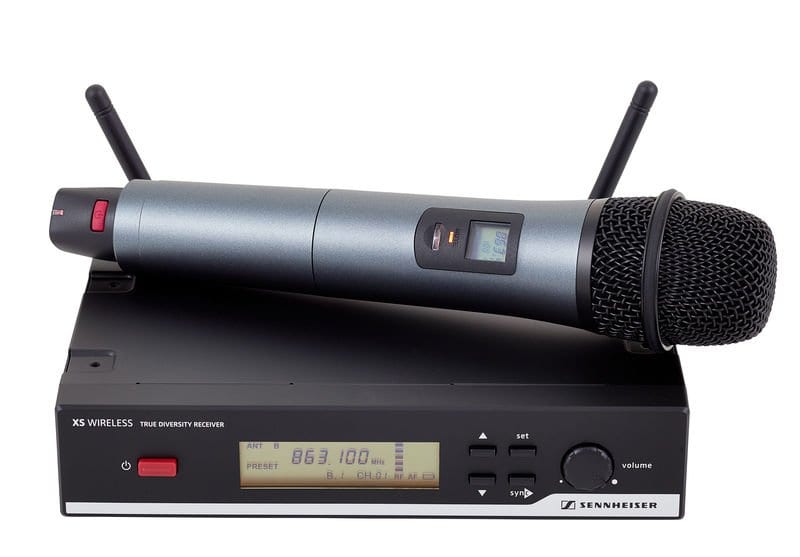 The nature of the transmitter determines which type of wireless system is suitable for the musician. For singers and presenters, there are microphone wireless systems with various types of microphones, such as classic handheld microphones, small Lavalier microphones to attach to your collar or headsets with or without monitoring headphones. Instrumentalists can rely on wireless systems for guitar/bass or wireless microphones.
 Many devices rely on Diversity technology, to ensure that wireless connections run as smoothly as possible without any interruption in the signal. It prevents reflected radio waves in opposite phases from walls or ceilings, causing dropouts, which are common in closed environments, especially over long distances.
Devices with pilot tone, allow for operation control as well as functions such as automatic standby. Squelch is a noise gate, which is adjusted by means of threshold control and ensures that the audio signal does not hiss when the signal reception is too weak.
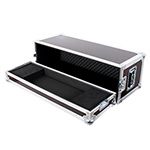
 A wireless transmitter is normally powered by (disposable or rechargeable) batteries. For those who, use their devices frequently, it may well be worthwhile to reach a little deeper into your pocket and get a long-lasting battery and charging station. This reduces operating costs in the long run. For regular stage use and frequent transportation, you should consider a flightcase or use a rack kit or mounting rail to safely secure your transmitter to any fixed installation.
 And of course, you can also use several wireless systems on stage at the same time, for example, one for the singer, two for the guitarists, etc. Be careful not to step on each other’s toes. The signal from each transmitter-receiver combination must be transmitted on to a separate channel, to avoid interference (interfering waves caused by mutual interference) and intermodulation (interference caused by sum and difference frequencies).
Often, when the equipment used is from the same manufacturer, you can group all the channels to be used as a band in groups, pre-allocated and ready to use.
What you have to consider – Legal foundations
 The use of bands of frequencies in a given country is regulated by the National Frequency Allocation Plan (National Frequency Allocation Table), which is subject to change over time. Many frequencies used until recently by musicians or radio, have been privatized or totally blocked. The unauthorized use in the event of limitations, or non-payment of the “license” in the case of privatization, can lead to heavy fines.
Today wireless transmitters for musicians pass through a mesh of HF signals ( “HF” stands for high-frequency). Many manufacturers offer their wireless antennas with identical fittings, but for different frequencies. A corresponding abbreviation behind the device usually specifies in which frequency range the signal transmission takes place.
 The amateur musician is considered a private individual and can use a wireless system without prior registration. For these group of users, certain frequency ranges are reserved. They are however, very limited compared to professional frequencies, and are therefore rather difficult when setting up large wireless setups.
If the organizer of the event at which you play is in order, there are no problems. As a professional user (and this means “a regular user“), you are obligated to register the frequencies you wish to use, specifying your purpose. On the other hand, certain frequency ranges are available, which are generously designed to allow for complex wireless systems.
Why, how and where? – Advantages, possibilities and locations
But what radio frequency is the right one for you? This answer strongly depends on how many wireless systems you intend to use and how many at the same time.
 Let us take a brief look at the different frequency bands. There are five registration-free areas available to amateurs. The lowest frequencies point to the obsolete VHF band, which ranges from 174-230 MHz. It allows the use of a small number of channels and is not particularly reliable.
The so-called “middle gap” in the LTE band covers the frequencies from 823 to 832 MHz. This frequency range is designed to be broad enough to operate one or two wireless microphones for small to medium-sized events. However, operating errors can occur in the area of LTE transmitters.
The European-wide frequency band (ISM) operates between 863 and 865 MHz. Due to its low bandwidth, it is suitable for the installation of two to four radio transmission links max. You should, however, know that home equipment such as radio headphones, babyphones etc also have access to this frequency range. Depending on the application, disturbances are therefore more likely to occur here than in other frequency ranges.
On top of that, there are also registration-free frequency ranges of
1. a) 1492 to 1518 MHz and
2. b) 1785 to 1805 MHz
Which a) can only be used in buildings, b) have been susceptible to dropouts. Some manufacturers, however, promise the parallel operation of up to 12 wireless links.
 In addition, more and more wireless systems are being introduced which transfer the digitally converted audio signal in the 2.4 GHz range. It is used by WLANs and is also available for Wifi. However, it only offers comparatively small ranges and is also prone to latency. Here it’s possible to have an installation of maximum five to six parallel transmitters.
Costs and registration
 Registration of frequency allocation is regulated by governments in most countries. The actual period of use is not taken into account. Therefore, if you have a device that is subject to registration, you are already obligated to pay, simply due to the frequency allocation. The costs are different for different user groups and are redefined annually so you should keep yourself up to date.
Conclusion
 All this may sounds confusing at first glance. However, if you know how and where you want to use your wireless system(s), you can note the requirements such as features and appropriate frequency ranges. This way you can exclude a large part of the immense range of wireless systems and find the right one for you. As an amateur-musician you have a variety of frequencies available for free. If you are a professional, then you will probably like to choose from the broader range of frequency bands.
Professional users, who in the long term want to be on the safe side, should engage in the field of professional frequencies with devices of lower transmission frequencies. Because the field of radio frequencies is highly competitive and constantly changing.







Comments 2