

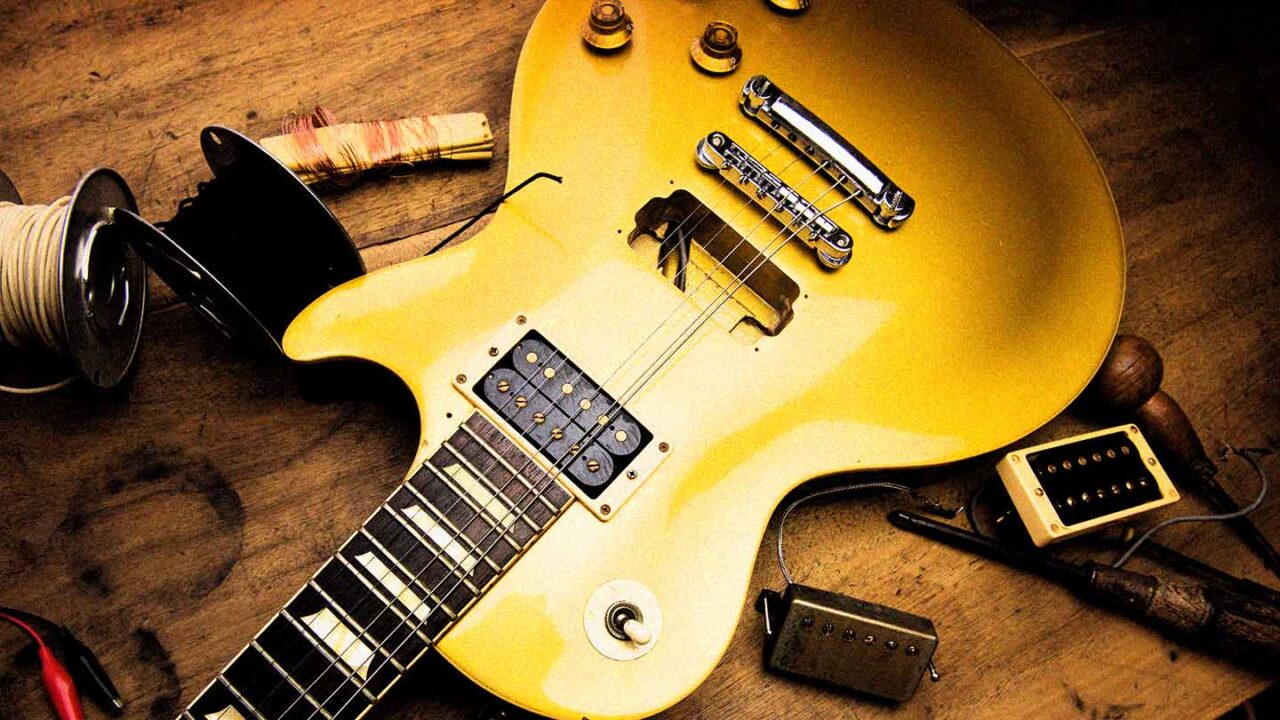

Like every component that plays a central role in the final sound of an electric guitar, pickups are the subject of endless debate. Some models have even developed a mystique of their own, with used examples changing hands for several thousand euros. Yet the basic principle behind a pickup is far from complicated, and there are plenty of outstanding models available today. This guide will help you get a clearer picture of the most common pickup types.
How a pickup works
The French term micro can be misleading. An electric guitar pickup is not, strictly speaking, a “microphone” like a Shure SM58 used for vocals. It is more accurately described as a sensor or transducer, as the English term guitar pickup makes clear. A guitar pickup consists of one or more magnets wrapped in a coil of copper wire. Its job is to convert the vibration of the strings into an electrical signal that can then be processed and amplified. To detect these vibrations, a magnetic field is required, which means the strings must contain a ferrous metal. This is why an electric guitar pickup will not work on a classical guitar fitted with nylon strings. On the other hand, it will work perfectly well with the steel strings of an acoustic guitar, although the lack of tonal accuracy can be a drawback (this unlikely combination can famously be found on the Gibson J-160E).
On an electric guitar, however, it is precisely this lack of absolute fidelity that combines with the instrument’s own character to create its distinctive tone. The advantage is that there are countless pickup models available, and replacing them is one of the easiest modifications you can make to tailor a guitar to your needs.

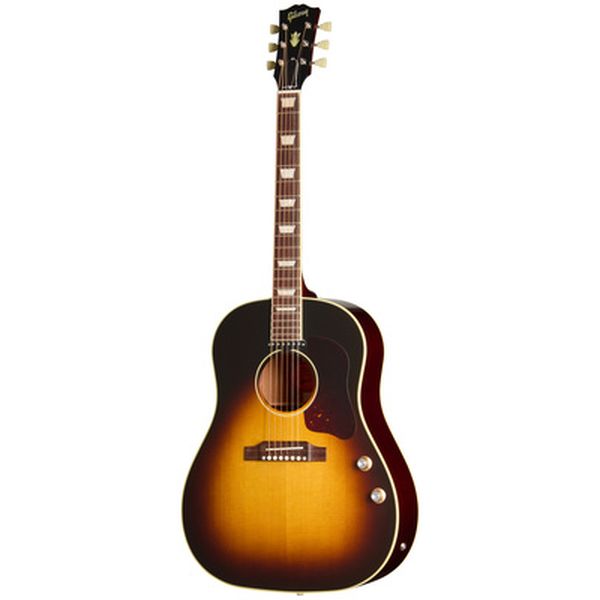
Stratocaster-style single-coil
- Output level: low
- Styles: funk, blues, pop, country
- Example model: PRS SE Silver Sky
There are countless single-coil pickups, each corresponding to different designs, many of them drawn from Fender’s rich catalogue. Jazzmaster, Telecaster and Jaguar pickups all differ in their construction. However, they share enough common characteristics to be grouped together in the same category.
Fender-style single-coils are generally prized for their clarity and brightness. They deliver the crisp snap that works so well for clean tones, along with a sharp attack that can even become biting depending on the rest of the rig.
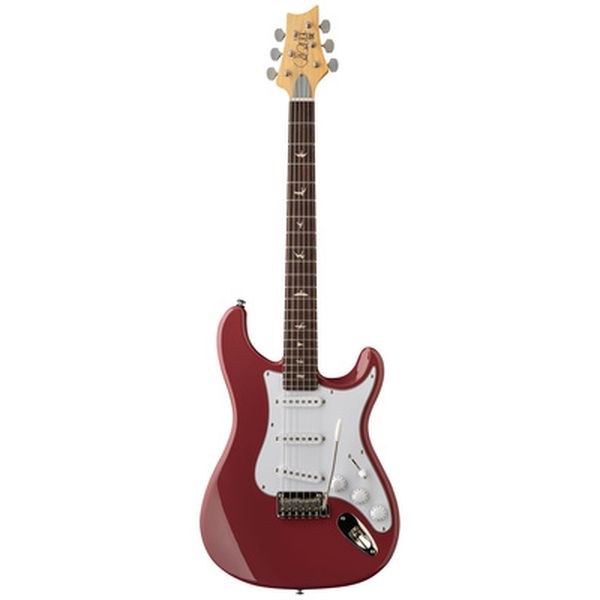
PRS
SE Silver Sky Derby Red
P90
- Output level: medium
- Styles: rock, blues, hard rock
- Example model: Gibson Les Paul Junior TV Yellow
Historically, the P90 was one of the earliest electric guitar pickup designs, dating back to 1946. Although it is also a single-coil pickup, it differs from the Stratocaster-style pickup with its darker, thicker character. Its attack is rougher, while the midrange is more pronounced, whereas Fender-style single-coils tend to have a more scooped midrange response.
These characteristics make it an ideal choice for anything from light breakup to more aggressive crunch, where its rich tonal nuance rewards players who experiment with variations in picking dynamics.
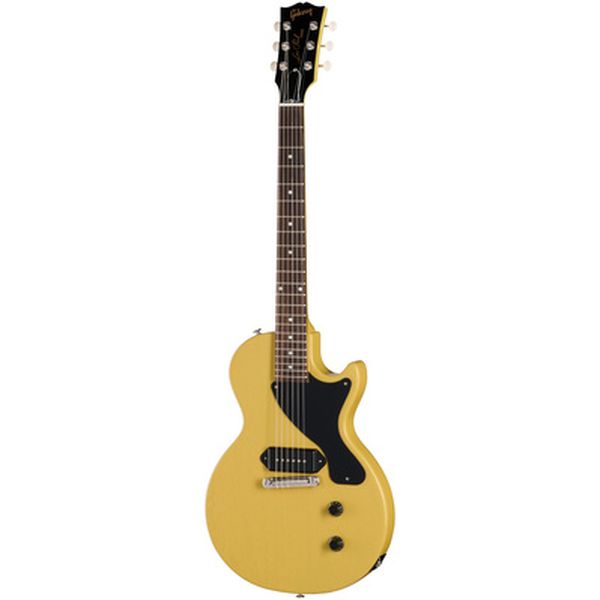
Gibson
Les Paul Junior TV Yellow
Vintage humbucker
- Output level: medium
- Styles: rock, blues, hard rock
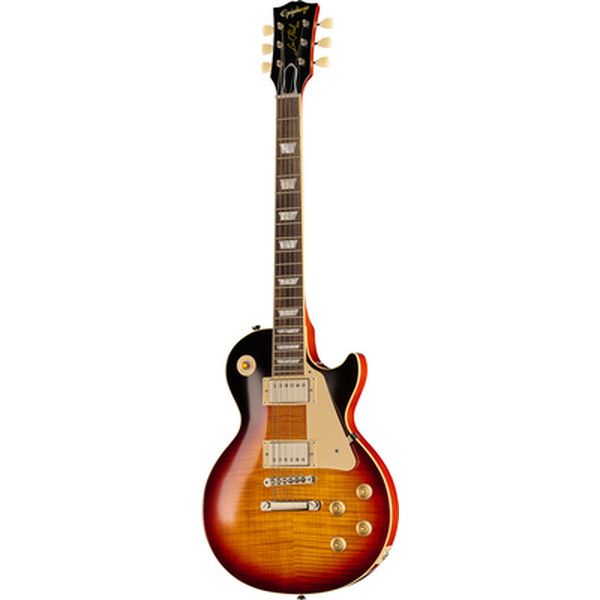
- Example model: Epiphone 1959 Les Paul Standard
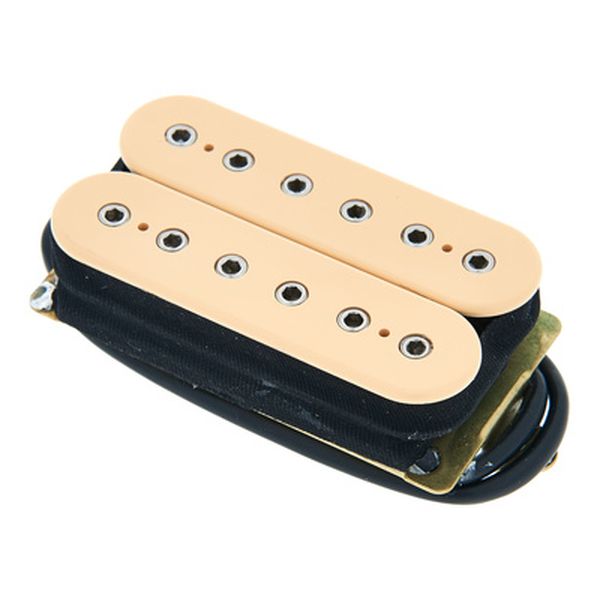
Just as the term “single-coil” actually encompasses a far more complex reality, the world of humbuckers is incredibly diverse, with countless subtle variations. Historically, the humbucker was invented by Seth Lover for Gibson in 1957, and its name comes from its ability to eliminate the unavoidable hum associated with single-coil pickups. But in addition to reducing background noise, the humbucker also produces a darker tone, a smoother and more compressed attack, and a higher output level. For all these reasons, it became the defining sound of late-1950s Gibson guitars, as well as the benchmark for 1970s hard rock tone—especially when plugged into a Marshall Plexi stack.
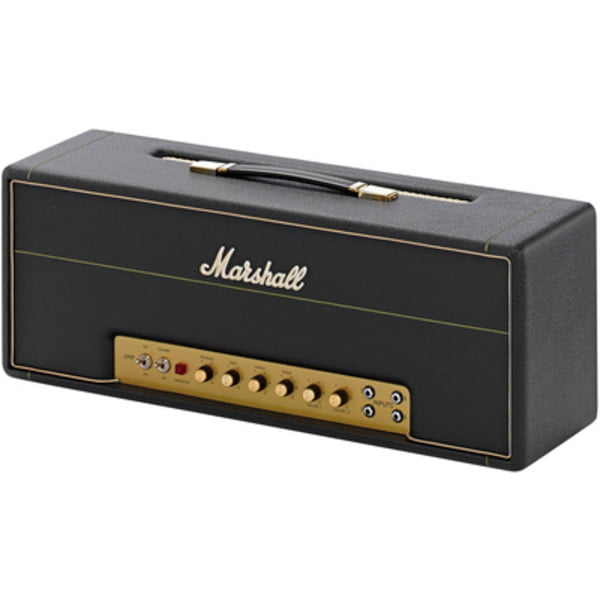
Modern humbucker
- Output level: high
- Styles: metal
- Example model: ESP LTD TE-1000 Silver Blast
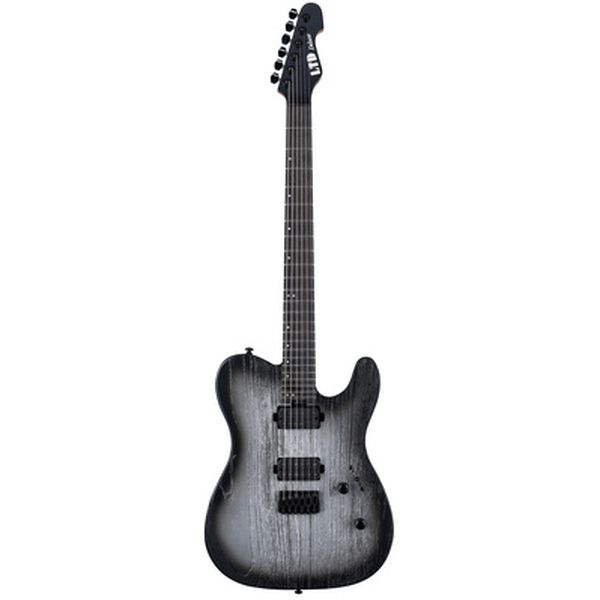
During the 1970s, guitarists began looking for ways to get more gain from amplifiers that had not been designed to produce the heavy distortion they wanted. This was when the first pickup manufacturers came up with the idea of offering models with a much higher output than the classic Gibson humbucker, beginning with the legendary DiMarzio Super Distortion in 1972.
Today, these pickups are standard equipment for metal-oriented guitar brands, and they often use ceramic magnets rather than Alnico. The result is aggressive, compressed and biting, sacrificing some of the subtlety of vintage humbuckers in favour of uncompromising power.
Active pickups
- Output level: very high
- Styles: metal, pop
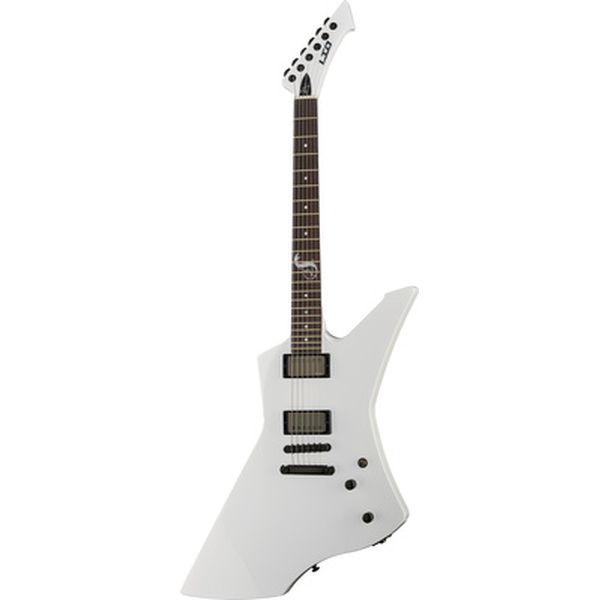
- Example model: ESP LTD Snakebyte SW
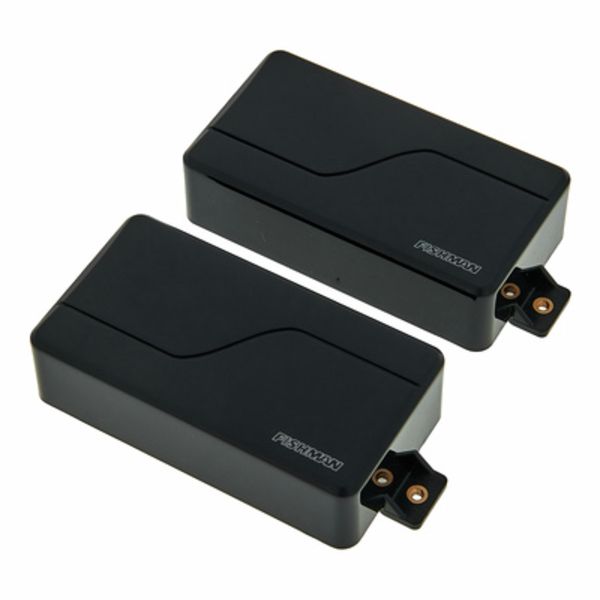
Active pickups have been around since the 1970s, but they truly found their audience during the 1990s and 2000s. These pickups feature a built-in preamp powered by a battery, or a rechargeable power supply in the case of Fishman Fluence models, and they offer several advantages. First, the resulting signal is low impedance, making it less susceptible to interference and long cable runs. The built-in preamp also makes it possible to shape the sound more precisely directly from the guitar, whether through onboard EQ or a choice of voicings, as is once again the case with Fluence pickups.
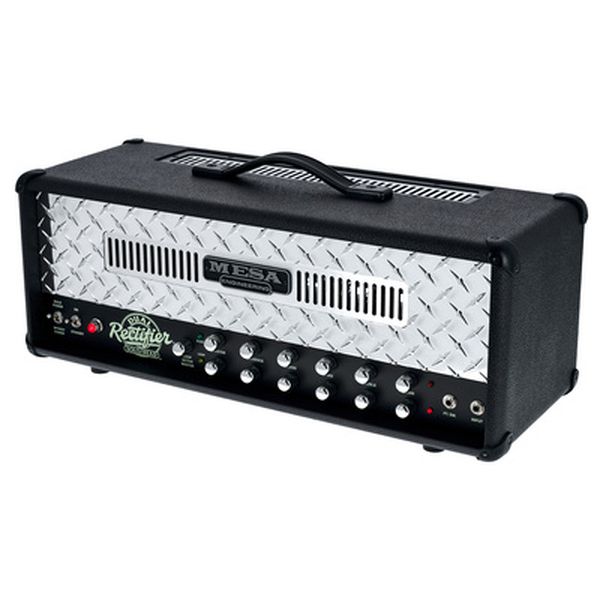
However, most guitarists choose active pickups for one main reason: their enormous output level and highly aggressive, compressed character, which is ideal for cutting through the distortion of a Dual Rectifier, for example. They can be criticised for sounding too clean or “clinical”, but for certain tones they are virtually indispensable.
Honourable mentions
The categories mentioned above are obviously not enough to reflect the extraordinary variety of pickups available in manufacturers’ catalogues. Other models worth considering include Wide Range pickups, Fender’s take on the humbucker, with a more open top end; the Dynasonic, Gretsch’s punchy, high-output single-coil; the Filter’Tron, Gretsch’s brighter, lower-output humbucker; the Charlie Christian, Gibson’s first pickup design before the P90; mini humbuckers, first used by Epiphone and later Gibson, which are brighter than standard humbuckers; and Gold Foil pickups, inspired by the inexpensive catalogue guitars sold during the 1970s, with a very clear, almost transparent sound. As you can see, there is an enormous range of flavours available, offering countless ways to vary the sound of the same instrument.
Other factors that change everything
And while we are on the subject of variation, there are plenty of other factors that have a decisive influence on the sound. First, a pickup may or may not be wax potted. This treatment was designed to prevent unwanted noise, but it also slightly restricts the high frequencies. When playing with low gain, unpotted pickups can be a very interesting option. The pickup’s position also has a major influence. The closer it is to the bridge, the brighter the sound will be. The closer it is to the neck, the darker the sound will become, with a softer attack. On many guitars, both pickups are the same model, and their different positions alone are enough to create a fundamental difference in tone. Finally, pickup wiring can also play a very important role, whether through the value of the capacitors connected to the volume and tone controls or the phase-switching options provided by switches.
As you will have gathered, electric guitar pickups are a rabbit hole that you could spend a lifetime exploring. And that is exactly what makes them so fascinating!
This article is an adaptation of a piece originally written by Julien Bitoun, who is credited as the author of the original French t.blog article.










Comments 0
No comments yet.