












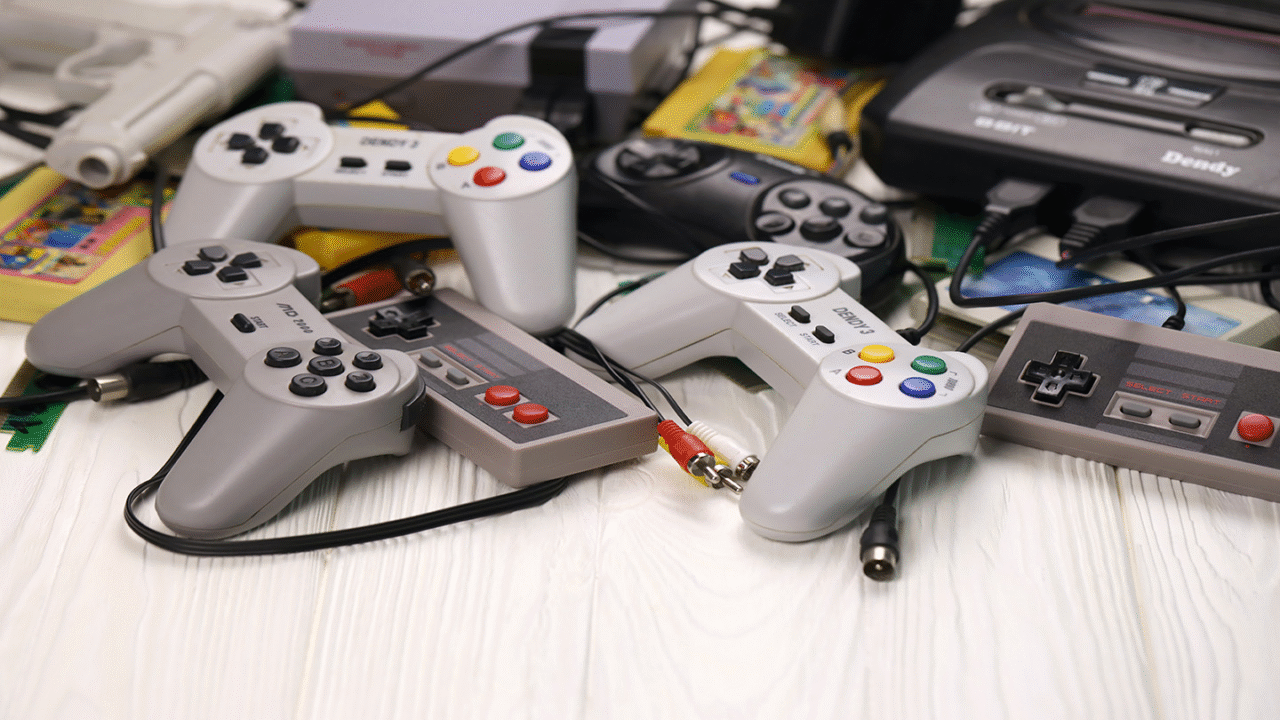

Some video games are remembered for their story, their graphics, or how revolutionary their gameplay was. But in many cases, what truly stays with us is the music.
This article is a journey through video game soundtracks that defined an era. Not all of them are orchestral or complex. Some were made with just a few bits, others with the full spirit of a rave. But they all share one thing in common: they will be remembered for generations to come.
Super Mario Bros. (1985) – Koji Kondo
Before Super Mario Bros., video game music was little more than functional, repetitive background noise, forgettable at best. But Koji Kondo changed that forever. With just a few sound channels and severe technical limitations, he created melodies that are now part of pop culture history.
Super Mario Bros. turned video game music into an art form in its own right, one that continues to evolve to this day. And Kondo didn’t stop there; he went on to work his magic again with the Zelda series. A living legend.
Donkey Kong Country (1994) – David Wise
Released for the Super Nintendo in 1994, Donkey Kong Country was an ambitious platformer by Rare. While most expected something upbeat and melodic, David Wise delivered something entirely different: ambient textures, immersive melodies, melancholic atmospheres, and tropical rhythms full of marimbas and sound effects. Special mention goes to “Aquatic Ambience,” which captured an underwater spirituality so perfectly that it transcended the game itself. Wise made the Super Nintendo sound like nothing it ever had before, and his work introduced many kids to the world of ambient music.
Wipeout (1995) – CoLD SToRAGE
The arrival of the CD format with consoles like the PlayStation changed everything. Wipeout was one of the first to understand that music shouldn’t just accompany the game but it should be part of the experience itself. It was among the first titles to put music on the same level as gameplay, with one clear goal: to win over the young people filling clubs and raves.
To do that, they needed the artists who were shaking those dance floors. At a time when video games were still seen as kid stuff, many musicians refused to participate. But they managed to bring in Orbital, The Chemical Brothers, and Leftfield, each contributing a track. The rest of the soundtrack was composed by CoLD SToRAGE (Tim Wright), an in-house musician whose work not only held its own but went on to define the sound of a generation.
With Wipeout, techno, drum & bass, and underground electronic music made their grand entrance into gaming. And nothing ever sounded the same again.
Final Fantasy VII (1997) – Nobuo Uematsu
When Final Fantasy VII hit store shelves in 1997, it didn’t just redefine what a video game could be, it also changed how we perceive game music. Nobuo Uematsu, already acclaimed for his work on earlier titles, composed a soundtrack so rich, emotional, and ambitious that many compared him to a film composer.
I personally see him as the Ennio Morricone of video games: a composer capable of capturing the soul of a story in just a few notes. Every track in Final Fantasy VII was an extension of the game’s universe. From the solemn “Anxious Heart” to the epic “One-Winged Angel,” and of course the unforgettable “Aerith’s Theme“. A simple, crystalline melody that moved countless players to tears. For the first time, many realized that video games could make you feel pain.
Silent Hill 2 (2001) – Akira Yamaoka
Silent Hill 2 is one of the few games where the music can make you feel pain. Akira Yamaoka, composer and sound designer, took the industrial-noise formula of the first game and pushed it further: distorted guitars, broken melodies, and eerie atmospheres.
This isn’t your typical soundtrack. It’s a ghostly presence, another layer of the trauma that runs through the story. And if you listen to it outside the game, with good headphones and a quiet mind, you’ll find that every sound is filled with subtle details, empty spaces, and whispering textures. Yamaoka didn’t use sound to decorate horror, he made it embody horror. As if all the music came directly from a wound that still hasn’t healed.
The Sims (2001) – Jerry Martin & Marc Russo
The first Sims game was, at its core, a satire. At the time, I didn’t grasp the irony and took it as a “life simulator.” But if you wanted to succeed, your Sim had to work a lot. No weekends, no real vacations. All that effort just to buy a nicer couch, a more efficient bathtub, or a fancier kitchen. It was a critique disguised as everyday life, a jab at the “American lifestyle”, where happiness is always just a few purchases away.
And the music was its perfect companion. Bossa nova, smooth jazz, easy listening. They played as you decorated your house, making that sonic comfort justify the endless chase for more.
Grand Theft Auto: Vice City (2002) – Various Artists
It’s surprising how little people talk about this soundtrack today, given the impact it had back then. In 2002, the ’80s were still seen as a superficial, tacky, outdated decade. But GTA Vice City was one of the first mainstream works to celebrate that aesthetic.
The music played on the in-game car radios, where players could switch stations based on their mood. On Wave 103, we rediscovered the sophisticated synthpop of New Order and Tears for Fears. Flash FM featured hits by Laura Branigan, Hall & Oates, and Michael Jackson. And Emotion 98.3 was filled with nostalgic ballads from Foreigner, REO Speedwagon, and Cutting Crew. The selection wasn’t just background music, it was part of the story, the atmosphere, the tribute to the ’80s.
Undertale (2015) – Toby Fox
Undertale is one of those rare miracles that happen every once in a while in the industry. Created almost entirely by one person, Toby Fox, the game not only revived the irreverent spirit of SNES-era JRPGs like EarthBound, but added a deeply personal, honest, and melancholic touch. Yet, if there’s one area where Undertale truly shines, it’s the music.
Toby Fox composed the entire soundtrack himself, emulating the distinctive sounds of 8-bit and 16-bit consoles. Despite the technical simplicity, each track achieves an emotional resonance few games have matched. Fallen Down, Once Upon a Time, Ruins, Snowy, Megalovania are already part of gaming history. The best video game soundtrack ever made? Maybe so.
NieR: Automata (2017) – Keiichi Okabe
The soundtrack of NieR:Automata does not merely accompany the game; it speaks, feels, and breathes. Keiichi Okabe builds a sonic universe that reflects the core themes of pain, repetition, identity, and memory. Each melody seems written from the fragile perspective of a machine that longs to become something more, and in that tension emerges something deeply human.
Tracks like “City Ruins,” “Weight of the World,” and “Amusement Park” do more than set the tone; they evolve with the narrative, shifting vocally, instrumentally, and emotionally to match each moment. Invented languages, ethereal choirs, and melancholic arrangements turn every piece into a shard of a soul that should not exist yet somehow feels real. Few games make music so essential to understanding their story. Okabe manages the near-impossible: a score that conveys the despair, beauty, and faith of a vanished civilization.
The Last of Us (2013) – Gustavo Santaolalla
The Last of Us isn’t exactly my favorite game. It won every award imaginable, was hailed as a masterpiece, and for years people called it “the best game ever made.” Over time, that perception has started to shift. But one thing is undeniable: it defined a generation. And a big part of that emotional impact came from its soundtrack.
Gustavo Santaolalla, the Argentine composer with two Oscars to his name, took a radically different approach from the bombastic orchestral scores typical of AAA games. Here, the main character is silence. A fragile, tense, broken guitar carries the emotional heartbeat of the story. Santaolalla understood that in a broken world, the music should be broken too.
How video games are influencing today’s music
Video games are now a creative well that pop, hip-hop, and electronic artists draw from, lifting melodies, sound effects, and even narrative moods into chart records. You can hear J. Cole sampling a Kingdom Hearts theme, Drake flipping a Sonic motif, and producers dropping instantly recognizable pings from Mario, Zelda, and Smash Bros., which land with nostalgia and crowd-tested impact.
Games also change how music is made, distributed, and discovered. Adaptive scoring techniques like vertical remixing force composers to think in modular layers that reassemble in real time, a mindset now bleeding into non-interactive production. League of Legends operates like a label with virtual bands, tens of millions of monthly listeners, and billions of views, while thousands of “gaming” playlists keep OSTs circulating long after the videogame has been shut down.
The Most Epic Video Game Soundtracks of all time – Your feedback
What all these soundtracks have in common is their ability to transcend their medium. They made us feel, think, even cry. And when the game ends and the console powers off, that music keeps playing inside us—like a melody that has already become part of our own story.
This article is an adaptation of a piece originally written by Cristian de Sucre, who is credited as the author of the original Spanish t.blog article.








Comments 0
No comments yet.