
















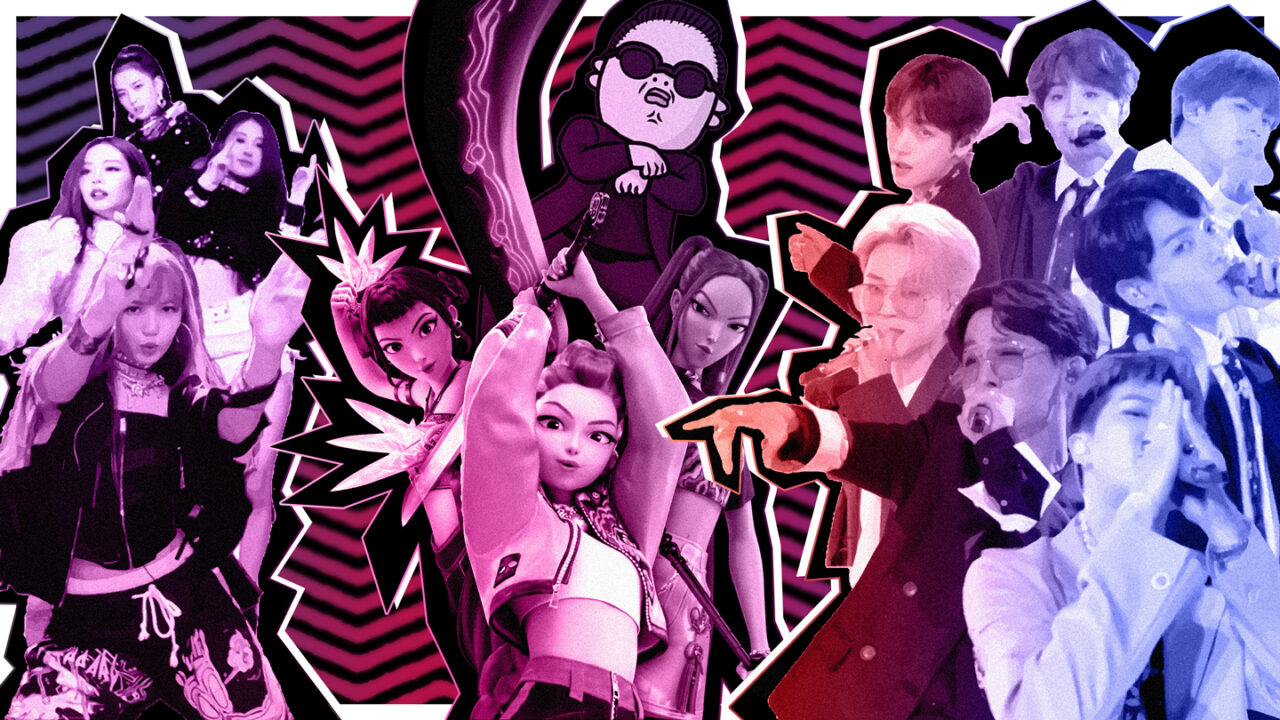

K-Pop (Korean Pop) has grown from a regional music scene into one of the most influential forces in global pop culture. What once seemed like a niche genre is now dominating streaming platforms, social media feeds, and international charts. From viral TikTok dances to sold-out world tours, K-Pop continues to expand its reach in Europe, the United States, and beyond.
But how did it all start?
Let’s take a closer look 👇
The Origins of K-Pop
To understand K-Pop, we need to go back to 1992, when a three-member group called Seo Taeji and Boys performed on a South Korean television talent show.
Their performance blended Korean lyrics, hip-hop, rap, Western pop influences, and synchronized choreography – something that was almost unheard of in South Korea at the time. The judges were unimpressed and gave them low scores.
The audience, however, loved it.
Their song “I Know” went on to dominate the Korean charts for 17 weeks, laying the foundation for a completely new music industry. Entertainment companies soon realized the potential of combining music, dance, visual storytelling, and strong artist branding. From that moment on, the modern K-Pop system began to take shape.
Today, K-Pop is not only a cultural phenomenon but also a major economic force. The industry generates billions for South Korea through music sales, touring, merchandising, and global partnerships.
The Viral Moment That Changed Everything
K-Pop then slowly started to set the bar in South Korea and adjacent countries, while the world pretty much ignored its existence for almost two decades – that’s up until when a certain guy sang a certain song with a bizarre horse-riding dance… we’re talking about PSY’s GANGNAM STYLE, one of the biggest hits the world has ever seen (including breaking several records on YouTube as well, such as amassing billions of views for the first time in internet history). PSY’s success not only showed the world how much power the Korean music market had and how little people cared about the language sung in a song, but also that it was possible to impose and create something completely new and succeed, without “copying” pre-existent formats: PSY wasn’t a “Koreanized” version of a US popstar, it was just… PSY.
The appeal of K-Pop was simple yet hard to replicate: having choreographed dances while singing isn’t exactly new in music (many pop stars used to do that in the ’90s), but the extreme dedication to the show and the visual aspect and utter perfection of movements was something that western culture wasn’t really used to: the cultural impact of a lifestyle that’s very much oriented to reaching perfection made its way into mainstream music.
Bear in mind that GANGNAM STYLE isn’t just a fortunate song turned into a hit by luck: it’s an extremely well crafted pop song, polished and produced by smart minds and manufactured to stick in your head from the first moment you hear it: it’s one of the many successful products of The Hit Factory, and we’re not referring to the recording studio where The Stooges recorded their songs 😉

Fun fact: PSY actually has a statue in Seoul’s Gangnam district. It was installed to celebrate the massive global impact of Gangnam Style, the 2012 hit that brought unprecedented international attention to South Korea and helped turn Gangnam into a worldwide cultural reference. The statue features the song’s iconic crossed-wrist dance pose, inviting visitors to step in and recreate the famous move themselves. 🎶🕺
The Global Explosion: BTS (방탄소년단) takes over
After PSY opened the door, a wave of artists quickly followed and brought K-Pop to international charts. One group in particular helped turn the genre into a global powerhouse: BTS (방탄소년단).
The seven-member group broke countless records, including:
- Multiple Billboard Hot 100 No. 1 singles
- Several Grammy nominations
- Sold-out stadium tours worldwide
- Billions of streaming fans
Their fanbase, known as ARMY, spans nearly every country on the planet.
But BTS are far from the only stars shaping modern K-Pop.
Some of the biggest global acts today include:
BLACKPINK – one of the most successful girl groups of all time, known for record-breaking tours and high-profile collaborations with global stars like Dua Lipa and Lady Gaga. Beyond their group success, the members have also built strong solo careers, releasing international hits and collaborating with major artists – such as ROSÉ’s global smash APT. with Bruno Mars.
Stray Kids – dominating global charts with their self-produced music and powerful performances
SEVENTEEN – praised for their complex choreography and songwriting
TXT (Tomorrow X Together) – known for experimental pop sounds and cinematic concepts
NewJeans – one of the most influential new-generation groups, redefining the sound of modern K-Pop
IVE, LE SSERAFIM, and aespa – leading the new era of girl groups
ATEEZ and ENHYPEN – rapidly growing international fanbases and global tours
KATSEYE – while not strictly a K-pop group, this global girl group was formed through a trainee-style program similar to the K-pop system. Because of that background and its connection to the Korean pop industry, the group has quickly gained strong popularity among K-pop fans worldwide.
Many K-Pop artists now headline major international festivals, collaborate with Western pop stars, and dominate streaming platforms like Spotify and YouTube.
A K-Pop song wins an Oscar!
K-Pop Demon Hunters – the animated musical fantasy became a global phenomenon, highlighting the growing cultural impact of K-pop. The Netflix film follows Huntrix – Rumi, Mira, and Zoey – a world-famous K-pop girl group who secretly protect the world as demon hunters. After becoming Netflix’s most-watched film of 2025, the movie capped its record-breaking run by winning the Academy Award for Best Animated Feature. Its soundtrack also gained huge recognition, especially the song Golden, which was nominated for Best Original Song and won multiple major awards, including a Golden Globe, Critics Choice Award, and a Grammy – marking the first time a K-pop song won in the category for Best Song Written for Visual Media. Directed by Maggie Kang and Chris Appelhans and animated by Sony Pictures Animation, the film’s success further cemented the global reach of K-pop culture.
The Unique Training System Behind K-Pop
One of the most distinctive aspects of K-Pop is its training system.
Many idols begin their journey as trainees in entertainment agencies, often auditioning in their early teens. Companies such as HYBE, SM Entertainment, YG Entertainment, and JYP Entertainment recruit young performers and train them for years before they debut.
Training usually includes:
- Vocal coaching
- Dance and choreography
- Acting and stage performance
- Language lessons
- Media and interview training
Some trainees practice for several years before debuting, and there is no guarantee they will ever become part of a group.
This intense system has produced some of the most polished performers in the music industry, known for flawless choreography, strong visuals, and carefully crafted stage productions.
However, the system has also faced criticism for its demanding schedules and pressure on young artists. In recent years, there has been greater awareness around mental health and artist welfare, and many companies have begun implementing improved support systems for performers.
Why K-Pop Works
K-Pop’s success comes from a powerful combination of factors:
1. Performance and Visuals
K-Pop concerts and music videos are highly choreographed, visually striking productions.
2. Fan Engagement
Artists interact heavily with fans through livestreams, social media platforms, and fan communities.
3. Global Accessibility
Streaming platforms and social media have made it easier than ever for fans around the world to discover new music.
4. Creative Concepts
Each comeback often comes with a new visual concept, storyline, and aesthetic.
The result is a genre that feels constantly fresh and evolving.
Final thoughts
K-Pop has grown into one of the most fascinating music movements of the modern era. What started as a small cultural shift in South Korea has become a global entertainment powerhouse influencing fashion, dance, social media, and music worldwide.
Behind the polished performances and colorful visuals are artists who dedicate years to mastering their craft. Exploring music from different cultures is always enriching, and K-Pop has proven that great music can cross any language barrier.
Whether you’re a casual listener or a devoted fan, one thing is certain: K-Pop isn’t just a trend anymore: it’s a permanent part of global pop culture.
What do you think of K-Pop? Do you listen to it? Let us know with a comment!














Comments 9