


Mooer Micro Looper II

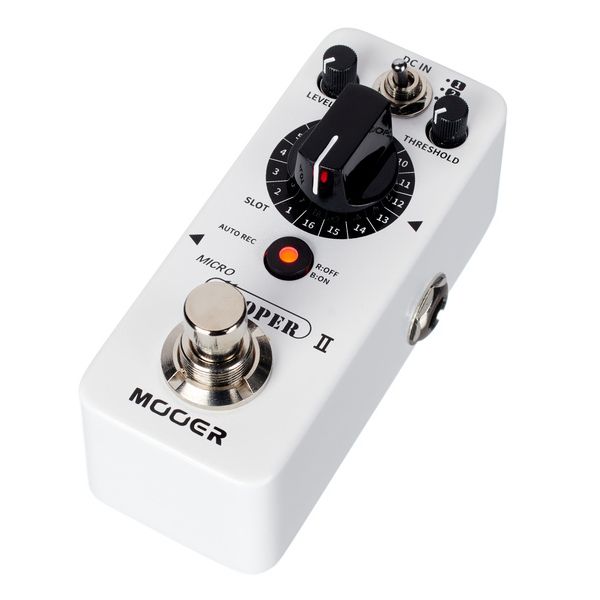
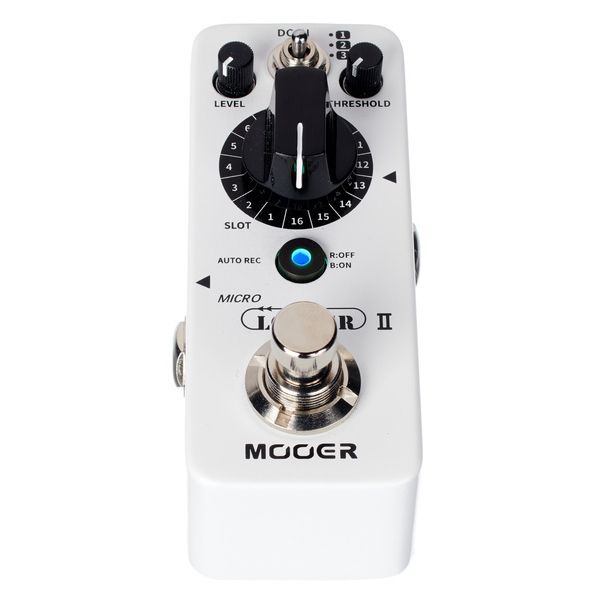
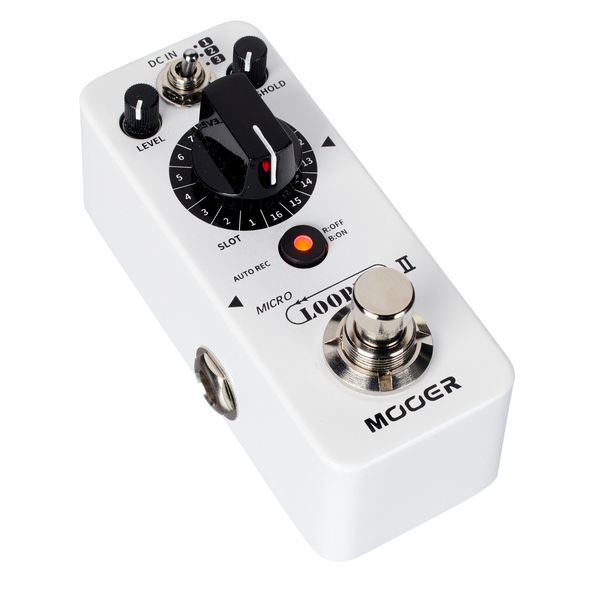
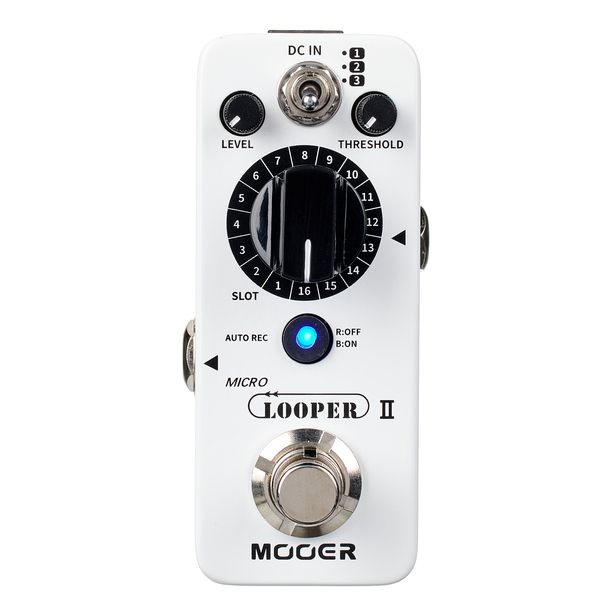


Effects Pedal
- Looper
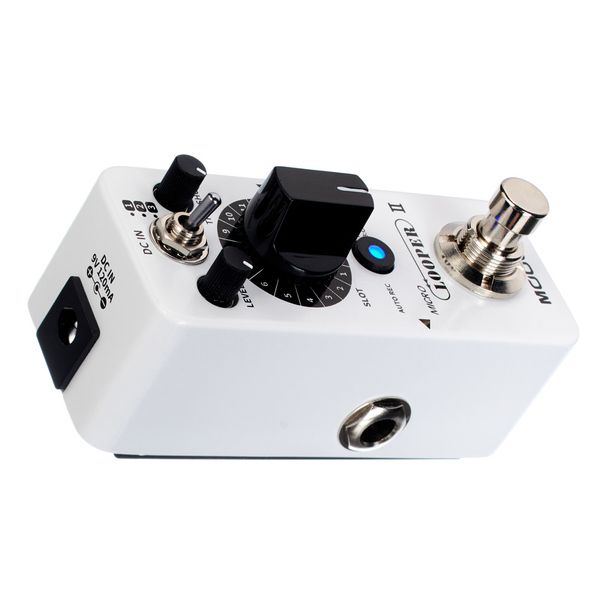
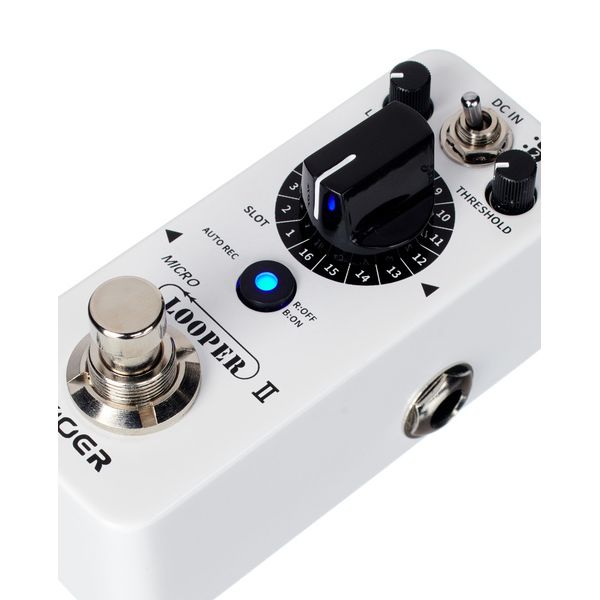
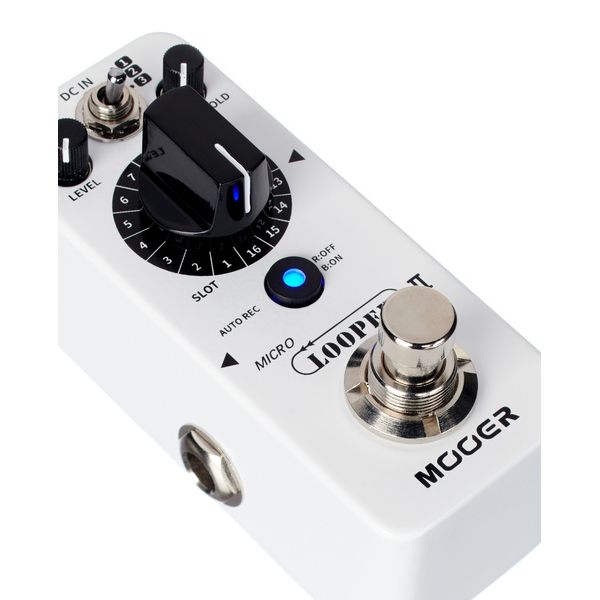
- 3 Memory banks with 16 slots per bank
- 480 Minutes total recording time (10 minutes per slot)
- Auto record function starts recording automatically when input signal is detected
- Unlimited number of recording layers
- Level, Threshold and Slot controls
- Auto Rec on/off push button
- Digital bypass
- Status LED
- Bypass footswitch
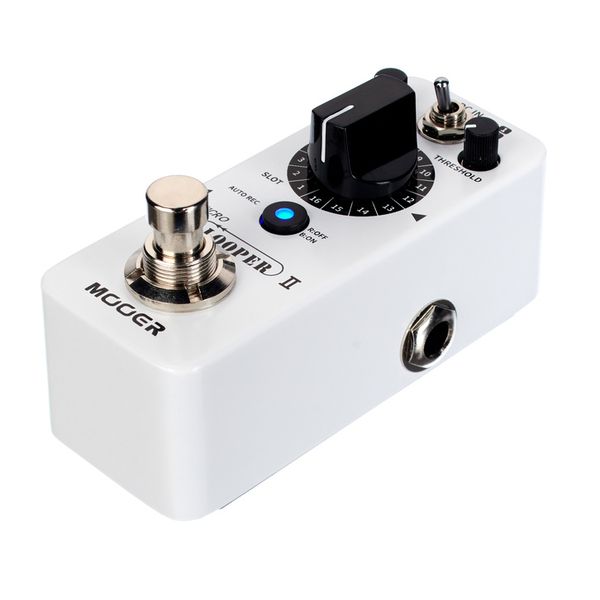
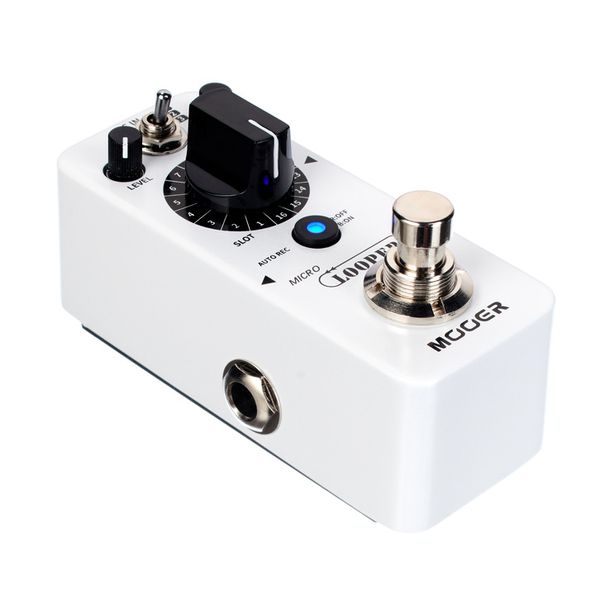
- Input: 6.3mm jack
- Output: 6.3mm jack
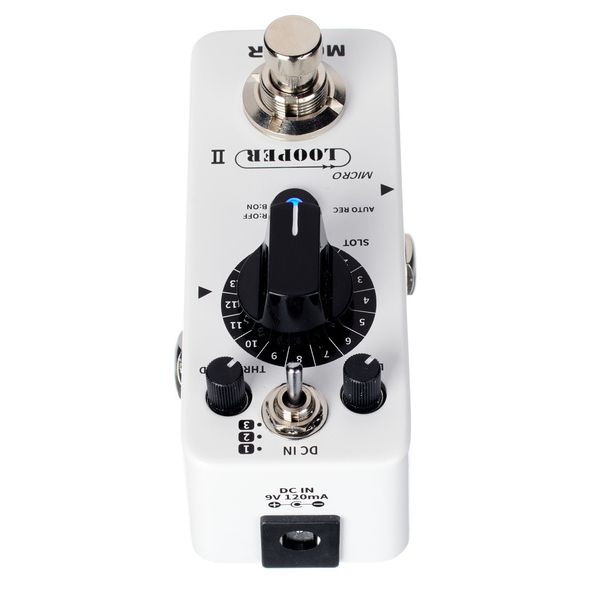
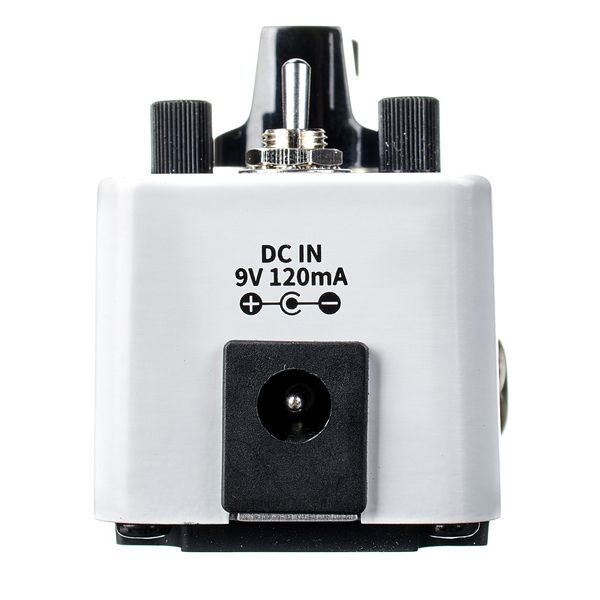
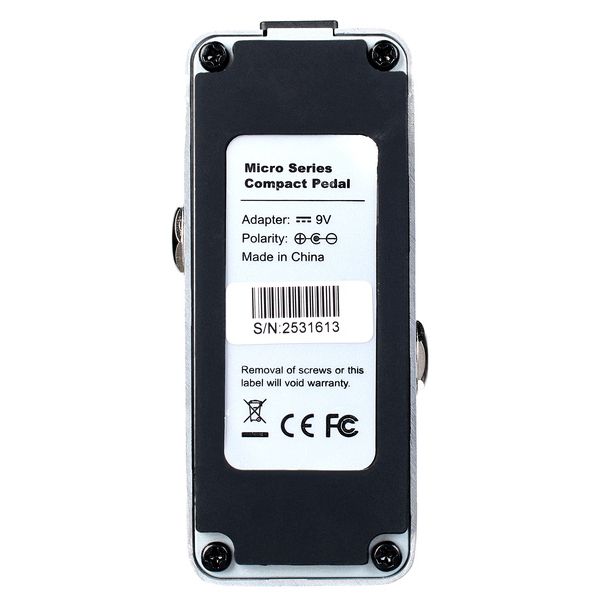
- Mains adapter connection: Barrel socket 5.5 x 2.1 mm, centre negative
- Power supply via 9 V DC power supply (not included, suitable power supply: Art. 409939)
- Power consumption: 120mA
- Metal housing
- Dimensions (L x W x H): 93.5 x 42 x 52 mm
- Weight: 157g
Note: Battery operation is not supported.
Note: Register your product at www.w-distribution.de/Warranty and extend the guarantee to 4 years.
-
Available since June 2023
-
Item number 568108
-
Sales Unit 1 piece(s)
-
Recording time in minutes 10 m
-
USB connector No
-
MIDI No
-
Stereo No
-
XLR Input No
-
Incl. Power Supply No
Mini looper with plenty of memory
The Mooer Micro Looper II is a compact pedal that allows musicians to create rich soundscapes with ease or craft backing tracks for practising tricky solo passages. Essentially, a looper pedal like the Micro Looper II functions as a specialised recording device, letting users record and layer phrases or loops in real time. This model provides 48 storage slots, with each slot offering up to 10 minutes of recording time. While the central footswitch handles recording and playback functions, as is typical with loopers, the Micro Looper II also includes an automatic recording feature, allowing loops to begin as soon as an input signal is detected.

)
Ready, set, play!
Operating the Mooer Micro Looper II is extremely straightforward, with every function clearly represented by a dedicated control. The LED light offers visual feedback: Red signals either recording or overdubbing, while blue indicates playback. If the LED is off, the selected slot is empty. The LED also serves as a button to activate the auto-record function, which starts recording when the input jack detects a signal. The threshold dial determines the required volume for triggering this feature, with a good starting point at around 11 o'clock; for high-gain sounds, the threshold may need to be adjusted to around 3 o'clock or higher. The volume balance between playback loops and the guitar signal can be controlled via the level dial.
)
For fans of simplicity
The Micro Looper II is ideal for anyone who finds multi-channel loopers overly complicated and prefers a more intuitive approach. The learning curve is minimal, allowing users to focus on creativity. Presets are organised across three banks, each containing 16 slots, and bank selection is controlled by a small toggle switch. In total, the Micro Looper II offers up to 480 minutes (that's eight whole hours!) of looping capacity. Loops are preserved in high fidelity thanks to its 44.1kHz, 24-bit studio-quality AD conversion, and the pedal's compact design is so small that the jacks are staggered to fit. Battery operation is not supported, but the looper can be run on a standard 9V/DC power supply, with a modest power consumption of 120mA.
)
About Mooer
Mooer is based in the Chinese city of Shenzhen and has been making products for guitarists since 2010, which include compact single pedals through to multi-effects units and compact amplifiers. The company initially produced a range of mini pedals before making perhaps its most significant breakthrough in 2016 with the sophisticated Ocean Machine delay pedal, which was designed in collaboration with Devin Townsend. Mooer's product range now also includes solutions that feature amp modelling, IR-based speaker simulation, and matching equalisers, and the company's focus remains firmly on the use of digital technology.
Practise, compose, arrange and perform
Though the Micro Looper II may seem small and unassuming, it will play a significant role in a musician's daily routine. Practising with a metronome isn not always inspiring, but loading up one's favourite riffs into the looper can make a huge difference, providing backing tracks with which to rehearse solos. It is also highly useful for composing and arranging, especially for trying out two-part guitar harmonies. And, of course, solo performers can use it to create expansive soundscapes in live performances. For gigs, the looper's memory slots are particularly valuable, allowing loops to be pre-recorded in advance. And it is not just for guitarists: The Micro Looper II can handle drum loops or even full backing tracks from a computer (albeit in mono).