


Drawmer OC1 Opto Compressor

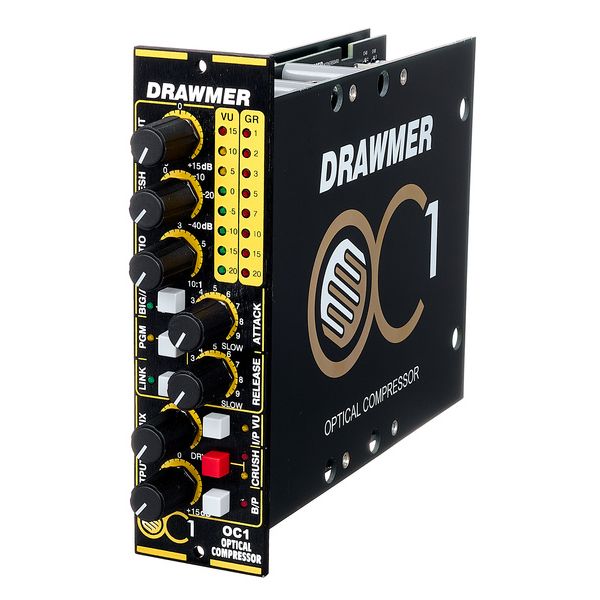
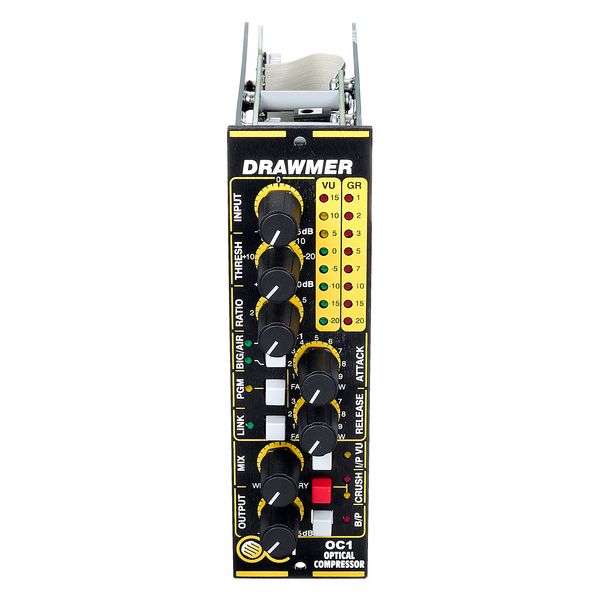
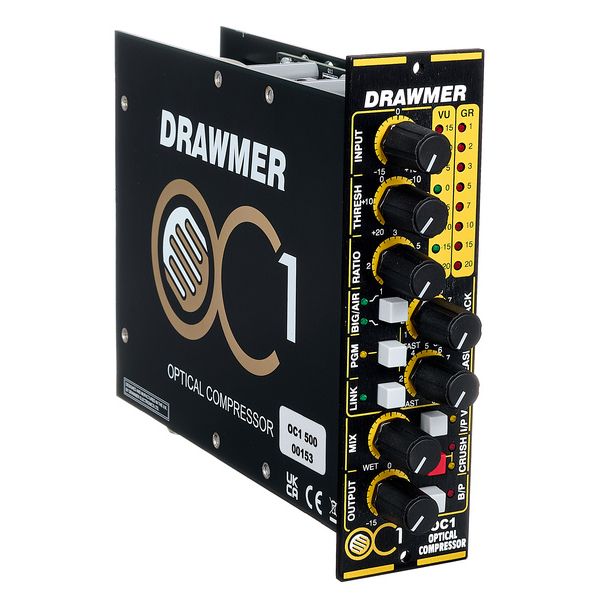
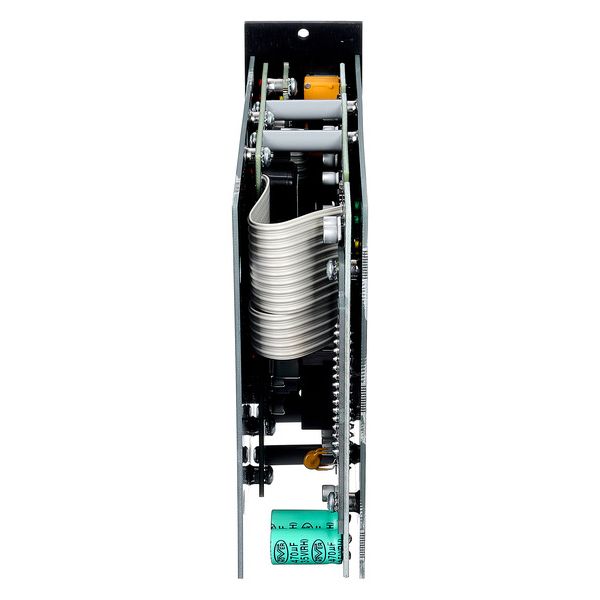


Optical Compressor
- Classic optical compressor in 500-series module format
- Soft-knee characteristic for natural and musical compression
- Stepped potentiometers
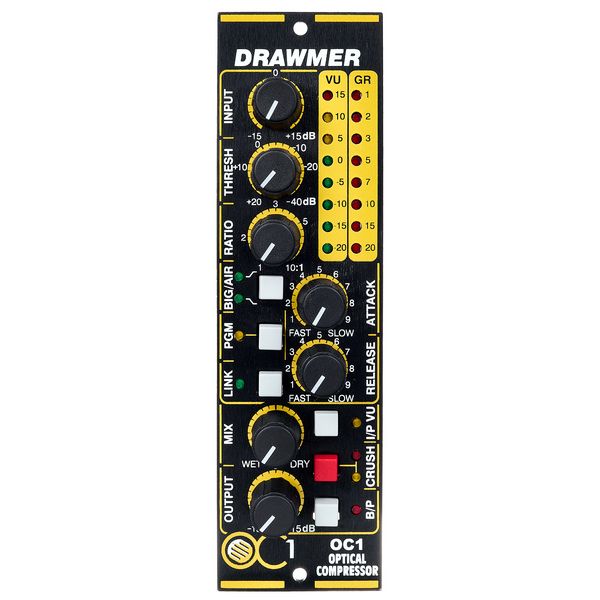
- BIG and AIR modes for boosting low frequencies and enhancing clarity in the high-frequency range
- Side-Chain-Link (via Pin 6)
- Built-in CRUSH function for harmonic saturation and a warmer sound
- Wet/Dry mix for parallel compression
- True Bypass
- Dimensions (W × H × D): 38 × 135 × 150 mm
- Weight: 0.38 kg
- Requires 1 500 Series slot
-
Available since July 2026
-
Item number 649142
-
Sales Unit 1 piece(s)
-
Pre-Amp No
-
48 V Phantom power No
-
compressor Yes
-
limiter No
-
equalizer No
-
De-Esser No
-
other processors No
-
Rack/Frame No
-
supplies No
Opto compression with a softer transition
The Drawmer OC1 Opto Compressor is a fully featured mono compressor in the 500 Series lunchbox format, available at a remarkably accessible price. Occupying a full-width module slot, it is based on a feedback soft-knee circuit and uses a natural-sounding optical gain-control element with a smooth, forgiving response. This is complemented by a soft transition around the threshold region, helping the compression to engage gradually and musically. Thanks to its programme-dependent behaviour, the OC1 responds very organically to musical input. A dedicated Dry/Wet control also enables parallel compression directly within the unit. Beyond that, the two functions Big and Air are designed to provide a fuller low-end foundation and greater transparency, respectively, while the Crush function introduces additional harmonic content for extra warmth and character.

)
Comprehensive feature set
The specific strengths of the Drawmer OC1 make it especially well suited to working with vocals and acoustic instruments, where it adds density, warmth, and cohesion while maintaining a transparent sound. Control is provided via seven 21-position stepped knobs for Input, Output, Mix, Threshold, Ratio, Attack, and Release, alongside six buttons for Big/Air, PGM, Link, I/P VU, Crush, and Bypass, allowing for extensive configuration options. External sidechain operation is also supported. The Mix control makes it possible to define the balance between the dry and compressed signals, allowing more assertive compression settings to be blended in parallel. Finally, a Link function allows multiple modules to be combined into stereo or multichannel configurations, with the Threshold, Ratio, Big, and Air parameters linked between units.
Punch and personality
First and foremost, the Drawmer OC1 delivers exactly the sound that a full-on opto compressor should: Musicality, transparency, warmth, and a calm sense of balance are at the heart of its design. Thanks to the stepped controls, settings can be reproduced accurately by hand whenever required. The Link function also extends its usefulness beyond individual sources, allowing stereo signals and subgroups to benefit from the same balanced characteristics that make opto compression so appealing. Both the core circuit and the Big, Air and Crush voicing options contribute to a cohesive sound. The effect is a subtle enhancement that adds density without compromising the source's original character. For situations where additional presence is required, the Crush function can introduce harmonic saturation, helping sounds cut through a mix more effectively. The dedicated Bypass button makes rapid comparisons easy by completely removing the circuit from the signal path.
)
)
About Drawmer
Drawmer is a British manufacturer of professional audio equipment, founded by Ivor Drawmer in 1982. The company's debut product was the DS201, the world's first frequency-conscious noise gate, which remains in production to this day – in fact, all Drawmer products continue to be designed and manufactured in South Yorkshire. Drawmer's innovative circuit designs combine classic analogue technology with practical, engineer-focused functionality. The product range includes compressors, equalisers, microphone preamps, monitor controllers and signal processors for studio, live sound and broadcast applications. Products such as the 1960 channel strip (which combined two preamps, a tube compressor and a DI box, and was used by renowned artists including Paul McCartney, Eric Clapton, Madonna and Stevie Wonder) remain a fixture in many professional production environments.
So many ways to shape the sound
With variable attack and release controls, the Drawmer OC1 can be matched precisely to the incoming signal. Alternatively, the PGM mode can take over automatically, helping to prevent unwanted "pumping"during heavier compression. Either way, producers can monitor their input levels and gain reduction on the clear front panel. The Big and Air functions are derived from Drawmer's three-band 1973 compressor: Big works by reducing detector sensitivity in the low frequencies, allowing the bass range to remain more prominent, creating additional weight, reducing unwanted pumping, and contributing to a more natural compression response. The Air function serves to restore high-frequency content that may be diminished during the compression process, bringing back openness and clarity. This is especially useful for improving lyrical intelligibility and for preserving the brightness and impact of cymbals.
In the spotlight
API 500 Series
The modular 500 Series format was developed by API (Automated Processes, Inc.) in the late 1960s. It allowed the company to license its circuit designs to other manufacturers, who then integrated them into their own mixing consoles. The modules were subsequently used in API's own consoles as well. In 1999, API introduced the Lunchbox concept, making it possible to use tried-and-tested console circuitry independently of a mixing desk, simply by mounting modules in a portable rack frame. In 2006, the company made the format open to other manufacturers through the VPR Alliance specification, which meant they could develop further compatible modules and racks. Today, a wide range of companies offer studio equipment in the 500 Series format. Alongside Drawmer, these include AMS Neve, Chandler Limited, SSL, Heritage Audio, and many others.
)