


Conductive Labs MRCC

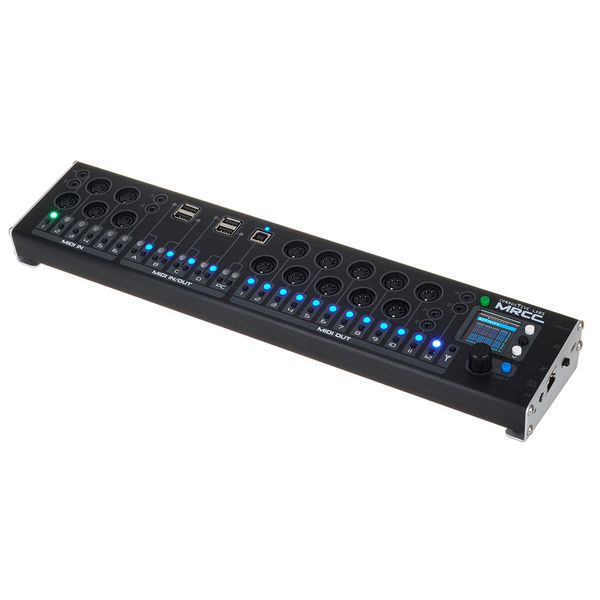
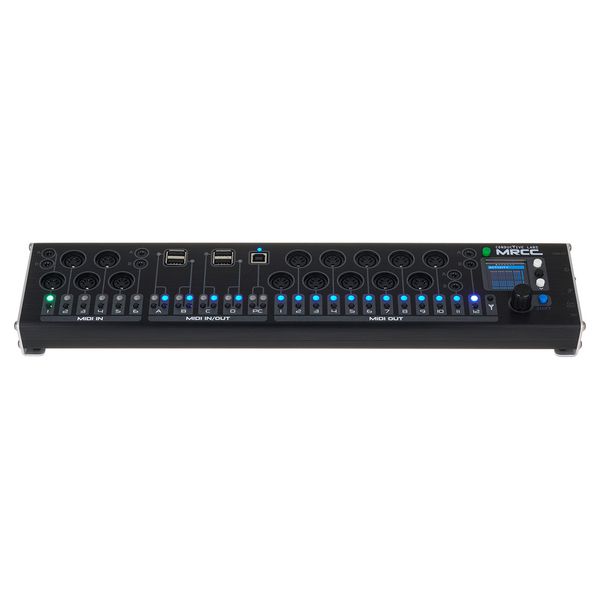
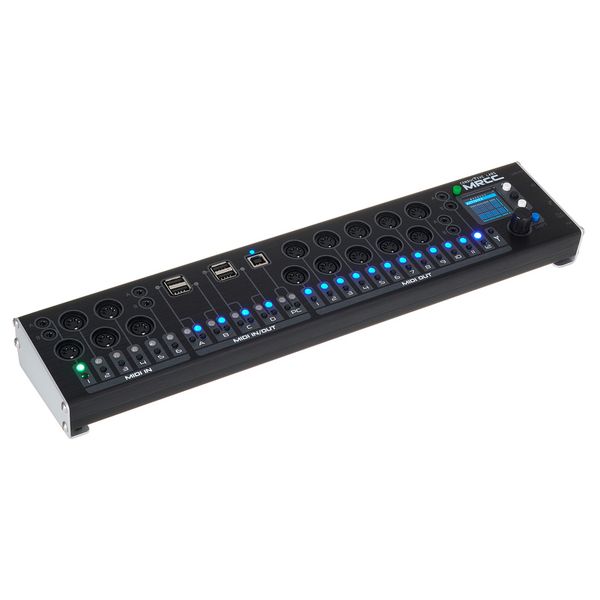
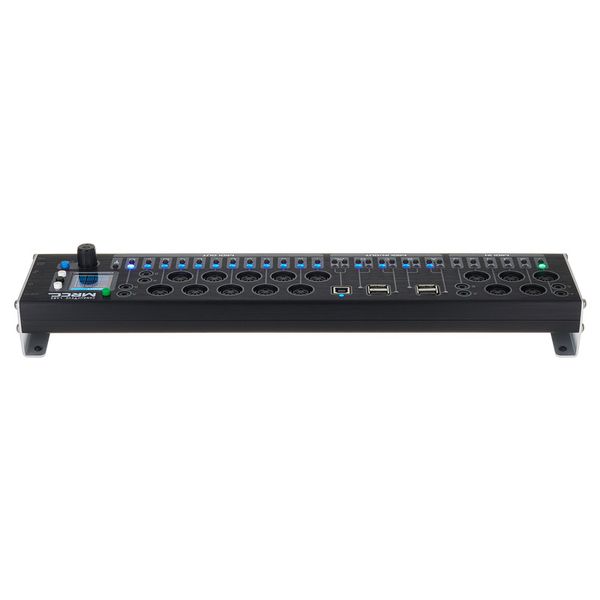
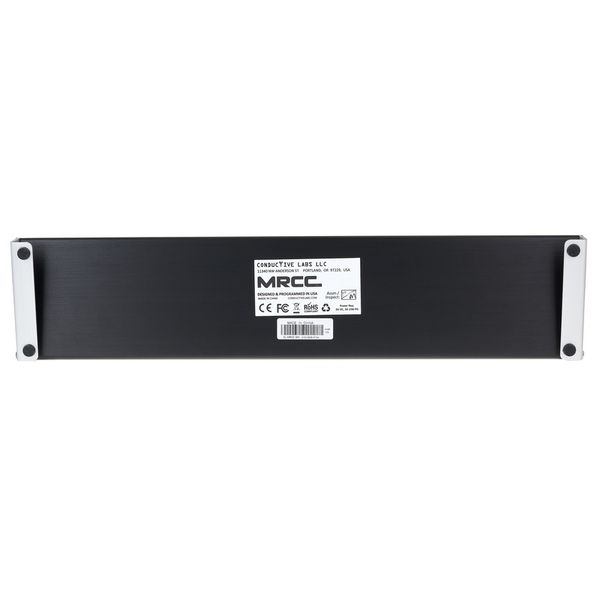
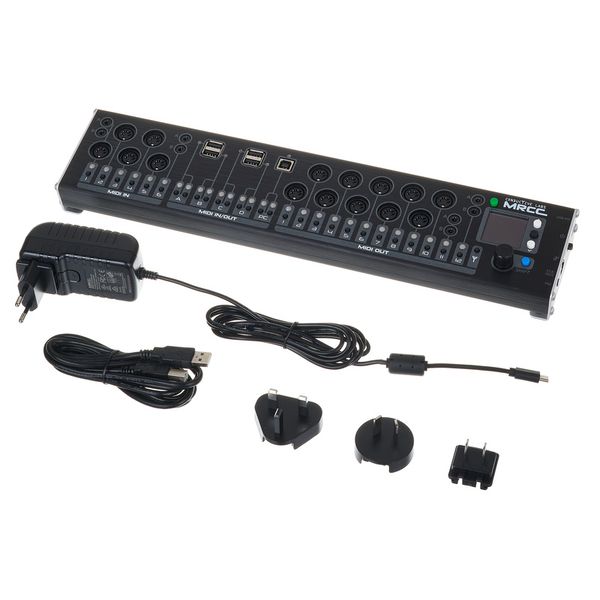


MIDI Router Control Center
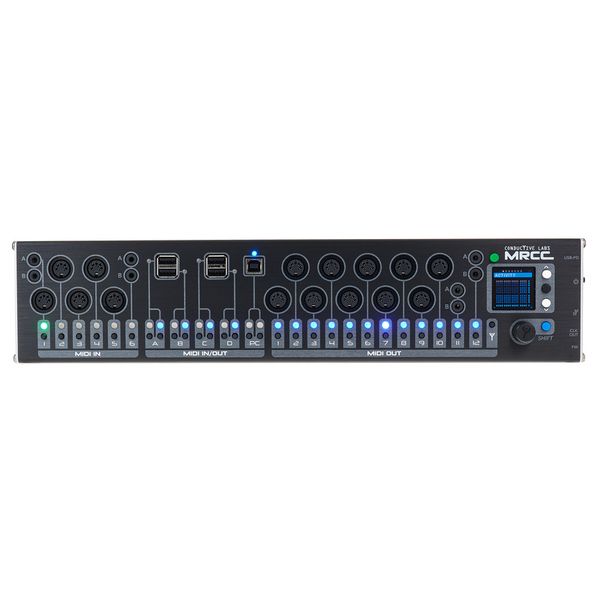
- An extensive stand-alone MIDI router, USB host and USB MIDI interface
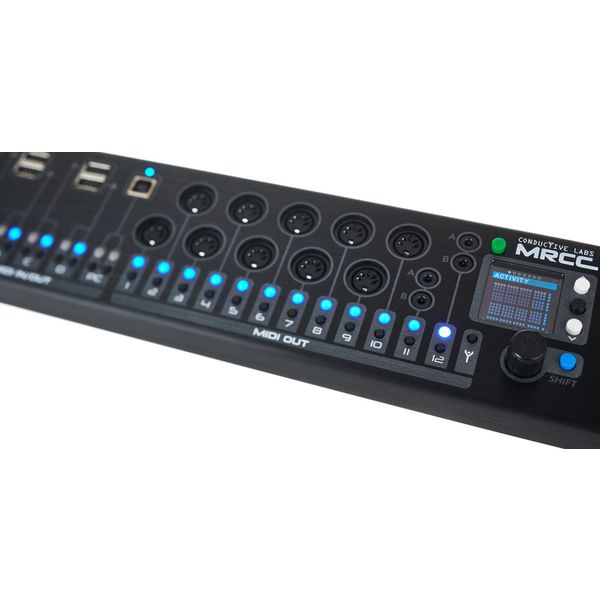
- Comfortable programming of all settings on the unit possible via buttons, 1.5" OLED display and encoder (no PC required)
- Any connections between all MIDI inputs and outputs possible as well as transpose, create splits and layers, merge, split, map and filter (clock, note, CC, prog change, stop/start/continue)
- MPE support
- 6 Independent arpeggiators
- Internal clock generator
- MIDI message monitor and matrix routing monitor
- 127 Presets can be stored
- Functions as a class-compliant USB MIDI interface
- SysEx support available for MIDI outputs 1-6, USB host ports and PC port
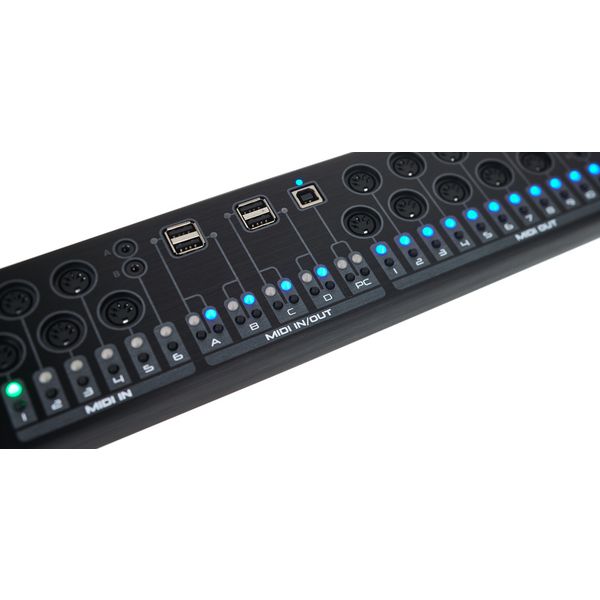
- 6 MIDI inputs (5-pin DIN and 3.5 mm TRS A/B)
- 12 MIDI outputs (5-pin DIN and 3.5 mm TRS A/B)
- 4 USB host ports (type A) for keyboards, sequencers, controllers and other devices
- 1 PC port (type B) with 12 virtual MIDI in/out ports
- Analogue clock output (3.5 mm jack)
- MRCC remote connection
- Power supply possible via USB-C port (external power supply included)
- Dimensions (W x D x H): 387 x 88.9 x 38.1 mm
- Suitable accessories (not included in the delivery): MRCC 2U Rack Ears (art. 535429), MRCC Remote 7 (art. 535430)
-
Available since February 2022
-
Item number 535428
-
Sales Unit 1 piece(s)
-
Amount Of Inputs 6
-
Amount Of Outputs 12
-
SMPTE Timecode No
-
Midi Thru Yes
-
MIDI Merge Yes
-
MIDI Controller Yes
-
MIDI Converter / Interface Yes
-
DAW-free MIDI routing
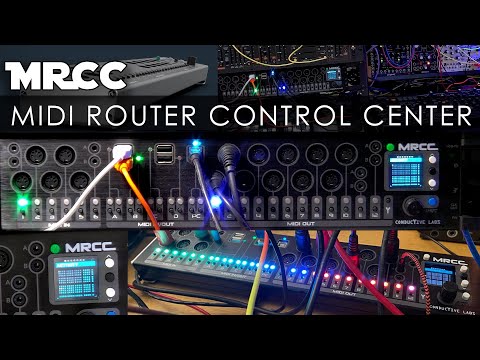
The MRCC is the second product developed by the US-based company Conductive Labs and offers considerably more than straightforward MIDI routing. Alongside its versatile, programmable routing capabilities, it can generate sequences using six independent arpeggiators, making it a comprehensive control centre for DAW-free setups. One of its most notable features is the ability to configure the system without a computer, using the buttons assigned to its eleven MIDI inputs and 17 outputs together with the OLED display. Automatic merging, filtering, MIDI effects, and MIDI message monitoring round out the feature set, providing flexible and reliable control over MIDI data in a wide range of setups.
)
Flexible inputs and outputs
All MIDI cables for the inputs and outputs can be connected conveniently on the front panel of the Conductive Labs MRCC. Four USB Type-A ports are also provided for connecting keyboards, sequencers, and other MIDI controllers, while an additional USB Type-B port allows the unit to receive MIDI data from a DAW via 12 virtual inputs, each supporting up to 16 channels for a total of 192 MIDI channels. All of the MRCC's inputs and outputs can be assigned to multiple destinations, and two inputs can also be routed to a single output when channels need to be combined. The unit can additionally generate an analogue clock signal at various PPQN (pulse per quarter-note) rates, with selectable 5V or 12V output levels.
)
Control centre for large setups
Conductive Labs has designed the MRCC primarily for electronic musicians working with larger hardware-based setups, offering a compact format that fits easily onto a studio desk or stage. It provides reliable and flexible MIDI routing between connected devices, while users who need additional outputs can expand the system with the optional MRCC Remote 7 via a 10-metre CAT6A Ethernet cable, although the extra outputs do not support SysEx data. Power is supplied through a USB Type-C port on the right-hand side, which also provides the connection for the MRCC Remote 7. Up to 127 presets can be stored in the MRCC and recalled on the fly, with an optional keyboard allowing users to assign names to them.
)
About Conductive Labs
The US company Conductive Labs, based in Portland, Oregon, was founded in 2017 by two former Intel employees, Darryl and Steve, who got their first two products funded through a Kickstarter campaign. These include The NDLR, a hybrid sequencer and arpeggiator that is designed to control multiple synthesizers while maintaining key and mode. Also in the range is the MRCC – a MIDI router that eliminates the need for a computer in a synthesiser-only setup. The company is also active in the field of wavetable synthesizers and multitrack sequencers for hardware-based MIDI/CV controllers.
Intuitive MIDI data filtering
The MRCC allows specific types of MIDI data to be filtered out using freely configurable data filters, including clock messages, Note-On/Off commands, program, changes and playback control messages. This helps ensure that connected hardware receives only the MIDI information it needs, while velocity values and CC commands can also be modified within the router. Velocity can be compressed, expanded, or limited using upper and lower thresholds, whereas CC values can be scaled as required. Keyboard splits can be layered across different channels, including overlapping ranges, while the six integrated and highly configurable arpeggiators generate note patterns that can be assigned to any output in six modes: Up, Down, Ping-Pong Inclusive, Ping-Pong Exclusive, Order, and Shuffle.
