
1

4.6 out of 5 stars from 2726 customer ratings
€89

4.6 out of 5 stars from 2726 customer ratings

4.7 out of 5 stars from 345 customer ratings

4.7 out of 5 stars from 118 customer ratings

4.9 out of 5 stars from 47 customer ratings

4.9 out of 5 stars from 86 customer ratings

4.6 out of 5 stars from 317 customer ratings

4.6 out of 5 stars from 57 customer ratings

4.8 out of 5 stars from 53 customer ratings

4.7 out of 5 stars from 385 customer ratings
4.7 out of 5 stars from 345 customer ratings

4.7 out of 5 stars from 16 customer ratings
4.6 out of 5 stars from 317 customer ratings
4.8 out of 5 stars from 53 customer ratings

4.8 out of 5 stars from 35 customer ratings
4.9 out of 5 stars from 86 customer ratings

5 out of 5 stars from 3 customer ratings

4.9 out of 5 stars from 192 customer ratings
4.7 out of 5 stars from 385 customer ratings

4.8 out of 5 stars from 156 customer ratings

4.6 out of 5 stars from 42 customer ratings

4.5 out of 5 stars from 1420 customer ratings

4.6 out of 5 stars from 1713 customer ratings
4.9 out of 5 stars from 47 customer ratings

4.7 out of 5 stars from 91 customer ratings

4.8 out of 5 stars from 29 customer ratings

4.3 out of 5 stars from 1443 customer ratings

4.7 out of 5 stars from 75 customer ratings

4.6 out of 5 stars from 30 customer ratings

4.3 out of 5 stars from 74 customer ratings

4.7 out of 5 stars from 51 customer ratings

4.7 out of 5 stars from 64 customer ratings

5 out of 5 stars from 1 customer ratings

4.4 out of 5 stars from 56 customer ratings


4.6 out of 5 stars from 3 customer ratings

5 out of 5 stars from 1 customer ratings


5 out of 5 stars from 6 customer ratings


3.5 out of 5 stars from 2 customer ratings


5 out of 5 stars from 2 customer ratings

5 out of 5 stars from 1 customer ratings

5 out of 5 stars from 2 customer ratings

4.6 out of 5 stars from 2726 customer ratings

4.3 out of 5 stars from 35 customer ratings
5 out of 5 stars from 6 customer ratings

4.7 out of 5 stars from 168 customer ratings

4.6 out of 5 stars from 48 customer ratings

4.2 out of 5 stars from 105 customer ratings
4.9 out of 5 stars from 192 customer ratings
4.6 out of 5 stars from 1713 customer ratings
4.9 out of 5 stars from 47 customer ratings

4.8 out of 5 stars from 164 customer ratings
4.8 out of 5 stars from 156 customer ratings
4.7 out of 5 stars from 118 customer ratings

4.8 out of 5 stars from 71 customer ratings

4.7 out of 5 stars from 100 customer ratings

4.7 out of 5 stars from 502 customer ratings

4.4 out of 5 stars from 94 customer ratings
4.9 out of 5 stars from 86 customer ratings

4.6 out of 5 stars from 202 customer ratings
4.3 out of 5 stars from 74 customer ratings

4.7 out of 5 stars from 278 customer ratings
4.8 out of 5 stars from 29 customer ratings

4.8 out of 5 stars from 56 customer ratings
4.3 out of 5 stars from 1443 customer ratings
4.5 out of 5 stars from 1420 customer ratings


Users looking for an audio interface are sure to find what they are looking for in Thomann's extensive range, which includes interfaces for beginners, home recording and rehearsal room setups, and bedroom producers as well as for professional recording studios, content creators, and gamers.
The number and variety of audio interfaces available are virtually endless, so this guide has been designed to make the selection process easier. Those who want to explore the world of audio interfaces in more detail can also check out Thomann's online guide to audio interfaces. Customers who have any other questions can of course contact Thomann's Studio and Recording Equipment department by telephone at +49 (0)9546-9223-30 or by e-mail at studio@thomann.de. And just in case the product you opt for is not quite what you needed after all, Thomann also offers a 30-Day Money-Back Guarantee as well as a full 3-year warranty.

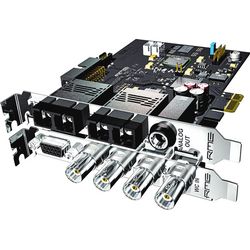
An audio interface is required whenever the user wants to route analogue signals into or out of their computer. When recording vocals, speech, or instruments, for example, the interface converts the audio signal into digital information and sends this to the computer, while digital signals coming from the computer are converted back to analogue, e.g. for monitoring via the connected speakers. Electronic circuits that are capable of converting analogue to digital and vice-versa in this manner are referred to as "AD/DA converters". Incidentally, the term "soundcard" also refers to a type of audio interface. The term stems from the fact that these used to be designed like a card that was installed inside the computer.
The majority of interfaces are connected via USB, and every modern computer - whether Apple Mac or Windows PC, desktop or laptop - also features USB ports. Alternatives such as Thunderbolt and Ethernet are generally only found on professional-level interfaces found in recording studios. Many USB interfaces come equipped with control software and drivers, or the user may receive a download link for specific software packages containing various audio programmes. What is more, the majority of interfaces do not require any drivers when used with a Mac.
No, this is not necessary, since USB microphones already have an integrated audio interface and can thus be connected directly to a computer - and this is of course a major advantage compared to stand-alone interfaces. When considering whether to buy a USB microphone or an audio interface with an analogue (XLR) microphone connection, users should note that the latter option is better, since this type of setup is much more flexible and can be expanded.
The number of interfaces that can be connected to an iPad is growing all the time. This sometimes requires an adapter, e.g. the Apple Camera Connection Kit, or the device may already come with a cable that has a Lightning connection. Audio interfaces for Android devices are harder to find, and the most important step is to check the compatibility between interface and tablet. If in doubt, Thomann's specialists are of course happy to provide assistance.
Audio interfaces are available with a single input (also known as a "channel" or "input channel") and a single stereo output, but models with eight or 16 input and output channels are also available. Microphones are one of the most frequently connected sources, so many interfaces accordingly have onboard mic preamps; synthesizers, drum machines, electric guitars and basses, and even effects units and mixing desks/DJ mixers can be connected to an audio interface and recorded to a computer. The audio interface's outputs are normally used to connect monitor speakers and headphones, in addition to which many interfaces also feature digital and MIDI connections, allowing keyboards, sound generators, effects units, mixing desks, and controllers to communicate with the computer.
It is not always necessary to have a separate monitoring controller to adjust the volume of the headphone or speaker output. However, a direct monitoring option is important when recording to a playback track from a computer, as this ensures that the line/microphone signal can be blended with the playback track with no time lag (know as "latency").
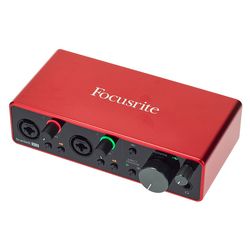
There is no single "best" audio interface, but everyone can certainly find the right one for their needs. For example, high-end interfaces are available from manufacturers like Apogee, Prism Sound, Metric Halo, and RME. More budget-friendly models are in turn available from the t. bone, IK Multimedia, Behringer, and many others, while brands like Focusrite and Universal Audio offer audio interfaces at multiple different price points. Popular manufacturers additionally include MotU, SSL, and Audient, to name just a few examples.