


Arturia MicroFreak

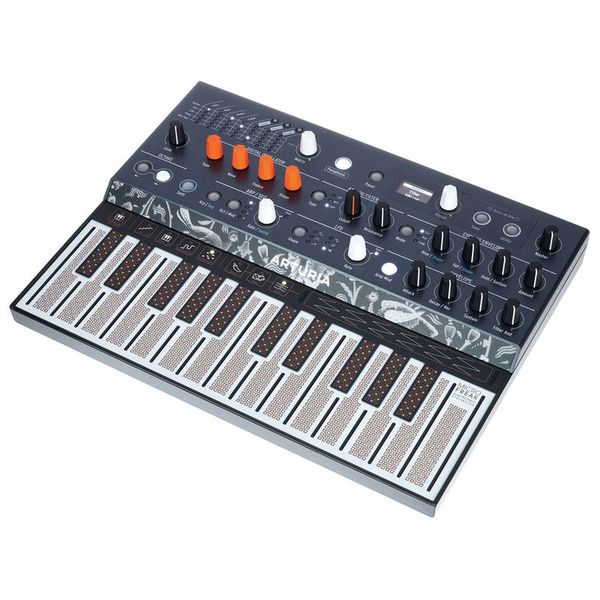
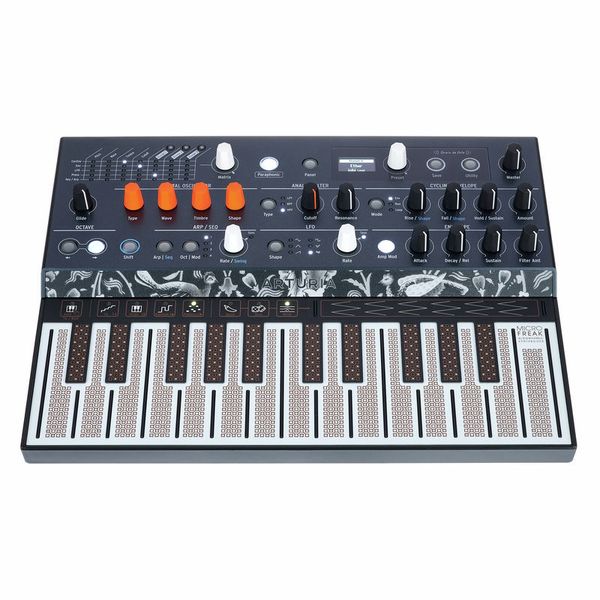
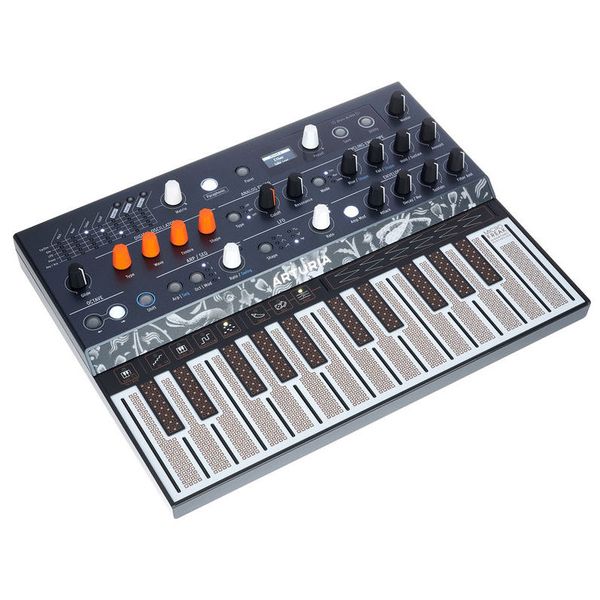



Hybrid Synthesizer
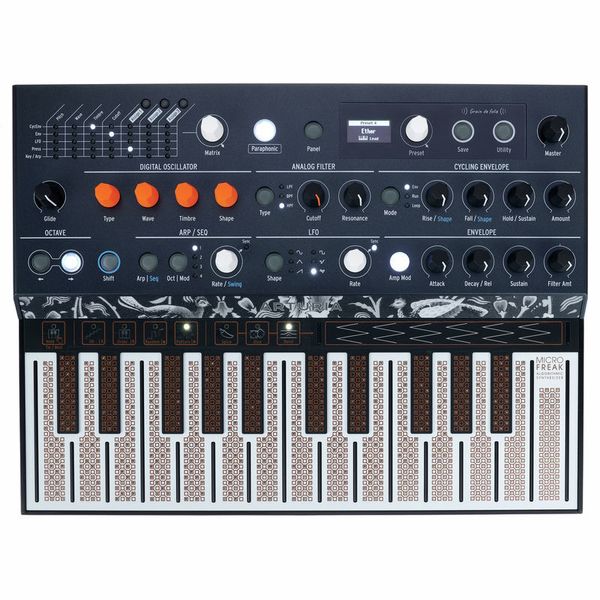
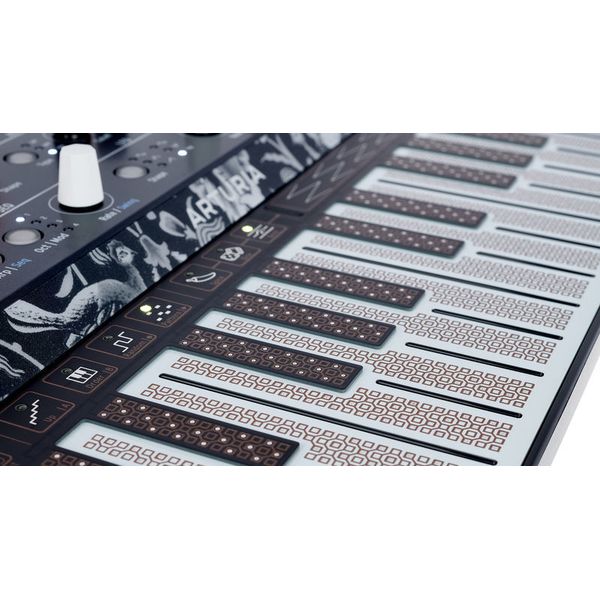
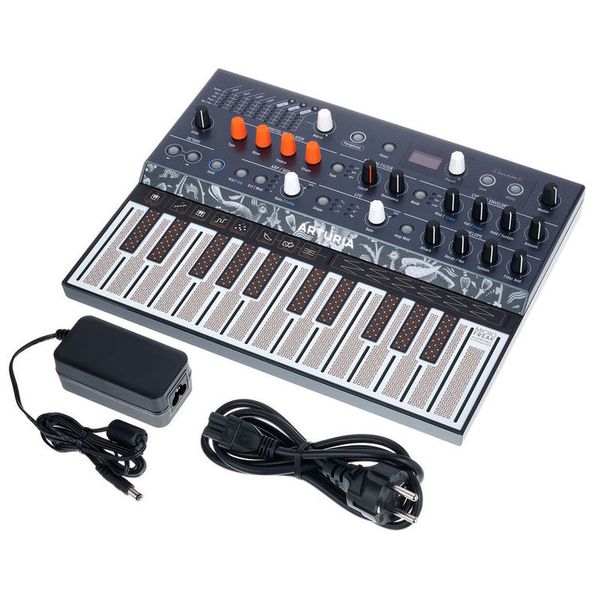
- Touch keyboard with 25 keys
- Velocity dynamic with polyphonic aftertouch
- Digital oscillator with synthesis methods like Karplus Strong, Harmonic OSC, Superwave and Texturer
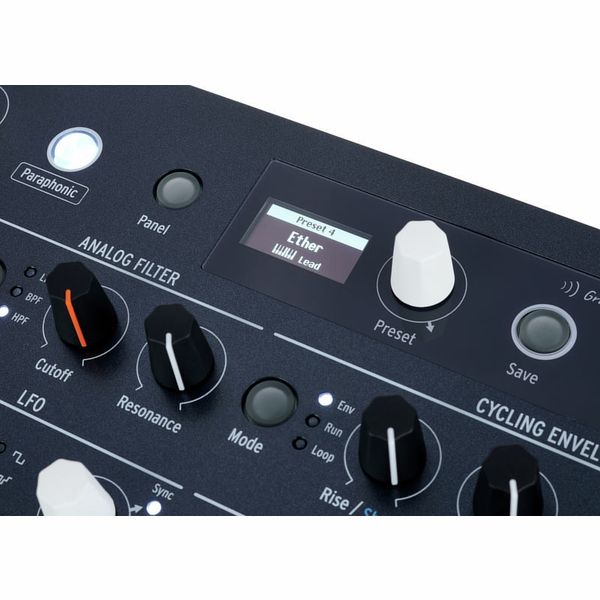
- Analog state variable filter (-12 dB/oct.) with selectable lowpass, bandpass and highpass characteristics
- LFO with 6 vibration modes
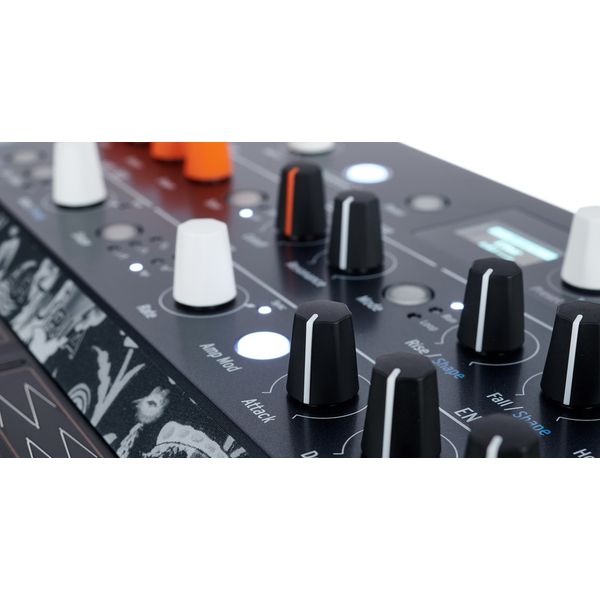
- 2 Envelope generators
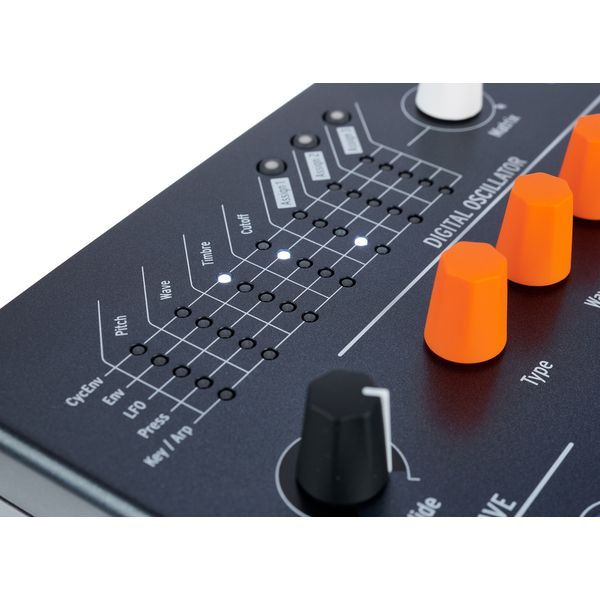
- Modulation matrix with 5 sources and 7 targets
- Arpeggiator
- Step sequencer with 4 automation tracks and random parameters
- Paraphonic mode
- OLED display
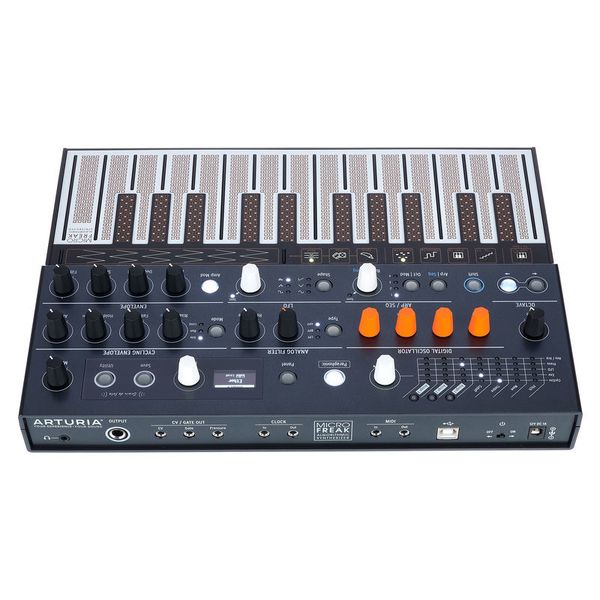
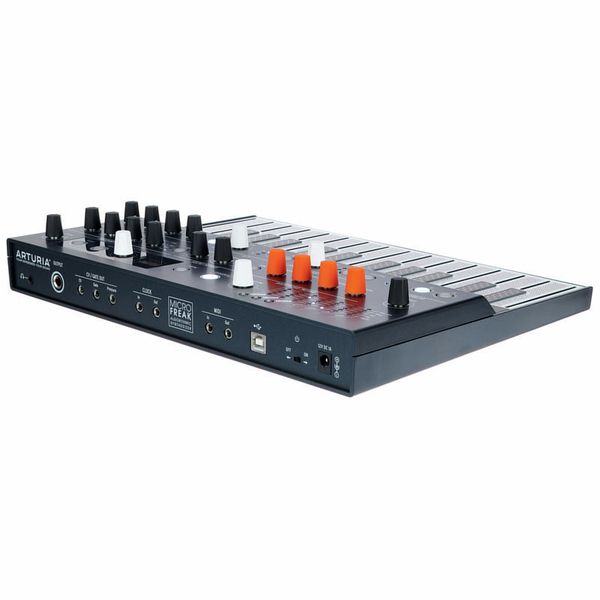
- Mono line output: 6.3 mm Jack (balanced)
- CV / Gate / Pressure Outputs: 3.5 mm Jack
- Clock In / Out: 3.5 mm Handle
- MIDI In / Out: 3.5 mm TRS jack
- USB port
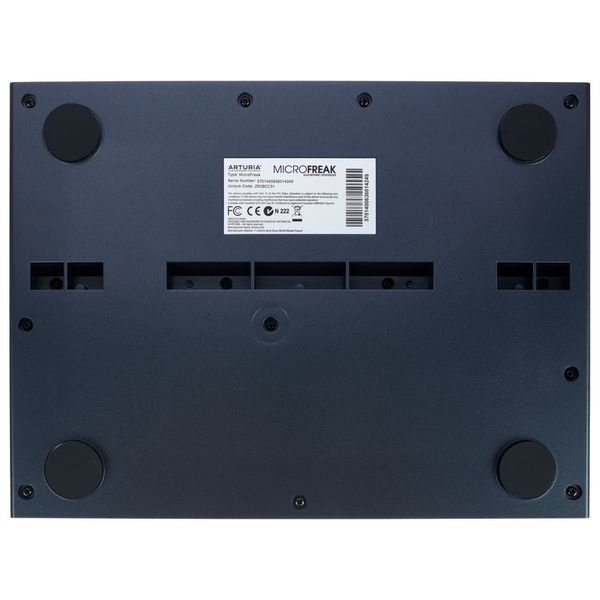
- Dimensions: 311 x 233 x 55 mm
- Weight 1.02 kg
- Includes 12V DC power supply unit
- Suitable bag: Article Nr. 485323 (not included)
-
Available since May 2019
-
Item number 457192
-
Sales Unit 1 piece(s)
-
Number Of Keys 25
-
Touch-Sensitive Yes
-
Aftertouch Yes
-
Split Zones No
-
Modulation Wheel No
-
Number of simultaneous Voices 1
-
Sound Engine Digital Analog Hybrid
-
MIDI interface 1x In, 1x Out
-
Storage Medium Internal
-
USB-port Yes
-
Effects 0
-
Arpeggiator Yes
-
Number of Analog Outputs 1
-
Digital Output No
-
Display Yes
-
Pedal Connections None
-
Dimensions 311 x 233 x 55 mm
-
Weight 1,0 kg
-

A hybrid oscillator laboratory
The Arturia MicroFreak is an unconventional hybrid synthesizer built for exploratory sound design and performance. At its core lies a versatile digital oscillator engine offering more than 17 oscillator modes – from virtual analogue and FM to wavetable, physical modelling, granular processing, and sample-based techniques – which feeds a resonant analogue SEM-style filter and is played via a distinctive capacitive keyboard. Positioned at the intersection of modular experimentation and compact hardware synthesis, the MicroFreak combines different sound generation techniques with an immediate, hands-on interface supported by a flexible modulation system and a powerful generative sequencer. MIDI, USB, clock, and CV connectivity allow it to operate equally as a creative sound design platform, controller, and sequencer within modern studio or modular environments.

)
Algorithms and architecture
MicroFreak's sound architecture centres on its multi-mode digital oscillator, offering numerous synthesis engines inspired by different traditions – including virtual analogue, wavetable, FM, additive and granular synthesis, plus physical modelling techniques such as Karplus-Strong string simulation. Rather than functioning as conventional oscillators, these modes behave like individual engines with dedicated parameters for shaping timbre and harmonic structure. After the oscillator stage, the signal passes through a resonant analogue state-variable filter inspired by the classic SEM design, providing low-pass, band-pass, and high-pass responses that shape and the oscillator signal. The MicroFreak can operate monophonically or in up to four-voice paraphonic mode, enabling chords and layered textures while sharing a single analogue filter stage.
)
Touch-sensitive sequencing
One of MicroFreak's defining characteristics is its distinctive capacitive keyboard, a flat touch-sensitive surface that transmits both velocity and polyphonic aftertouch on each note. With no moving parts, the PCB keybed responds instantly to subtle changes in pressure and contact that can be modulated to shape timbre and performance behaviour. Above the keyboard, touch controls provide immediate access to the instrument’s arpeggiator and 64-step sequencer, where notes, gates, and parameter automation can be programmed or edited in real time. The sequencer's Spice and Dice functions introduce controlled randomness into patterns, generating evolving variations while preserving their musicality. The modulation matrix and assignable touch strip complete the creative toolkit, encouraging a hands-on workflow where gestures, patterns, and timbres evolve naturally through experimentation.
)
About Arturia
Arturia's success story began with software emulations of well-known analogue synthesizers such as the Moog Minimoog, Sequential Prophet-5, and Oberheim SEM. The popular software instruments included in the V Collection are still flagship products of the French developer today. Over time, Arturia has gradually expanded its range and now also offers a host of hardware devices, ranging from synthesizers and keyboard controllers to sequencers. Since then, the former software developer has thus also become a household name in the world of analogue synthesizers and other equipment.
Get your Freak on!
At the heart of MicroFreak’s signal path lies a resonant analogue state-variable filter inspired by the classic SEM design, offering low-pass, band-pass, and high-pass modes capable of smooth shaping as well as aggressive resonance or self-oscillation – providing a natural bridge between analogue and digital. Beyond its internal architecture, MicroFreak naturally integrates with modular, hardware, and DAW-based setups. CV, Gate, and Pressure outputs drive modular systems, carrying notes, sequences, and performance gestures from the keyboard, touch strip, and sequencer – while MIDI and USB connectivity allow it to control external synthesizers and software instruments. Lightweight and capable of running from USB power, MicroFreak can operate equally well as a portable creative instrument, a modular control source, or a dedicated synthesizer within a larger studio setup.
In the spotlight
Capacitive poly-aftertouch keyboard
One of MicroFreak's most distinctive features is its unconventional capacitive keyboard. Instead of mechanical keys, the instrument uses a flat PCB surface that detects finger contact and pressure across each note. This design allows the keyboard to transmit both velocity and polyphonic aftertouch, enabling expressive control rarely found in compact synthesizers. Because the sensing system reacts to the contact area of the finger, subtle gestures can influence modulation parameters in real time through the modulation matrix. The result is a playing experience that differs from traditional keyboards but offers unique expressive possibilities, encouraging performers to shape timbre, modulation, and sequencing directly through touch.
)
