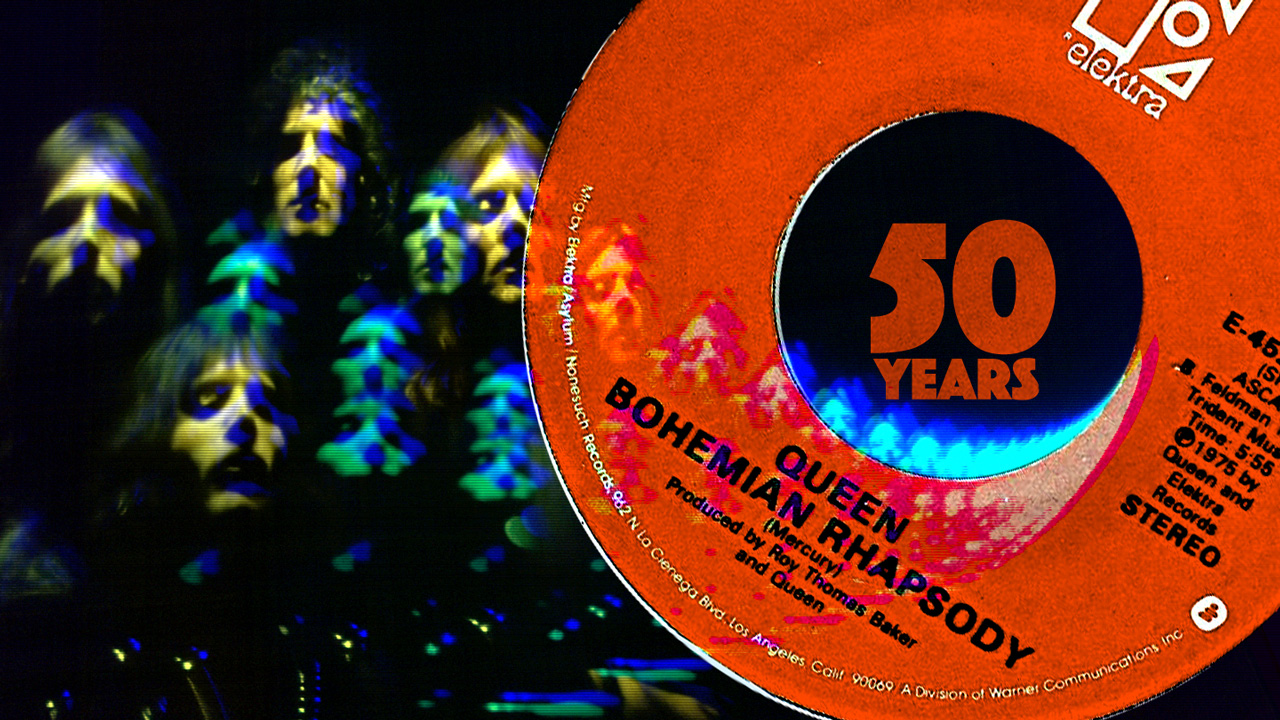

Even though it is now half a century old, Queen’s monumental hit “Bohemian Rhapsody” is still one of the most streamed tracks of the past decades. In 1975, Freddie Mercury and his band created nothing less than one of the greatest rock songs in music history. A musical and technical milestone, it has lost none of its brilliance to this day.
Against all odds
It’s hard to believe, but the executives at the record label EMI initially had reservations about releasing “Bohemian Rhapsody” as a single. Likewise, radio stations wondered what they were supposed to do with a six-minute song. Even bassist John Deacon expressed his worries “(…) that releasing the song would prove to be the biggest mistake in Queen’s career.” The concerns were obviously unfounded. The song turned out to be Queen’s first number one hit.

Pressure through the back door
Mercury sent a demo cassette to his friend, British radio DJ Kenny Everett, with strict instructions not to broadcast it, but simply to give him his opinion. Everett was enthusiastic about the track and, contrary to the instructions, played it fourteen times over a weekend, claiming each time to his boss that “his finger had slipped”. This effectively forced the record company to release the song directly to the public.

Music Man
Stingray 4 Special MN CR
Recording technology at its limit

Bohemian Rhapsody was a technical masterpiece that pushed the boundaries of recording technology at the time. Recorded in five different studios, it features more than 180 vocal tracks layered on top of each other. The result was an extremely multi-layered and dense sound that had never been heard before in rock music.
In the iconic middle section in particular, Freddie Mercury and his bandmates took the complex vocal harmonies to the absolute limit. The words “Galileo Figaro” were dubbed and cascaded so often that this opera-like section still makes listeners’ jaws drop to this day!
Crossover with incredible qualities
The probability of knowing another song that even remotely resembles Bohemian Rhapsody is – to put it mildly – extremely low. In fact, it’s impossible. After all, it is a monumental song that masterfully blends elements of ballad, rock, opera and a cappella – all with truly incredible vocal and instrumental abilities. A crossover of this magnitude is sure to blow listeners away.

Deeply moving, intimate lyrics
The lyrics are powerful, and there have been many attempts to interpret their meaning in various ways. However, the most likely interpretation is that they reflect Freddie’s personal journey and his struggle with coming out as bisexual. Some lines can be interpreted as him destroying his former self, while other passages revolve around what he has done, who he is and what haunts him.
The ballad begins gently and almost depressingly. After 35 seconds, Freddie begins to draw out his voice more expressively. With even more power and a touch of aggression, he then moves into the second verse. For many, “Bohemian Rhapsody” is a song that makes people of all different backgrounds and orientations feel heard and loved.

Exceeding all expectations
No one would have expected an opera from a rock band in the 1970s. And that was only one part, albeit an extremely striking one. The impressive thing about the operatic part is that it is not just any opera performed in a rock style, but actually sounds like a genuine opera.
But it doesn’t stop at the symbiosis of ballad and opera: when the last part kicks in, it’s time to bang your head. Brian May, Roger Taylor, John Deacon, and Freddie Mercury exhibit their virtuoso playing, celebrating the typical Queen sound. Freddie really turns it up with his voice. Everything culminates in the notorious gong at the end of the song.

Adaptations, choreography and reactions
Time and again, the long-legendary Queen hit has also become an inspiration for fascinating or humorous choreographies and reactions – for example, in the cult comedy Wayne’s World, in The Muppet Show, or in a flash mob with Julien Cohen and around 30 singers and numerous instrumentalists in the streets of Paris. Here’s a selection:
Vocal acrobat and pianist Freddie Mercury
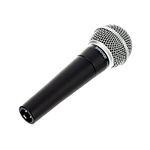
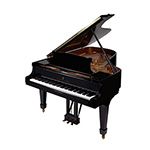
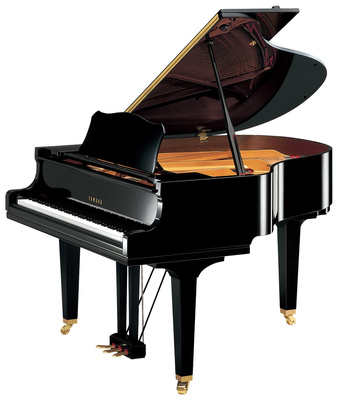
Freddie Mercury mainly used the Shure 565SD Unisphere microphone to perform and record. This dynamic microphone is characterized by its versatility and good protection against feedback. Freddie mainly played a black Yamaha G2 baby grand piano, which he had bought in 1975 and on which he composed almost all of his works, including hits such as “Bohemian Rhapsody”. He used it until his death, and the instrument was later auctioned off for a large sum.

Shure
565 SD
Yamaha
GC 2 PE Grand Piano
The down-to-earth and melodic bassist John Deacon
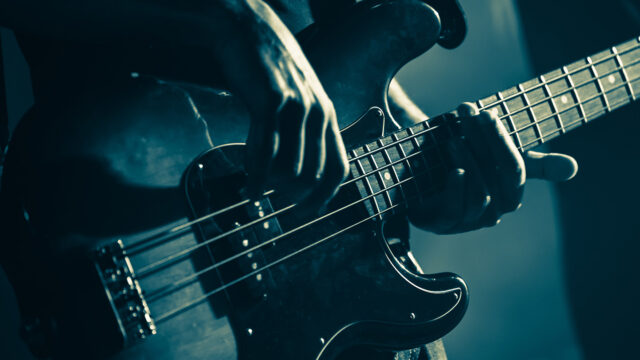
John Deacon mainly played a Fender Precision Bass and a Music Man StingRay, usually both as 4-string instruments. Given to him by the record company in 1972, his Fender Precision Bass became the workhorse of his career. He used the StingRay bass for songs such as the hit “Another One Bites the Dust”, increasingly relying on it during Queen’s later years. As Queen’s bassist, John Deacon was known for his melodic and memorable bass lines, which formed the foundation of many hits. He was considered the quiet, down-to-earth member of the band.

Fender
Player II P Bass RW 3TS
Rock drumming and Roger Taylor’s hi-hat trick
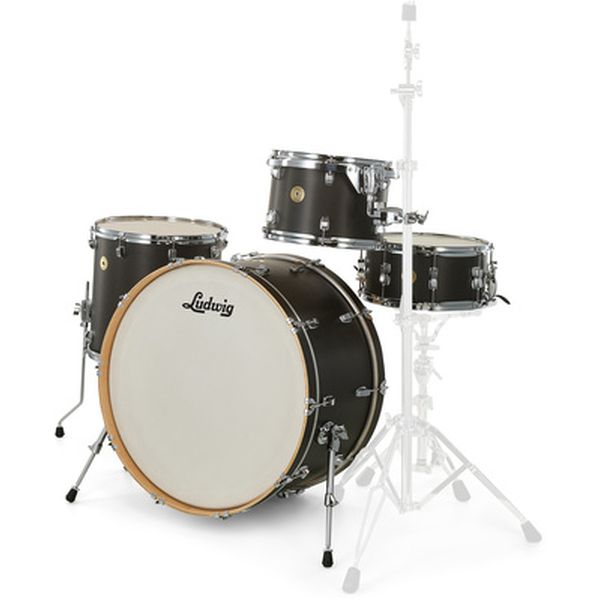
In the early days of Queen (1973-1975), Roger Taylor played a large black Ludwig drum kit with a 26-inch bass drum. Over the years, he used various sets, including Pearl drums and various cymbals from Zildjian, which are known for their characteristic sound.
Instead of crazy fills or complex grooves, Roger Taylor is most admired by other drummers for his straightforward, song-oriented rock drumming, his unique feel, his fat sound, and that signature hi-hat trick. What is it? He almost always opens it when he plays the snare!
Ludwig
Continental 4pc 26" Set B
Sound giant and tinkerer Brian May
Brian May, Queen’s legendary guitarist, isn’t just known for his distinctive riffs and solos, but also for his extremely characteristic guitar sound. He mainly plays his self-built “Red Special” guitar, which he built with his father in the 1960s, using parts from an old fireplace and a motorbike, among other things.

Vox
AC30 C2X Blue Bulldog
The Vox AC30 has been an integral part of his setup for decades, usually with nine of them rigged on top of each other. That signature sound is now also available as a headphone amplifier. And the Harley Benton BM-75 Trans Red also pays tribute to the grand master.
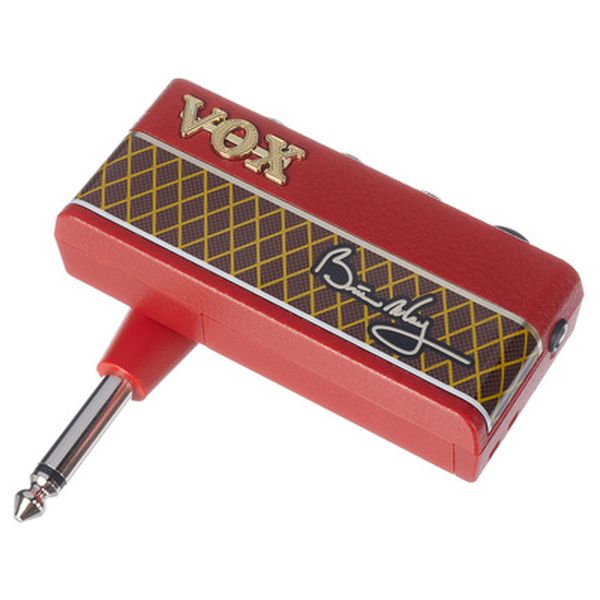
Vox
AmPlug2 Brian May

Harley Benton
BM-75 Trans Red Deluxe Series
What do you associate with the mega-hit “Bohemian Rhapsody”?
What do you associate with the mega-hit “Bohemian Rhapsody”? Which parts amazed you the most? Feel free to share your thoughts in the comments!





Comments 0
No comments yet.