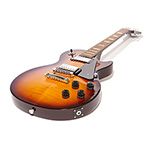
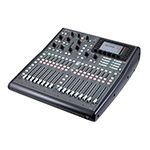
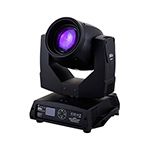
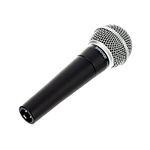
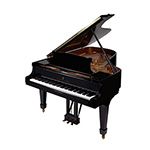
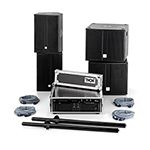
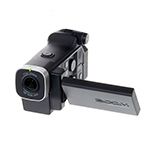
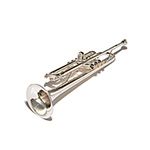
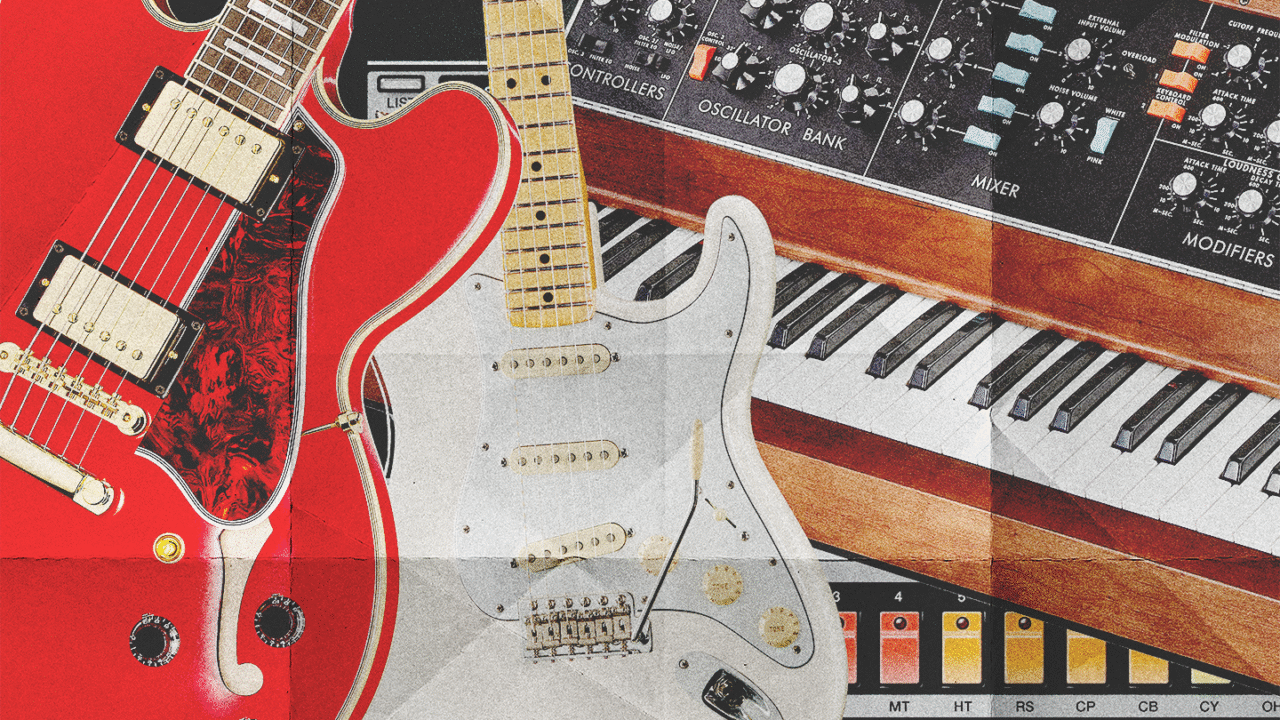

Every decade saw this special synergy of joie de vivre, music, and technological progress. While societal changes unfolded somewhere between rebellion, the search for meaning, and party culture, instrument manufacturers set out to develop ever newer and more powerful devices, which, as technological advancements and innovations, would become true milestones of their time. 🎵
The hunger for music was awakened and satiated. Here’s a quick overview and a piece of music history! 👇
1950s – The electrical revolution
The 1950s, especially the second half, were dominated by rock ‘n’ roll. Ultimately, the music style was a danceable crossover of R&B, gospel, and country. Icons of the era included Elvis Presley as the unforgettable King of Rock ’n’ Roll, Chuck Berry with his red Gibson ES-355, and Buddy Holly, as well as vocal groups like The Platters and The Drifters who delivered soul and R&B hits, and harmony-driven duos like the Everly Brothers.
The era brought a cultural revolution that benefited from the post-war sense of new beginnings and the emerging youth culture. The sound of the decade was aided by the development of the electric guitar and the first tube amplifiers, such as the legendary Fender Deluxe amps, which were already capable of delivering a fair amount of power. On the contrary, the drums and bass were still fairly traditional – most rock ‘n’ roll bands still used the double bass of the swing era.
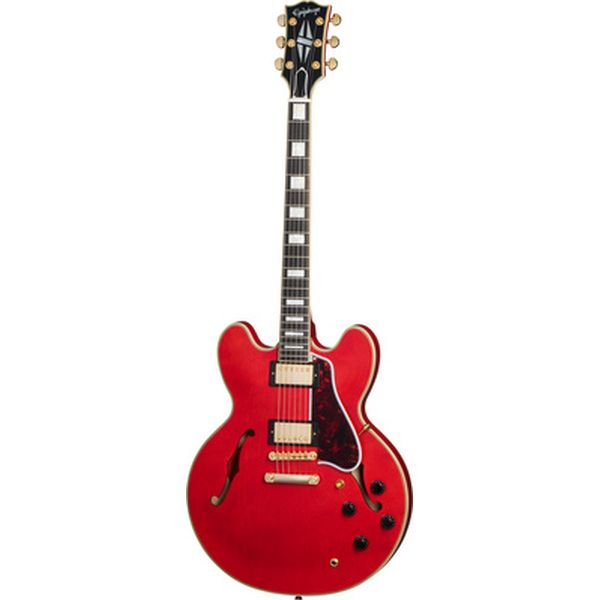
Epiphone
1959 ES-355 Cherry Red VOS
1960s – Between beat, folk rock, and psychedelic
In the following decade, the sound of the 50s continued to evolve and diversify. From 1962 onwards, bands such as The Beatles popularized the new style of beat music. While rock bands of the time began incorporating the organ into their sound and guitar amps became louder and more powerful, other genres, such as folk-inspired protest songs, made heavy use of the acoustic guitar.
And then there was all the flower power during the hippie era. Everyone was somehow “unanimously divided”: love, peace, freedom, and protest were celebrated musically. And what living witness doesn’t remember Woodstock and Jimi Hendrix? Typical instruments of the decade were the electric guitar with newly developed effects such as wah-wah and fuzz, the Vox organ, and experimental instruments like the sitar, which was often used in psychedelic rock, or the Mellotron, which can be seen as an early precursor to synthesizers.
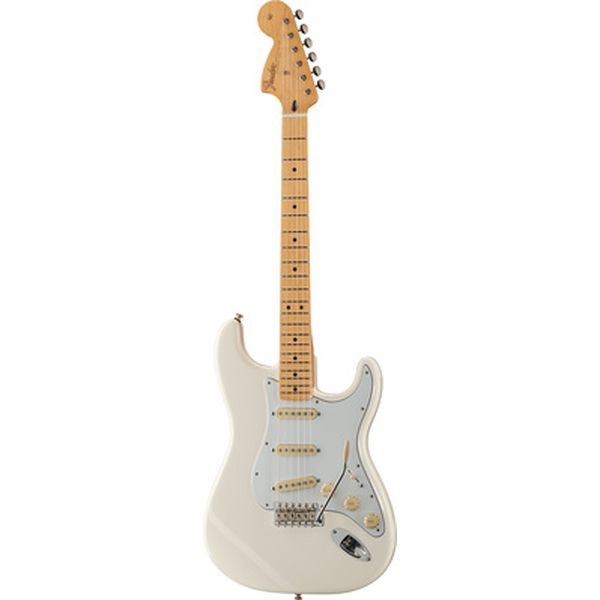
Fender
Jimi Hendrix Strat OWH
1970s – Metal, disco, and electronic music
The 70s were characterised by technological quantum leaps and an extremely diverse music scene. The first Moog synthesizer saw the light of day, and the Rhodes electric piano and clavinet helped define the typical Stevie Wonder sound. Metal drummers discovered that the double bass drum could make everything go faster.
The 1970s were fundamentally shaped by the rise of metal, with bands like Black Sabbath, Judas Priest, and Deep Purple laying the foundation for a genre that had evolved from hard rock and spread explosively.
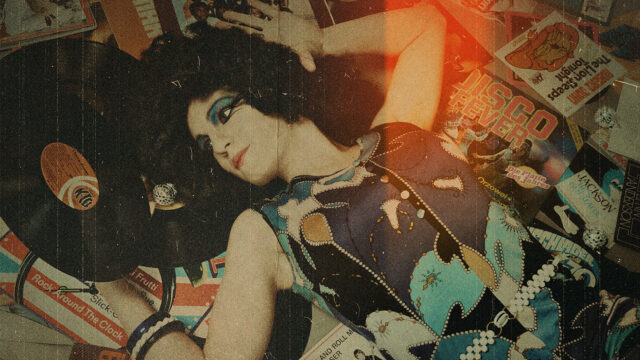
Simultaneously, disco fever took hold, reaching fever pitch and conquering the charts by 1974 at the latest. Suddenly, everyone wanted to dance like John Travolta in “Saturday Night Fever” and wore white suits to the discos. Meanwhile, Kraftwerk caused a sensation as pioneers of electronic music.
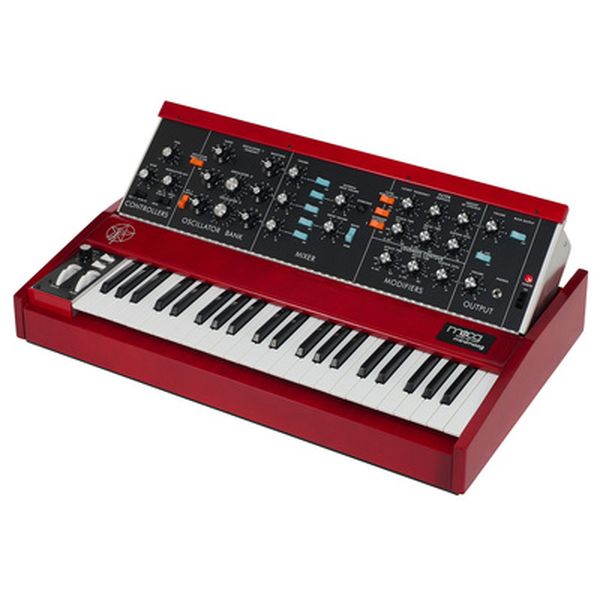
Moog
Geddy Lee Minimoog Model D
1980s – When synths and drum machines reigned supreme
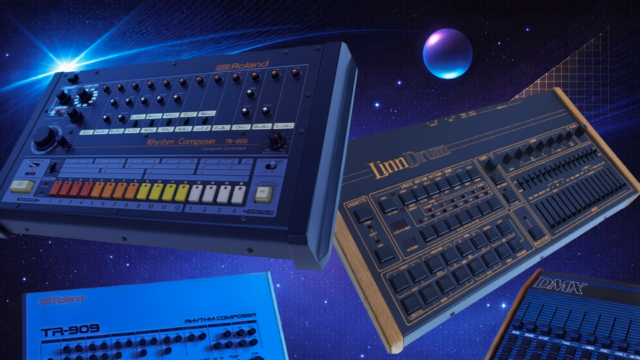
The absolute icon among the defining instruments of the 1980s was the Yamaha DX7, which seemed to be featured on almost every production of the time. Its special features were the new FM sound generation and the presets, which immediately climbed the charts. Its affordability also allowed it to achieve cult status among a wide range of musicians. This was, of course, supported by drum machines like the Roland TR-808 and the Roland TR-909.
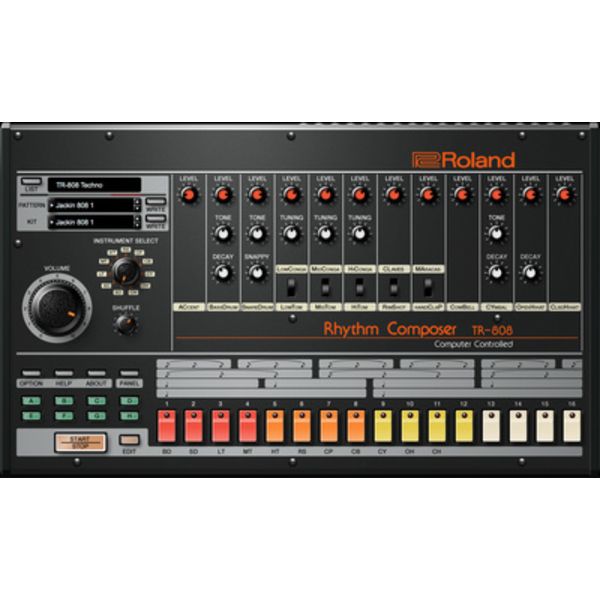
Roland
Roland Cloud TR-808 Download
The keytar was also a staple of stagecraft, allowing keyboardists to be mobile, although this “shoulder-mounted keyboard” was often used by bassists as well. Drummers experienced a true revolution with the emergence of electronic drums. Suddenly, they could play very quietly on stage yet be incredibly loud, and above all, access an endless array of sounds. And, of course, everyone was “completely detached from the earth” with Peter Schilling’s “Major Tom.”
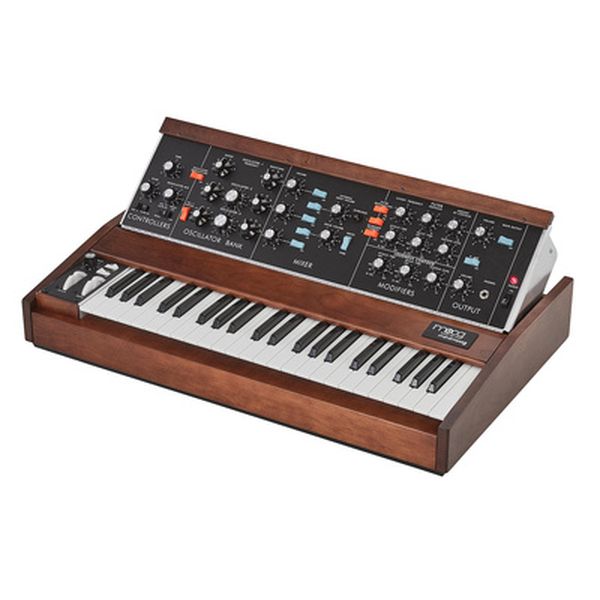
Moog
Minimoog Model D 2022
Who doesn’t remember it? The decade was one of the giants. Who doesn’t remember Queen, U2, Bon Jovi, Guns N’ Roses, AC/DC and Def Leppard, New Wave artists like Duran Duran, The Police, Eurythmics and Depeche Mode, or Dark Wave bands like The Cure and Joy Division?
1990s – Grunge, hip-hop, and electronic subcultures
Whether the instruments that defined the sound of the ‘90s were a result of the music itself or whether they themselves led to the development of new genres is a question that’s impossible to answer. After all, instruments like the electric guitar had been around for a long time and were simply used with a new, edgy sound, such as in grunge. At the same time, electronic music became increasingly popular. In addition to synths and drum computers, samplers were now widely available, and sampling entire grooves became a key element in hip-hop production.
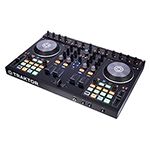
In addition, digital instruments were now often controlled via MIDI controllers. Last but not least, turntables were accepted as an instrument in their own right. The ‘90s had both: edgy, grungy lo-fi sounds and increasingly clean digital productions. Nirvana’s “Smells Like Teen Spirit” shaped the early grunge era, while Eurodance defined the decade with hits like Haddaway’s “What Is Love”.
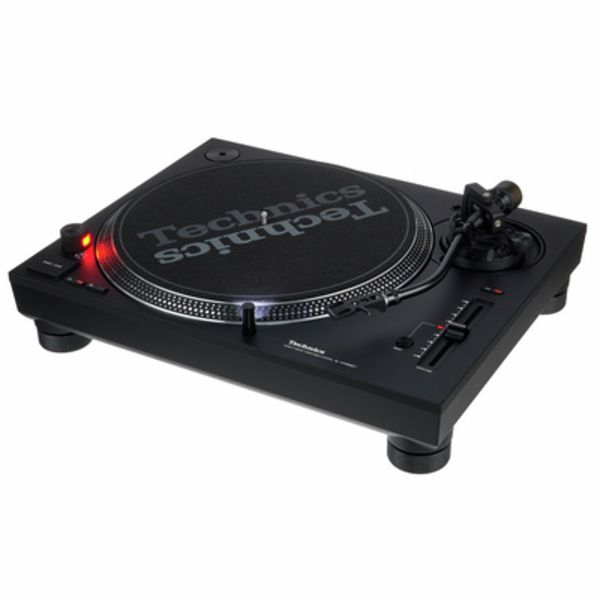
Technics
SL-1210MK 7
2000s – Hybrid production and digital workstations
Around the turn of the millennium, the nature of music production changed significantly. With DAW software such as Cubase, Logic, FL Studio, and Ableton Live, anyone could now produce entire tracks in their home studio. Many productions of the decade also made heavy use of new, previously unheard-of effects, such as Auto-tune pitch correction. Along with these new production techniques, software synths defined the sound of the 2000s.
At the same time, the acoustic guitar experienced a revival, thanks to a new wave of singer-songwriter music. Hip-hop, R&B, and modern disco became increasingly prevalent. For example, the Swedish band Alcazar had a one-hit wonder with “Crying at the Discoteque,” where synthesizers, electronic drums, and a distinctive bassline blew us away, but especially the sample of the disco classic “Space” by Sheila & B. Devotion. Sampling went on a rampant basis in the 2000s.
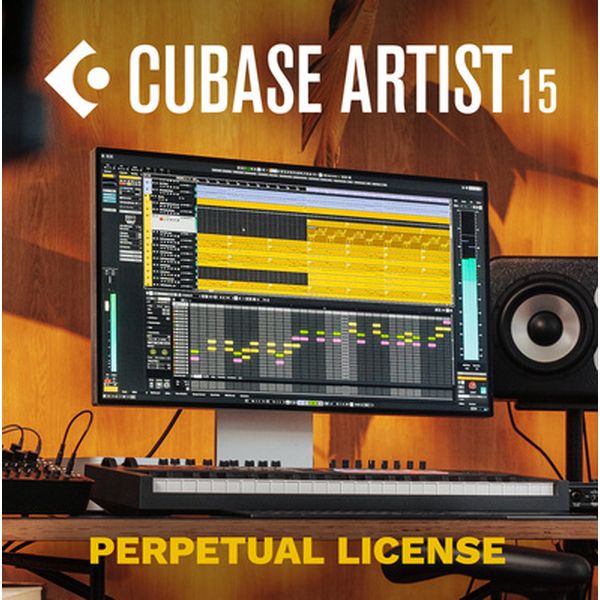
Steinberg
Download
2010s – EDM, trap, and ultra-digital production
EDM, pop and hip-hop dominated the music scene throughout the 2010s, including songs like “We Found Love” by Rihanna, “Rolling in the Deep” by Adele, and “Get Lucky” by Daft Punk. Things became increasingly wacky, which was reflected not only in the music itself, but also in the instruments and tools.
Vocoders and talkbox emulations became popular, as did EDM synths and (once again) the 808. At the same time, styles like indie and lo-fi relied heavily on minimalist guitars. While many productions of the 2010s were pretty packed with effects, others celebrated a reduction to the bare essentials.
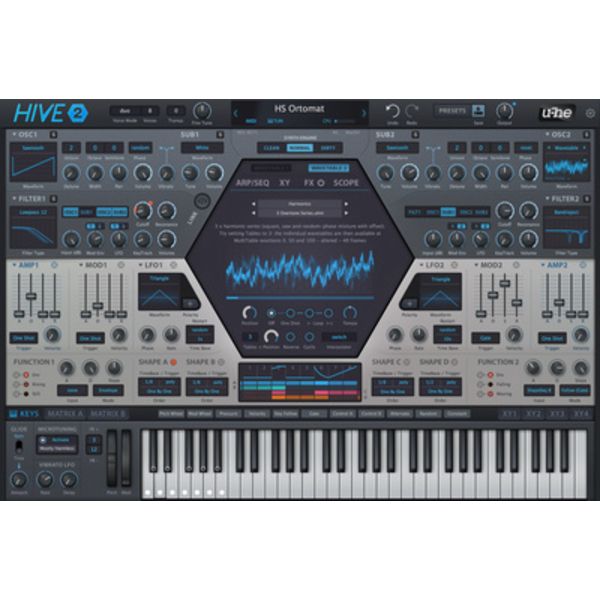
u-he
u-he Hive 2 Download
2020s – Retro revival and AI music
In the present day, we are seeing a symbiosis of several genres that, curiously enough, are developing in completely new ways while at the same time embracing a retro sound. The rise of bedroom producers has made the role of the producer more important than ever. Thanks to easily accessible music production software, anyone can now become a producer.
Analogue synths are back in vogue, as are modular synths such as Eurorack systems. Sounds like lo-fi pianos are a manifestation of the desire for “perfect imperfection”. And of course, a new wave of AI-generated music with completely artificially generated voices and instruments is eerily looming on the horizon. Well, the decade isn’t over yet; let’s see what happens.
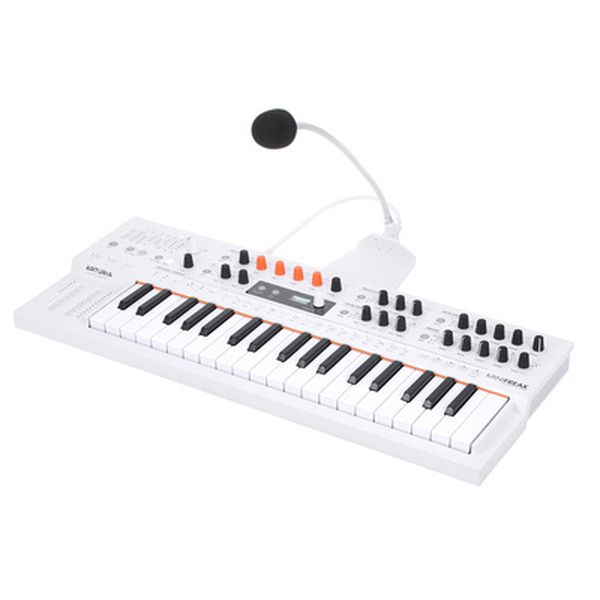
Arturia
MiniFreak Vocoder
Iconic Instruments That Defined Decades: Conclusion
The question remains as to which instruments will define and shape the coming decades. Any attempt to answer this question would be pure speculation. In terms of instrument design, the technology seems to have reached or even passed its zenith. But that’s what it’s always felt like, just from the perspective of the time.
When the first tube amplifiers hit the world’s stages, it seemed like a quantum leap, as did the development of synths, drum machines, and DAWs. For the near future, everything points to music becoming increasingly AI-based. Or will we once again experience a backlash and a return to the roots?

Your Thoughts on Iconic Instruments
What do you think – what will the future sound like and which instruments will shape it? Have a guess and let us know in the comments!






Comments 0
No comments yet.