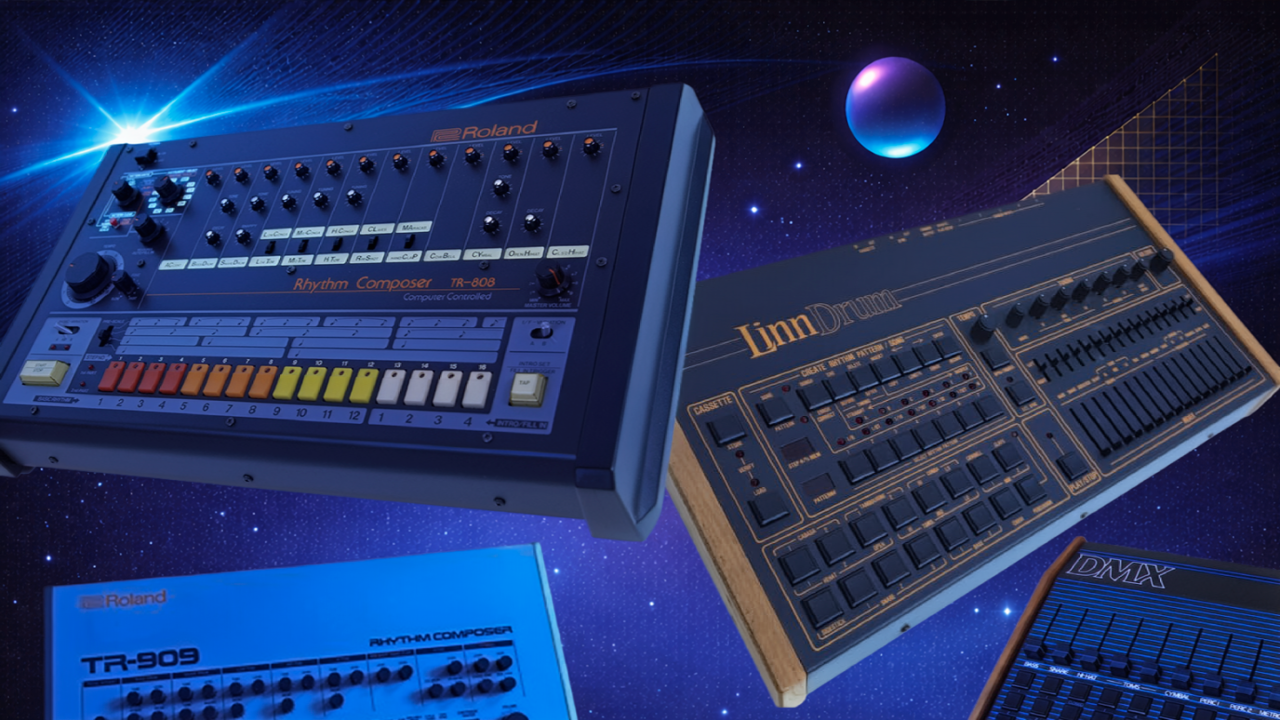

The 1980s marked a turning point in music history. Rhythm stopped being something you simply played and became something you designed. Drum machines were no longer background tools or practice aids. They became creative centers, capable of defining entire genres and reshaping how music was written, produced, and even imagined.
This was the decade when machines stopped imitating drummers and started leading the music.
Here are five drum machines that shaped the sound of the 80s.
Linn LM-1 and LinnDrum
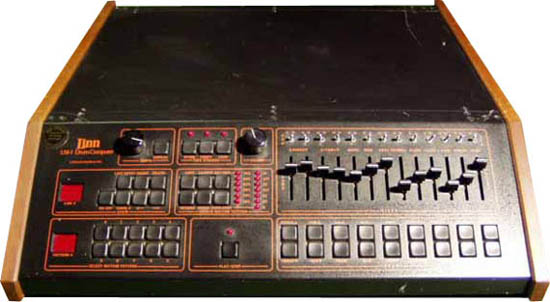
When the Linn LM-1 arrived in 1982, it did something revolutionary. Instead of synthesizing drum sounds, it used digital samples of real drums. For the first time, a drum machine sounded polished, expensive, and radio ready.
This immediately made it attractive to pop and rock artists who wanted modern precision without losing a sense of realism. The Linn wasn’t futuristic. It sounded authoritative.
Prince understood this better than anyone. He didn’t treat the Linn as a substitute drummer but as a compositional tool. Entire songs were built around its tight, dry groove.
The Linn sound spread everywhere. Michael Jackson, Prince, Madonna, Peter Gabriel, and The Human League all relied on it. The LinnDrum became the rhythmic fingerprint of mainstream 80s pop and new wave. Its handclaps, snares, and kicks became so common that they effectively defined what “modern” music sounded like.
Roland TR-808
Roland
Cloud TR-808 Download
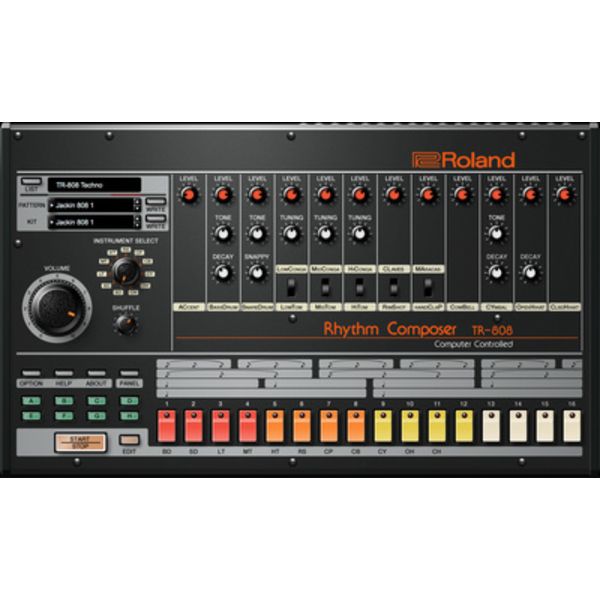
The Roland TR-808 was released in 1980, but it couldn’t have been more different. Instead of realism, it offered pure electronic character. Deep booming bass drums, sharp claps, robotic hi hats, and that unmistakable cowbell.
At first, it was a failure. Producers wanted realism. The 808 offered something alien. But some underground artists heard possibility.
Hip hop, electro, and early electronic musicians embraced the 808 precisely because it didn’t sound human. Its bass drum wasn’t just a kick. It was a low frequency statement.
Suddenly, rhythm became minimal, hypnotic, and physical. The 808 also crossed into mainstream R&B with Marvin Gaye’s 1982 Sexual Healing, proving that electronic drums could be sensual and emotional.
By the end of the 1980s, the 808 was everywhere. Hip hop, pop, dancehall, and early house all absorbed it. Today, the term “808” doesn’t even mean the machine anymore. It means a way of thinking about rhythm.
Oberheim DMX

GForce
Oberheim DMX Download
When Oberheim introduced the DMX at the dawn of the 1980s, digital drum machines were still largely uncharted territory. Aside from Linn’s LM-1, there were few instruments capable of delivering programmable rhythms using sampled drum sounds, and the DMX quickly distinguished itself within this small but influential group.
Its intuitive sequencing and punchy character made it a favorite among producers working across emerging styles, from new wave and early hip-hop to dancehall reggae, helping to define the rhythmic identity of the decade.
One of its most famous appearances came from The Police, who used the DMX to craft the tightly controlled kick drum on Every Breath You Take, blending electronic precision with a song that otherwise felt organic and restrained.
That iconic kick drum and clap are DMX sounds. The machine sat at a cultural crossroads between hip hop, post punk, and club music. It proved that programmed drums could feel heavy, human, and emotionally charged.
Roland TR-909
Roland
Cloud TR-909 Download
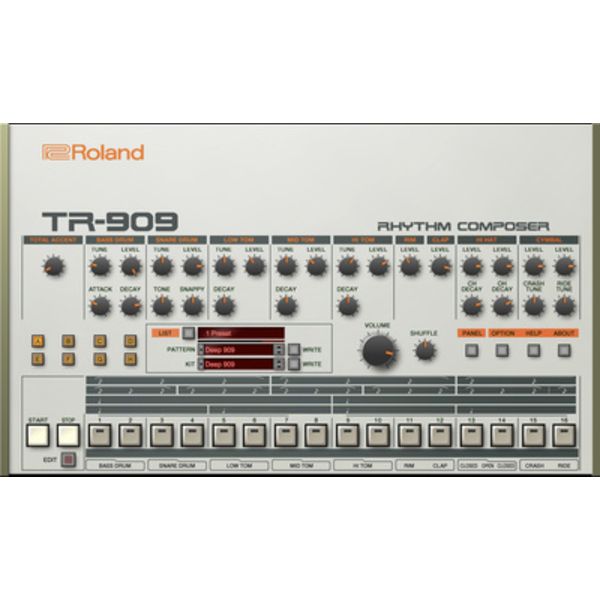
The TR-909’s impact is most keenly felt in how it spawned entire genres of electronic dance music. House and techno were literally built on the 909: its 4-on-the-floor kick, syncopated claps, and offbeat open hat became the rhythmic DNA of dance clubs from Chicago’s Warehouse to Berlin’s Love Parade.
The term “909” is now shorthand for the authentic house/techno drum sound, much as “808” signifies hip-hop bass. Culturally, the 909 empowered a new generation of predominantly underground producers in the late ’80s.
Unlike expensive samplers or Fairlight computers, a used TR-909 was relatively attainable and could drive an entire track. This democratization fueled the explosion of rave culture and DIY dance music scenes worldwide.
The machine’s influence also pushed instrument design forward, as its use of MIDI set a standard, and later drum machines and software all include 909 samples or emulations.
In the broader musical landscape, the 909 helped electronic rhythms infiltrate mainstream pop in the late ’80s and early ’90s (e.g. the club remixes and grooves in early 90s pop. One Roland engineer admitted they “had not expected” the 909 to create new musical forms, yet it did.
Fast forward to today: every serious dance music producer knows the 909 sound by heart, and modern techno/house often deliberately uses 909 samples to capture that classic vibe.
Each year on “909 Day” (September 9th), fans celebrate its legacy. In sum, the TR-909 shaped the sound of late ’80s dance music and left a permanent imprint on music history – it turned up the tempo of pop culture and never looked back
.
E-mu SP-12 & SP-1200
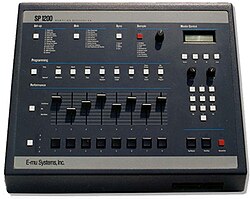
Building on the legacy of the SP-12, the E-mu SP-1200 arrived in 1987 and quietly changed music forever.
The SP-1200 was essentially an all-in-one production workstation: it could sample audio, assign the samples to pads as drum sounds or instrument hits, and sequence patterns… all within one box! It featured 12-bit audio resolution at a low 26.04 kHz sample rate, which gave its samples a raw, “warm, dirty, and gritty” texture.
The total sample time was only about 10 seconds across all sounds, forcing producers to get creative by sampling short snippets or looping cleverly. As a matter of fact, users discovered you could extend sample time by sampling records at 45 RPM and then pitching down inside the SP-1200, exploiting the “drop-sample pitch-shifting” feature to squeeze more audio in.
It was a drum machine, a sampler, and a sequencer in one box. More importantly, it allowed producers to build entire tracks from fragments of other records.
Public Enemy’s production team used the SP-1200 to layer sirens, drum breaks, and vocal fragments into controlled chaos.
Regardless of newer technologies, such as DAWs and Sample packs, that shift still defines modern hip-hop production culture.
When drum machines became musicians
These drum machines didn’t replace drummers. They redefined rhythm.
They moved music away from performance alone and toward composition, programming, and sound design. They empowered individual creators and helped to create iconic songs.
The sound of the 1980s wasn’t just big hair and synths. It was machines, limitations, and imagination working together. And we’re still dancing to the results.







Comments 0
No comments yet.