I’ll start by clarifying that I don’t have vast experience with high-end classical guitars. Although I play classical pieces (like J.S. Bach), my background is primarily in electric and acoustic guitar.
That said, I believe I have a solid grasp of what makes a correct instrument. Over the last few years, I’ve come to appreciate acoustic instruments more and more, largely due to acquiring a Yamaha FG5. Even though it's a steel-string acoustic, I use it as my benchmark for a successful model. I don’t know if I just got lucky with a specific batch or if its artificially aged (A.R.E.) woods make the difference, but the FG5—at least the one I own—isn’t just a "good" instrument; it is magical and inspires me to play my best every time.
I am looking for that same magic in my search for a classical guitar. I believe that in this price range (around €1,500), if a luthier has the know-how and the will, they can produce an excellent instrument.
Unfortunately, in the case of the Hanika 54PF, I didn't find that magic. In its defense, however, I firmly believe that with enough playing time and age, this guitar could level up significantly.
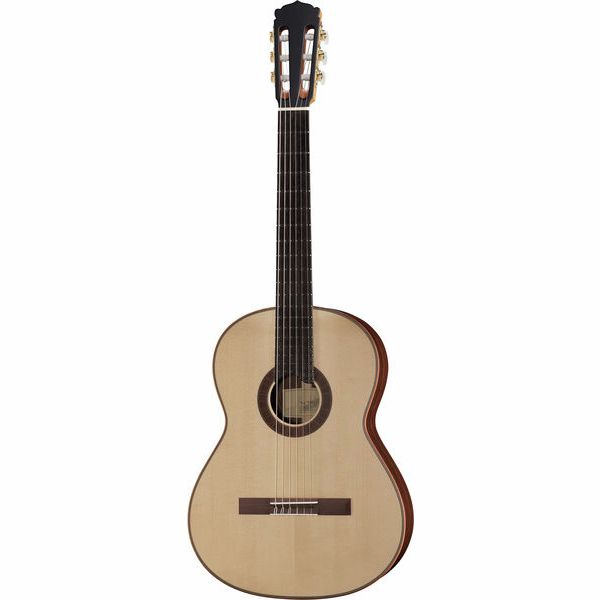
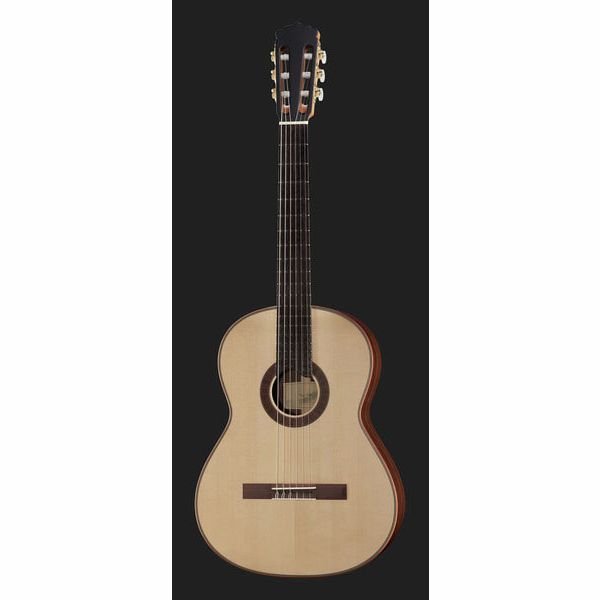
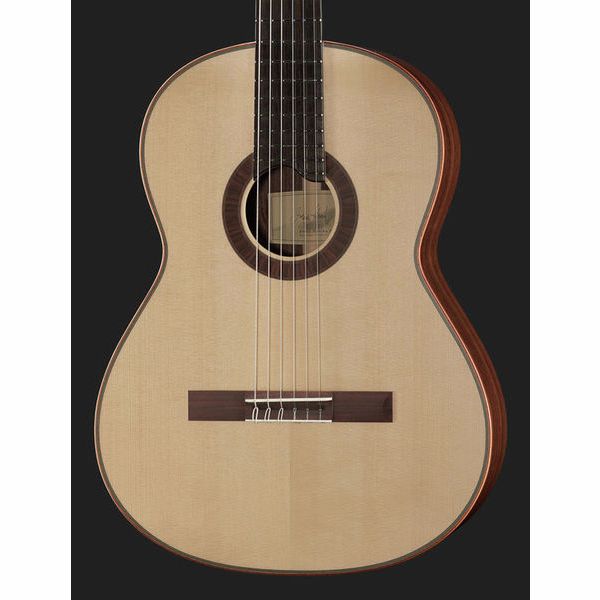
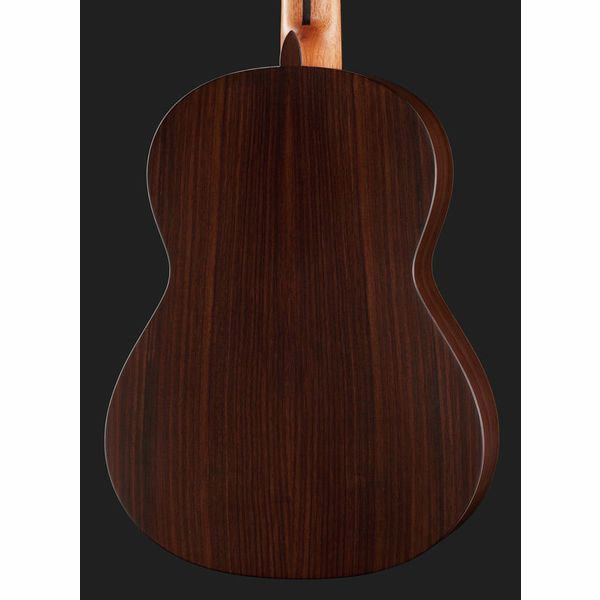
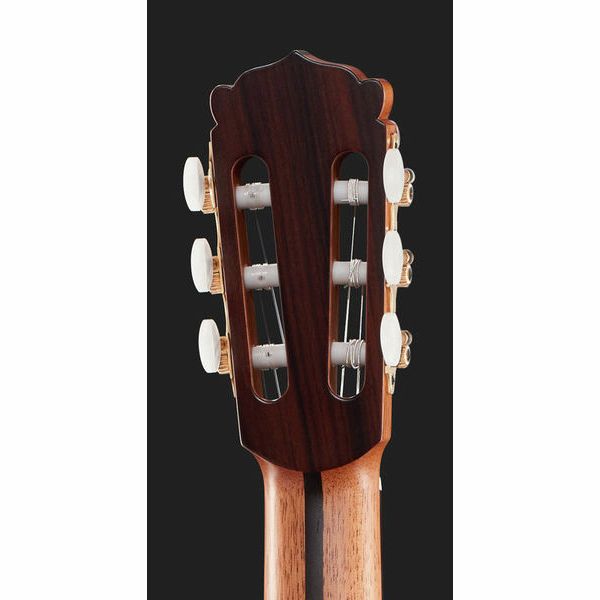
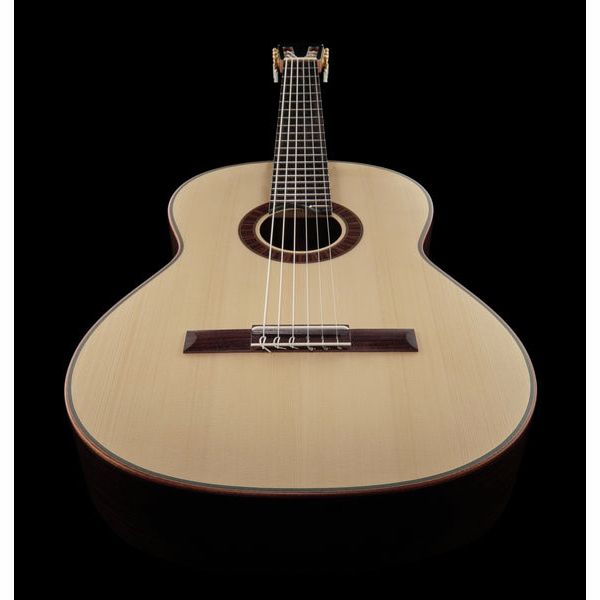
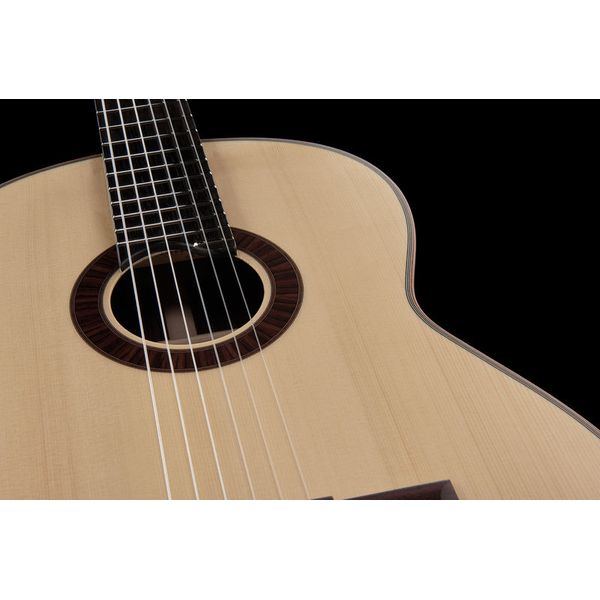
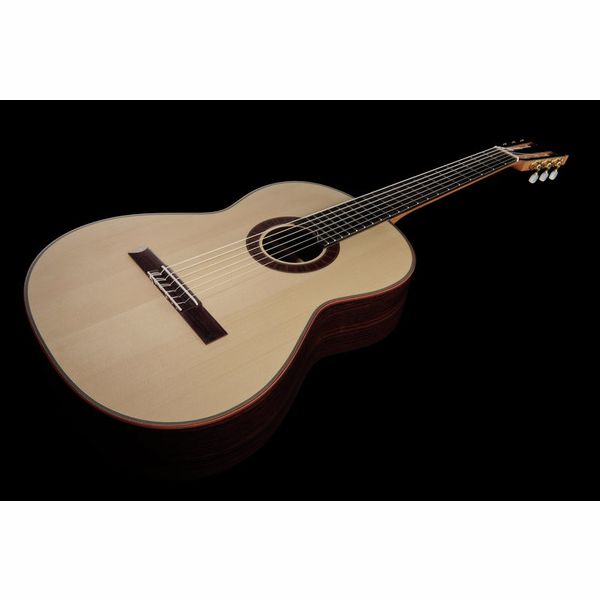
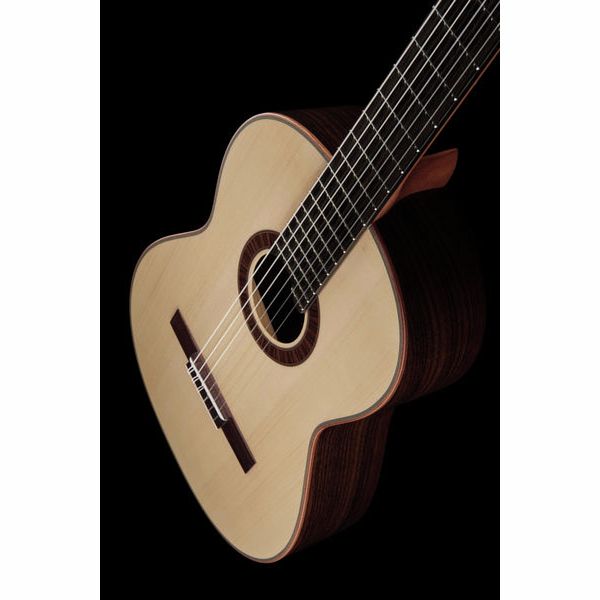
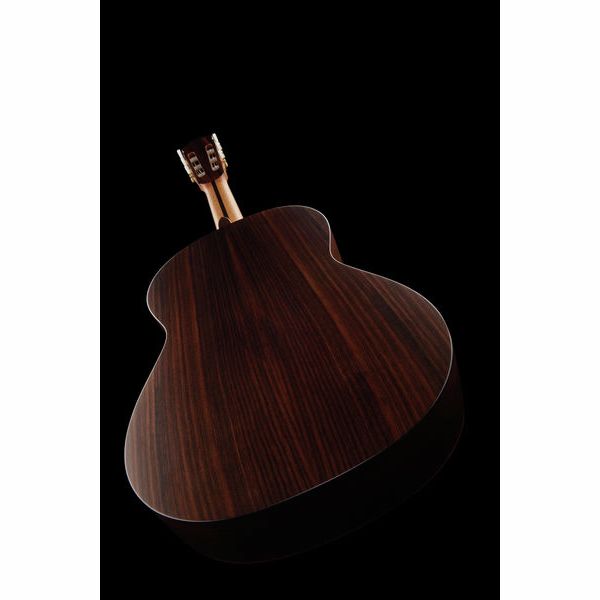
Everything about the build is impeccable; there are no flaws or defects. The angle where the sides meet the top is rounded, allowing the right arm to rest on the instrument for hours without fatigue. Personally, for my own reasons, this doesn’t suit me; I prefer the body edge to "hook" my right arm a bit, but that is my own quirk. I imagine most players will welcome this design.
As I mentioned, I come from an electric/acoustic background. In demanding passages, I use the unorthodox technique of fretting the low E string with my thumb. The "D" shape of this guitar’s neck felt quite uncomfortable for that technique from the very first moment. Hanika does offer models with "C" profiles, which I imagine would feel more familiar to my hand.
The sound attempts to be balanced, but in my opinion, it doesn't quite succeed. It has a slight tilt toward the treble side. While a bright sound is a natural characteristic of spruce, I am certain the bass response could have been punchier, even with a spruce top.
The dynamic range is "standard good," but lacks that extra element that makes a difference. The same applies to how the sound blooms around the player; it has decent projection that cheap guitars lack, but nothing impressive.
The action tends to be high; it could certainly be a click lower to make fretting more comfortable. I imagine that with the right choice of strings, both the playability and the bass emphasis could be improved or even resolved.
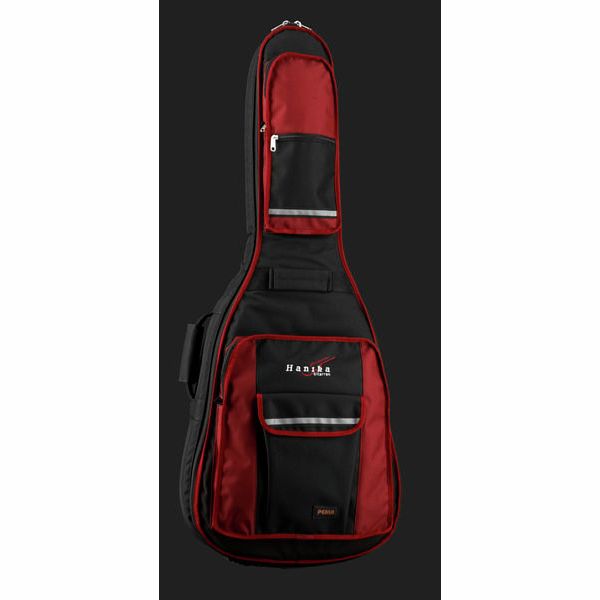
Ultimately, this is an honest guitar for the money, meaning it is a €1,300 guitar, but nothing more. It isn't a hidden gem, nor is it overpriced. It would be a slightly more attractive purchase if it came with a hard case, though that wouldn't change the feel of the instrument itself. What *might* change its feel is time and playing. It feels like a "green" (unopened) guitar. It wouldn't surprise me if, after playing it once it has matured, I had a completely different opinion. However, my comments reflect my experience with the guitar as it stands today.
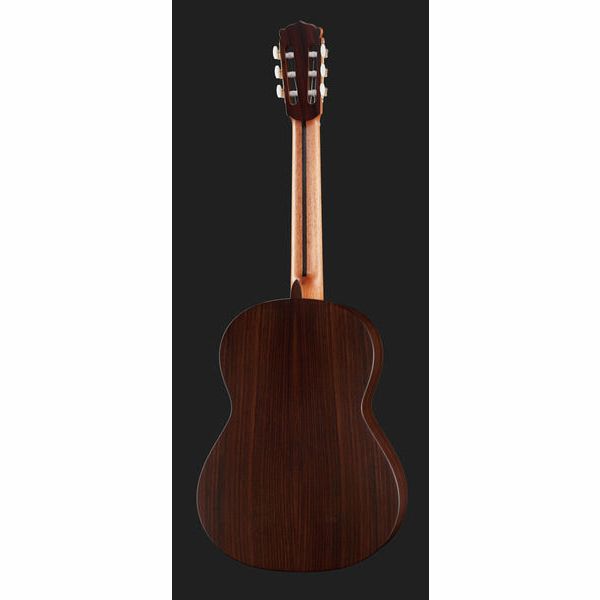
It isn't a "bell" that sings with harmonics, nor is it the classical equivalent of the FG5. Perhaps I am spoiled by the Japanese, who take immense pride in their work. Maybe other manufacturers could take a page from their book and give the world amazing instruments in the €1,200–€2,000 range. Yamaha proved it is possible. When the woods are good (as they are on the 54PF) and the technical know-how exists, perhaps just a few more hours of detailed labor are enough to produce a perfect instrument. Let those extra hours raise the price slightly, but not to double or triple the cost of the Hanika 54. Give people great instruments and stop the tiered pricing tactics, that is my humble opinion, and forgive me if I am wrong.
As for the guitar, it will be returned to Thomann. Fortunately, they give us the ability to do proper market research, and I am grateful to them.
The search continues.
Edit:
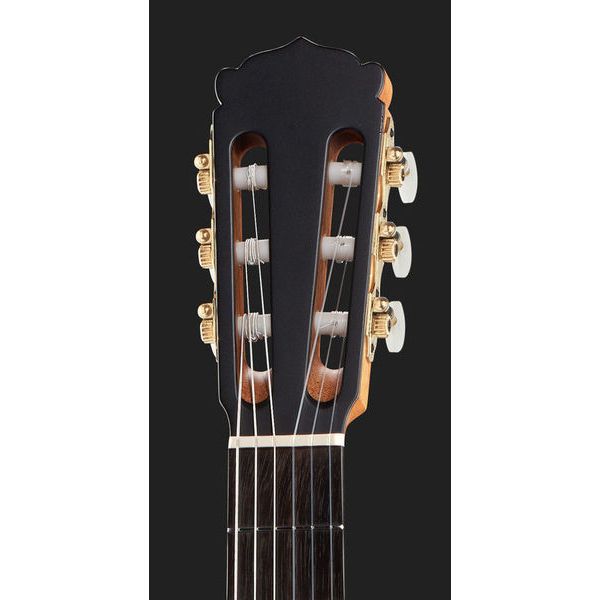
Currently, Thomann's specifications for the instrument state it has an ebony fretboard, but the Hanika website lists it as Blackwood.
From my experience, while the wood closely resembles ebony, it is actually Blackwood, as it has an oily texture and is tonally closer to Rosewood. I personally prefer ebony, but it wouldn't be a dealbreaker for me.
While packing the guitar for return, I noticed they provide an extra saddle to lower the action, meaning the guitar doesn't require a professional setup to be comfortable to play.
It is a very good instrument, and if the neck had fit my hand better, I would have probably kept it, with the reasonable expectation that its already nice sound would improve even further.