


Roland TR-1000



Drum Machine
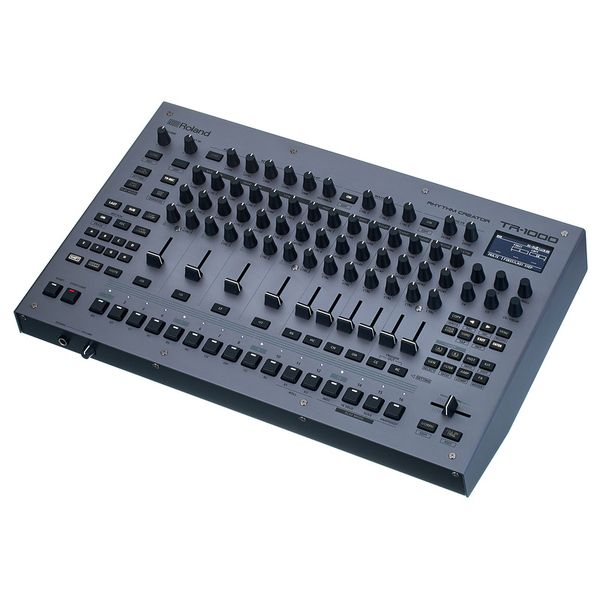
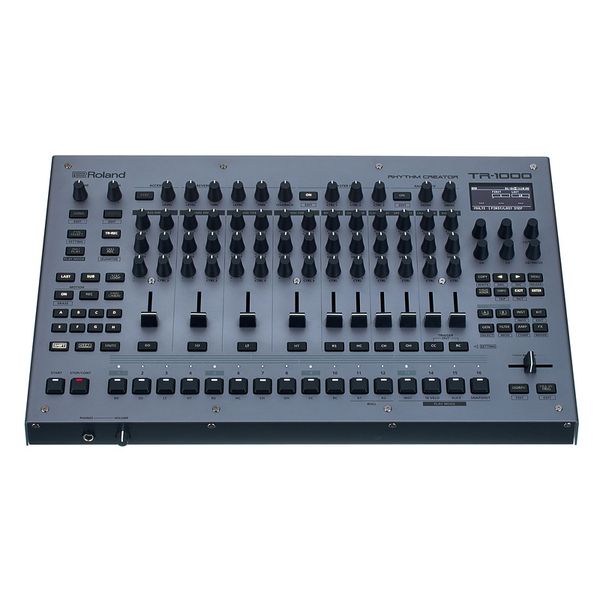
- Rhythm Creator
- 16 analogue instruments with the authentic sound of the TR-808 and TR-909, plus expanded capabilities
- 10 analogue TR-808 instruments: Bass Drum, Snare Drum, Low Tom, High Tom, Rim Shot, Hand Clap, Open Hi-Hat, Closed Hi-Hat, Cymbal & Cow Bell
- 6 analogue TR-909 instruments: Bass Drum, Snare Drum, Low Tom, High Tom, Rim Shot, Hand Clap
- 50 different ACB (Analog Circuit Behavior) sound engines with a wide range of parameters
- FM sound generation for digital percussion sounds
- Virtual analogue synthesizer and more than 2,500 PCM samples for bass and synthesizer sounds, effects and more
- Stereo sampling and re-sampling with time stretching and beat slicing
- 46 GB storage space for users' own samples (16-bit / 48 kHz)
- Per instrument: Compressor, filter (multimode filter or 4-band EQ), amplifier with envelope
- 4 instruments with layer function (2 sound engines), sidechaining and modulation LFO
- Step sequencer with 10 tracks and up to 128 steps per track
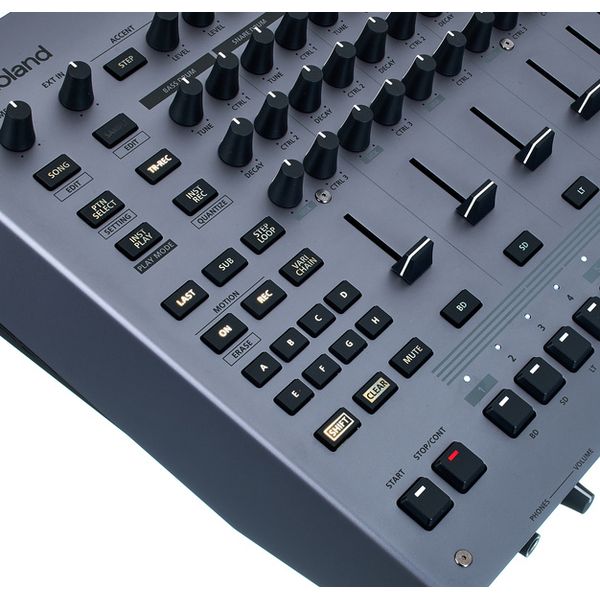
- TR recording, real-time recording, motion recording for parameter automation
- Memory space for 16 projects, 2048 patterns and 2048 drum kits
- Master effects section with analogue filter and drive, digital insert effects, compressor, reverb and delay
- Morph fader for blending parameter settings
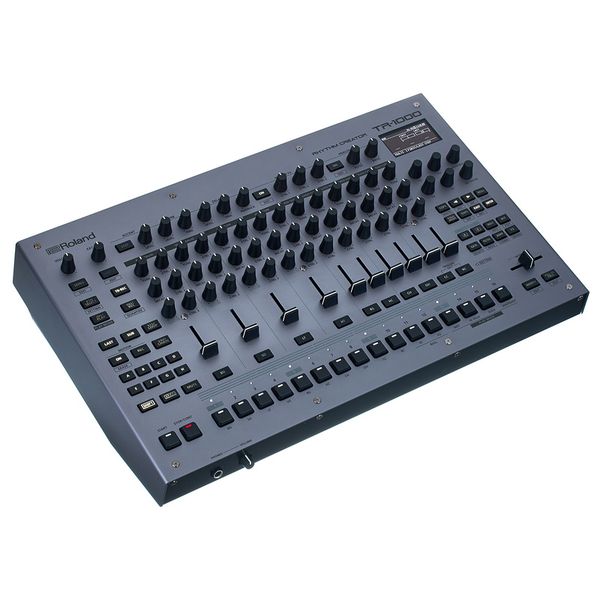
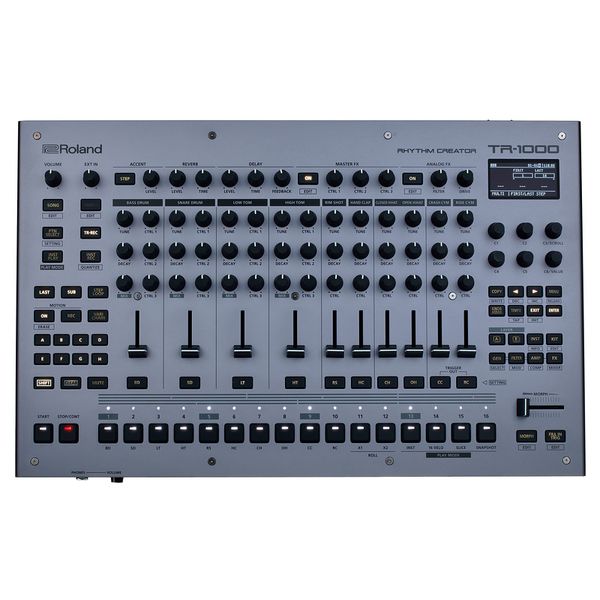
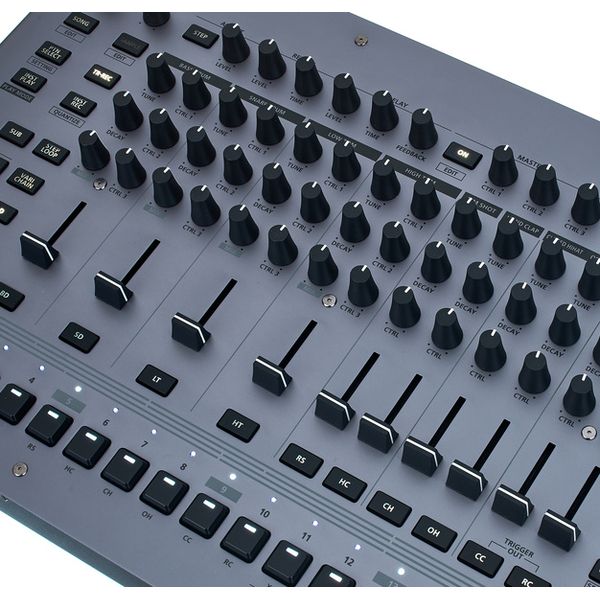
- 42 controls and 10 faders for editing instruments
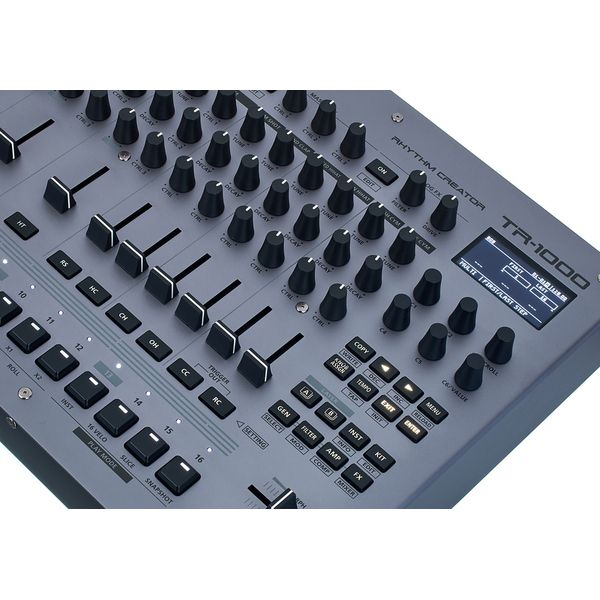
- OLED display and 6 encoders
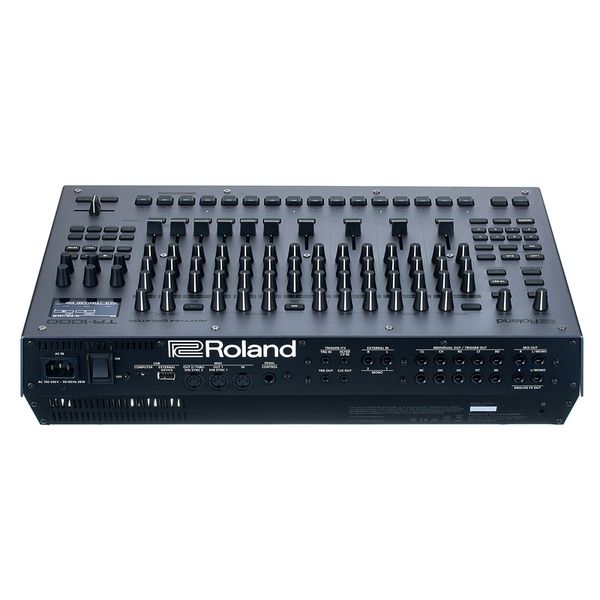
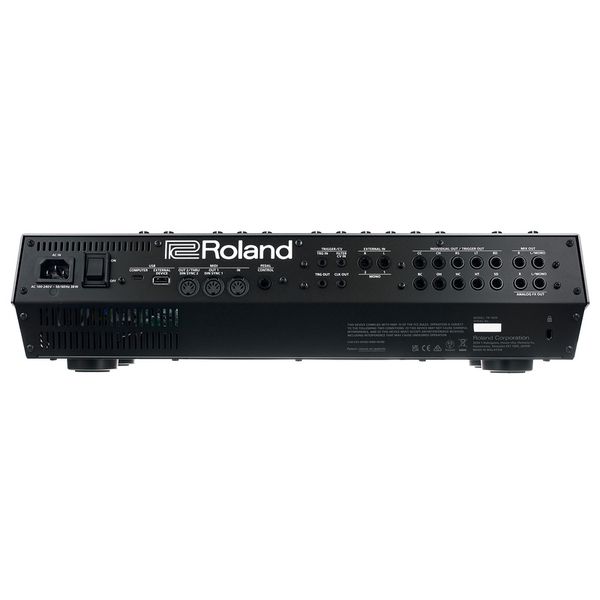
- Mix out (2x 6.3mm jack)
- Analogue FX out (2x 6.3 mm jack)
- 10 individual outputs (6.3 mm jack)
- Stereo headphone out with volume control: 6.3 mm jack
- External in: 2x 6.3 mm jack
- Trigger and CV inputs: 2x 3.5 mm jack
- Trigger and clock outputs: 2x 3.5 mm jack
- Pedal input: 6.3 mm jack
- MIDI In, Out 1, Out 2 / Thru (5-pin DIN)
- USB-A port for external devices and storage media
- USB-C port for USB audio and MIDI
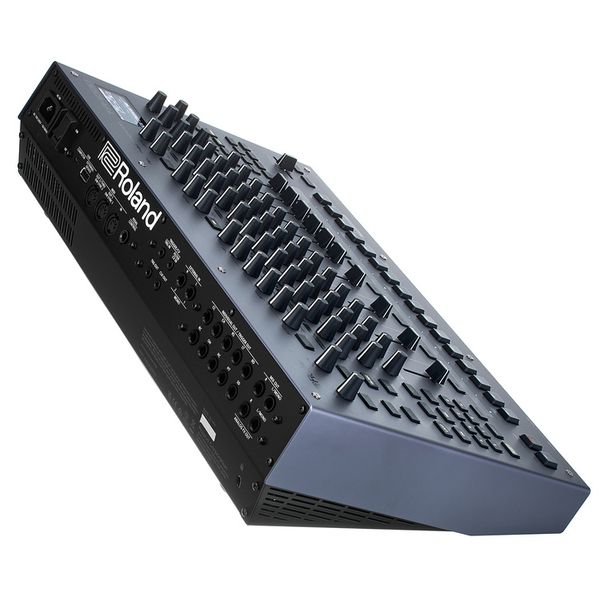
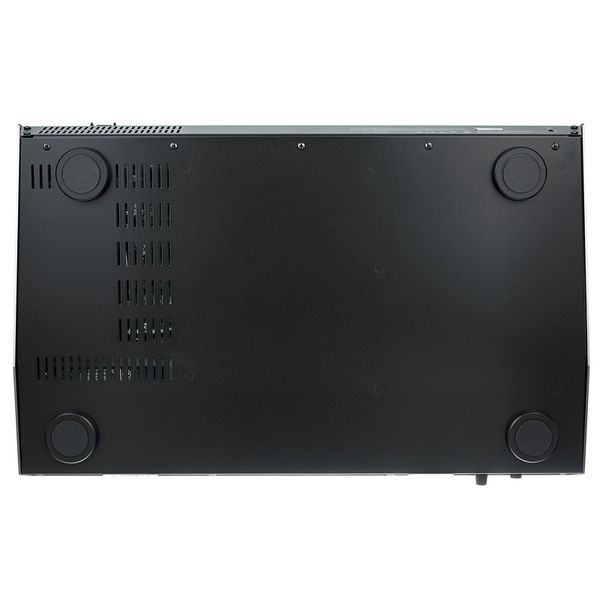
- Solid metal housing
- Dimensions (W x D x H): 486 x 311 x 125 mm
- Weight: 5.5 kg
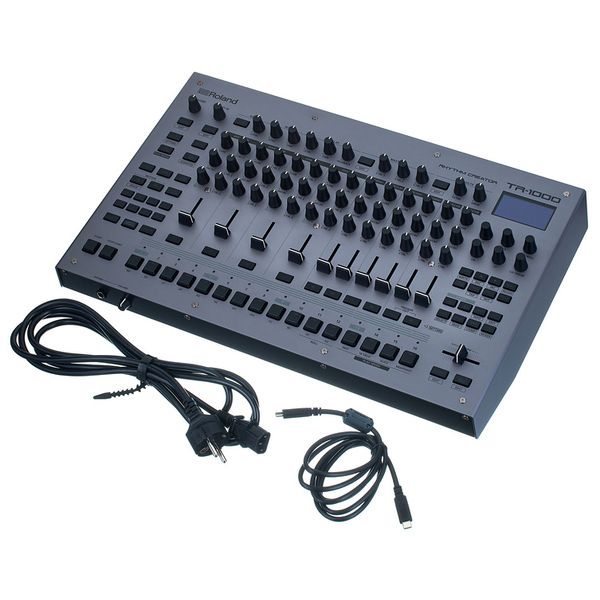
- Includes power supply cable, user manual and USB-C cable
-
Available since October 2025
-
Item number 623272
-
Sales Unit 1 piece(s)
-
Sound Synthesis Analog, Samplebased, Synthese
-
Pads 16
-
Effects Yes
-
Bass Yes
-
Display Yes
-
MIDI interface In, Out, Thru
-
Number of analog outputs 14
-
Headphone Connector Yes
-
Mains Operation Yes
-
Battery Operation No
-
Fader(s) 10
-
Sampling Function Yes
-
Storage Medium Internal
-
Footswitch connection 1
-
USB Yes
-
Headphone Output Yes
-
Extras Hybrid Sound Engine
-
Shape Desktop
-
The TR enters a new era
The TR-1000 is the first Roland drum machine to combine newly engineered analogue TR circuits with modern digital engines, and the first Roland to use new analogue circuitry in 40 years – all in a single flagship instrument. Roland has recreated sixteen iconic 808 and 909 circuits, complemented by digital synthesis engines (ACB, VA, FM, and PCM) and a fully-featured sampling section. These elements can be stacked into multi‑layered kits, with extended controls – such as the 808 kick's Tune and infinite decay – allowing deeper control over classic TR sounds. A flexible performance sequencer, featuring unquantised and motion recording, probability, and fills, is paired with an expressive morph fader, while dedicated sidechain and effects sections complete the design. With its rugged metal chassis, 46GB of user sample memory, and comprehensive connectivity, the Roland TR‑1000 is built to perform both in the studio and on stage.

)
Sequence, layer, sample
At its core, the Roland TR‑1000 is a multitrack powerhouse. Each track is built around a selectable sound engine, with filtering, compression, and effects – ideal for both quick tweaks and more involved editing. Its four dual-layer tracks allow two instruments to be stacked (e.g., an 808 kick and sub-bass), while the remaining six tracks handle the drums and percussion, in typical Roland fashion. Patterns can be programmed via the classic TR-REC grid, or recorded live, then chained into full song structures (with eight variations and fills) that can be recalled in Song mode. A high‑resolution display with six encoders supports real-time editing, and the sampling engine – complete with transient detection – captures, time-stretches, slices, and resamples loops or one-shots on the fly, assigning them directly to the step keys for instant playback.
)
Analogue hybrid
The Roland TR-1000 is a hybrid setup specialist, serving as the centrepiece of a live rig, a studio beat-crafting tool, or the rhythmic backbone of a band. Its blend of analogue circuits, digital engines, and sampling section adapts effortlessly to spontaneous jams or polished productions. Per-track controls, the morph fader, and snapshots (storing up to 16 recallable track states) keep real-time adjustments – variations, fills, and breaks – at the user's fingertips, even in dense patterns. Unquantised recording and micro-timing humanises grooves, while Step Loop and queued pattern chaining cater to improvisers and composers alike, ensuring full creative control over complex arrangements. Live electronic musicians, studio producers, and hybrid bands will find it a reliable and flexible centrepiece for their rhythmic workflows.
)
About Roland
Roland was founded in 1972 in Osaka, Japan, and has been designing and building electronic musical instruments ever since. During its successful history, Roland has launched many ground-breaking instruments, from legendary drum machines such as the TR-808 and the TR-909 to synthesizer classics like Jupiter-8, SH-101 and the iconic TB-303. Besides synthesizers, Roland's workstations and electric pianos are also very popular. Equally well-known is Roland’s subsidiary Boss, under whose brand name it designs and sells principally guitar pedals and effects units. Under the Roland Professional A/V label, the company additionally develops and distributes professional equipment for virtually every branch of audio and video production – from home studios through to commercial applications.
Comprehensive connectivity, complete control
With its comprehensive collection of inputs and outputs, the Roland TR-1000 fits easily into almost any setup. Stereo main outputs, a dedicated pair of FX outputs, and ten 1/4" jack outputs – configurable as individual outputs or trigger outputs – feed desks, interfaces, or outboard gear, while external inputs route synths, grooveboxes, or even vocals into the TR-1000's internal effects and sidechain. MIDI I/O, DIN sync, and USB audio/MIDI integrate smoothly with DAWs, DJ mixers, or controllers, while the dedicated desktop app supports sample editing, kit management, and multi-channel routing. Additional 1/8” trigger, clock, and filter CV connections further extend compatibility with modular systems or vintage drum machines.
In the spotlight
Morph Fader
The morph fader is the TR-1000's most expressive performance tool, enabling musicians to blend multiple parameters – filter sweeps, effect mixes, layer balances, or pitch curves – into a single, intuitive movement. Unlike absolute scene changes, Morph applies relative offsets to current control values on the panel, creating smooth transitions and modulations between sonic states without the need to navigate menus. Combined with 16 storable snapshot configurations and the fill trigger, it allows entire kit variants, effect setups, or level settings to be recalled instantly, reinforcing the TR-1000's status as a musical instrument in its own right, whether improvising live or tracking in a studio – all within the classic TR workflow.
)