


Mackie CR3.5

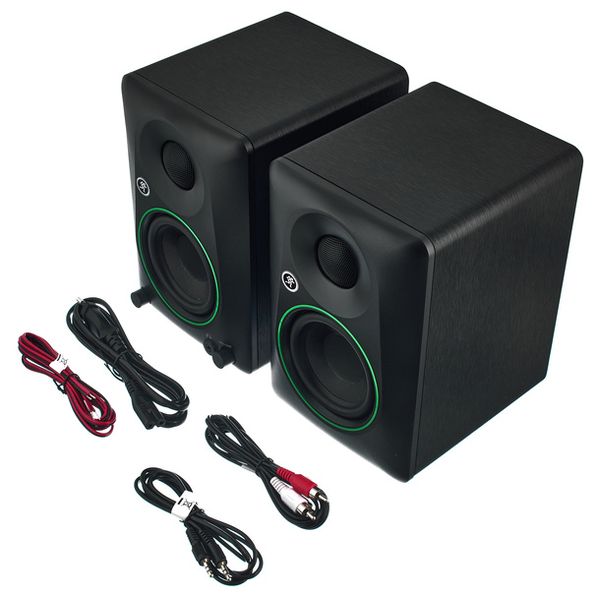


Active 3.5" Studio Monitors
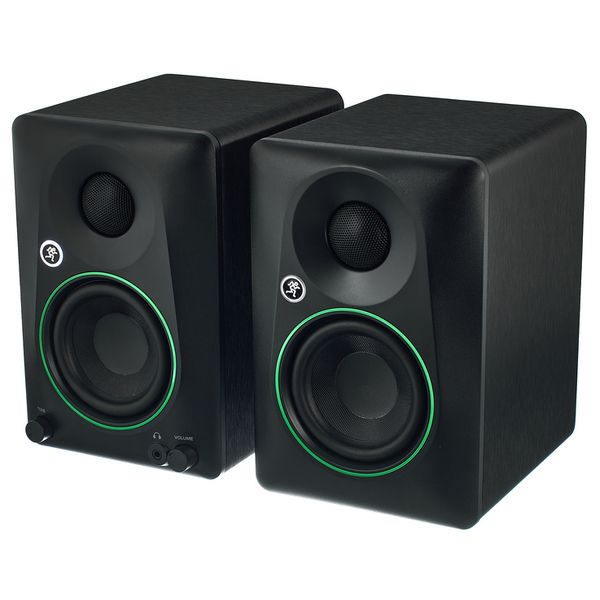
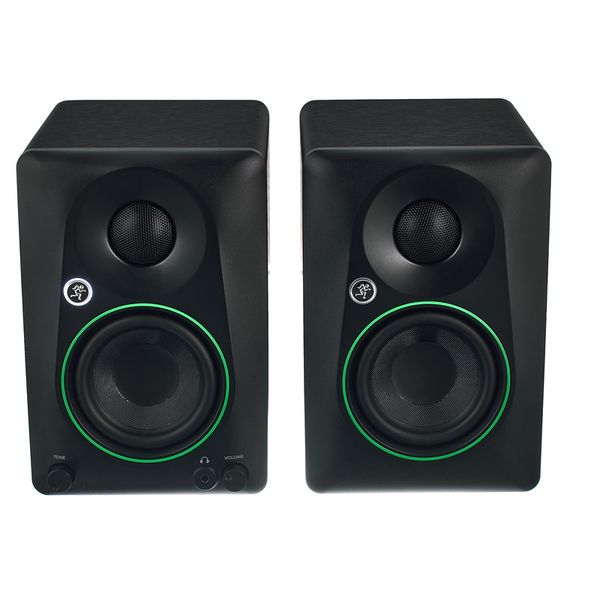
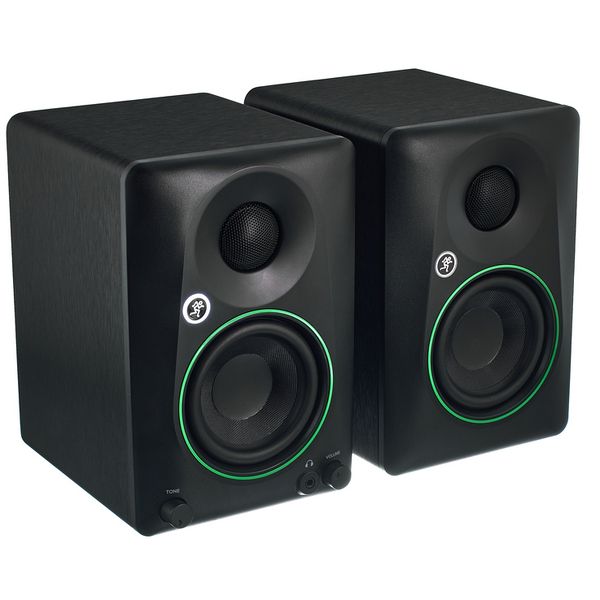
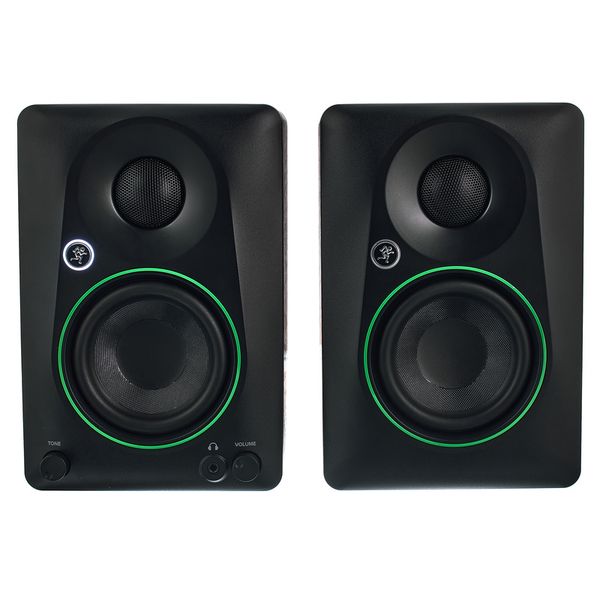
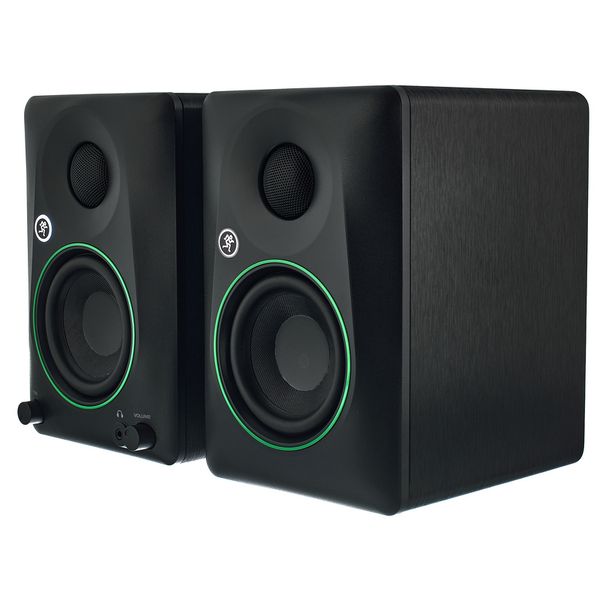
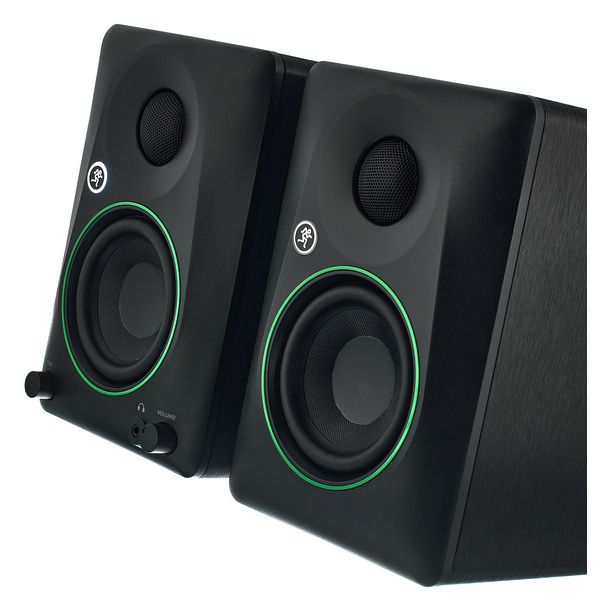
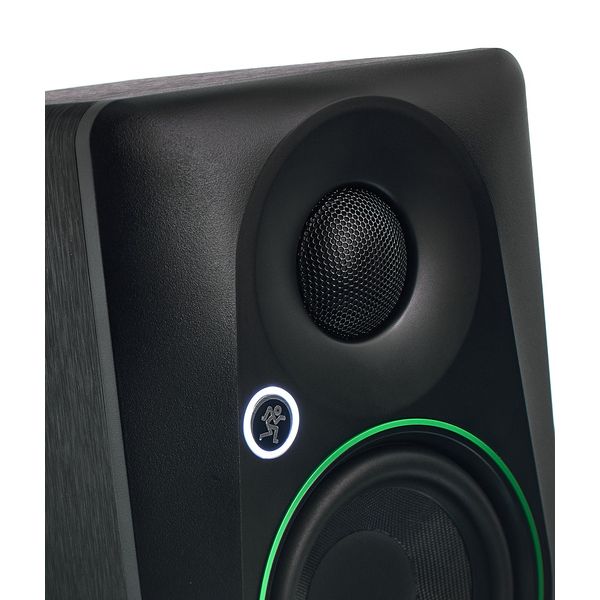
- Drivers: 3.5" woofer with fabric cone, silk-dome tweeter with protective grille
- Frequency range: 70 Hz – 20,000 kHz
- Max. sound pressure level: 97 dB
- Class AB amplifier with 50 W output (RMS)
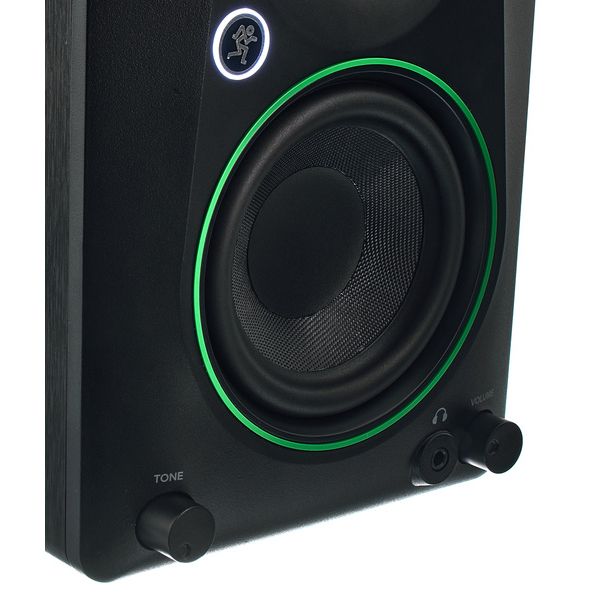
- Control for sound adjustment
- Volume control
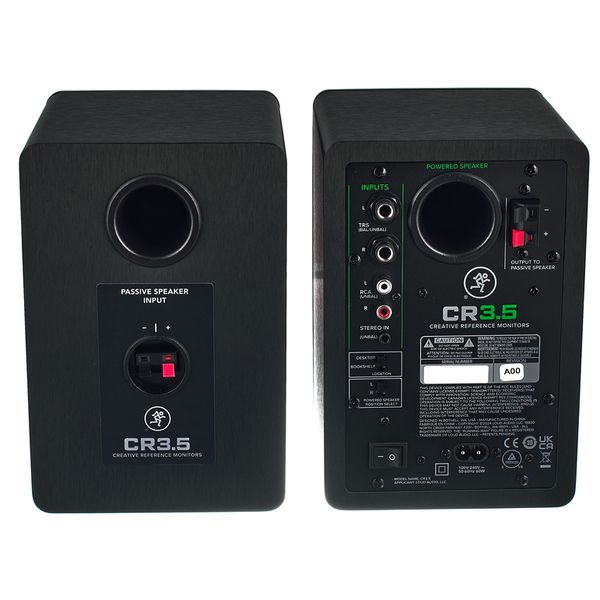
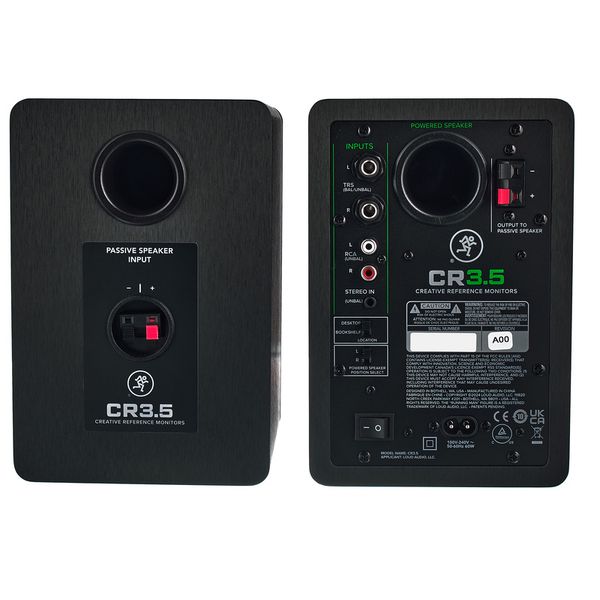
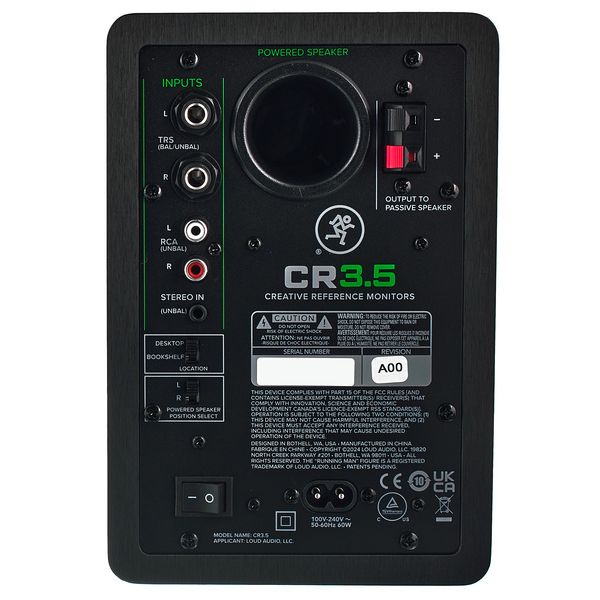
- Position switch for desktop and bookshelf modes
- Position switch L/R
- Built-in switched-mode power supply 100 - 240V / 50 - 60 Hz
- Inputs: 2 x Line 6.3 mm jack, 2 x RCA (L/R stereo) and 1 x 3.5 mm stereo mini jack
- Headphone output: 3.5 mm stereo mini jack
- Speaker terminal for connecting both monitors
- Incl. power cable, RCA cable, AUX cable and speaker wire
- Dimensions of each speaker (H×W×D): 206×140×180 mm
- Weight per pair: 3.7 kg
- Price per pair
-
Available since January 2025
-
Item number 602442
-
Sales Unit 1 pair(s)
-
Speaker size 1x 3,5"
-
Amplifier power per unit (RMS) 50 W
-
Magnetic Shielding No
-
Analogue XLR Input No
-
Analogue Input (Jack) Yes
-
Analogue Input (Mini Jack) Yes
-
Analogue Input (RCA) Yes
-
Digital input No
-
Manual frequency correction No
-
Frequency range min. 70 Hz
-
Frequency range max. 20000 Hz
-
Dimensions in mm 206 x 140 x 180
-
Speaker Housing - Woofer System Bass reflex
-

The complete package
The Mackie CR3.5 Gen 3 is a compact active monitor system designed to bridge everyday listening duties – from home entertainment and gaming to serious desktop music production and mixing. Part of Mackie's popular third-generation CR (Creative Reference) series, the system pairs a powered speaker with a passive partner to deliver a balanced, monitoring-grade stereo setup straight out of the box. A Class A/B amplifier delivers 50W of total output, ideal for small rooms and nearfield monitoring. With its compact footprint, multiple analogue inputs, and front-panel controls, it integrates easily into home studios, content-creation setups, and personal listening spaces – where flexibility and clarity are equally important.
)
Shape the sound
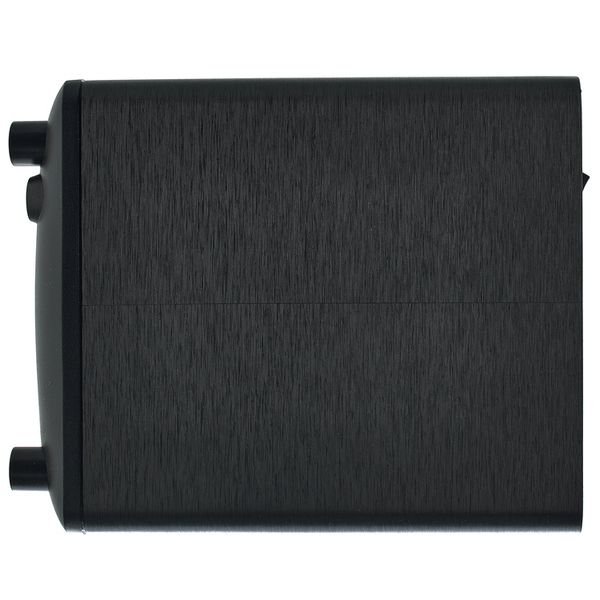
The Mackie CR3.5 uses rigid MDF cabinets with rear-firing bass reflex ports to extend low-frequency response while keeping resonance under control in close-range setups. Each speaker pairs a 3.5" woven-fibre woofer with a 1" silk-dome tweeter, crossed over at 3kHz for a smooth handover between lows, mids, and highs. Rather than chasing exaggerated bass or sheer loudness, the CR3.5 prioritises balance and definition: Mids remain clear and forward for vocals, speech, and guitars, the low end stays tight and controlled for its size, and the top end is detailed without sounding aggressive. Stereo imaging is precise at nearfield distances, making placement and depth easy to judge when working at a desk.
)
Suit the space
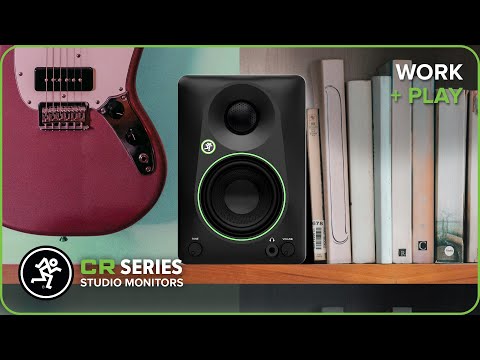
Designed for desk-based workflows, the Mackie CR3.5 suits producers working in small project studios, content creators editing audio or video, as well as gamers and music fans looking for better sound without a complex or costly setup. Balanced 1/4" TRS inputs connect directly to audio interfaces, mixers, or other studio gear, while RCA and 3.5mm stereo inputs accommodate hi-fi equipment, computers, and other consumer devices. Plugging headphones into the front-panel output automatically mutes the speakers – ideal for late-night sessions or critical listening. Compact, easy to place, and quick to configure, the CR3.5 balances accurate monitoring with everyday listening, switching effortlessly between work and play.
)
About Mackie
In 1988 Greg Mackie, already a successful co-founder of a pro audio company, founded Mackie Designs Inc. with the goal of producing affordable, high-quality mixers. The company's first official product, the LM-1602 line mixer, was initially produced within the four walls of his home. As sales figures were encouraging, its successor model CR-1604 soon followed - and in 1991 the company finally moved into its first proper production facility. The combination of reliable quality and low prices quickly brought the company enormous success, so that by 1995 Mackie had already sold 100,000 products. In 2003, the company was renamed LOUD Audio, LLC so that there is no longer any confusion between the Mackie brand and its former parent company of the same name.
Scaling the CR system
As the most compact model in the Mackie CR range, the CR3.5 is optimised for close-range listening in small rooms, desktops, and tight workspaces. Its controlled low end and modest output are well suited to nearfield monitoring, but users working at higher levels or in larger rooms may benefit from stepping up to the CR4.5 or CR5, which offer larger woofers, increased headroom, and deeper bass extension while retaining the same voicing concept and controls. For setups that call for more low-frequency weight, the CR3.5 can also be paired with a CR8S BT subwoofer, forming a compact 2.1 system that scales easily from focused desktop work to more immersive listening, gaming, or multimedia use. For more wireless flexibility, there's also a version of the CR3.5 with Bluetooth capability.
In the spotlight
Tone and Location controls
A defining feature of Mackie's CR Gen 3 monitors is a simple but effective voicing system that adapts the speakers to different uses and placements without relying on software EQ. The rear-panel Location switch compensates for desktop or bookshelf placement by adjusting the low-frequency response, helping reduce boundary reflections that can blur bass and low-mid detail. On the front panel, the Tone control shapes the overall character of the sound: Turned fully left, the response remains flatter and more neutral for tracking, mixing, or critical listening; as it's turned clockwise, low-end weight and high-frequency sparkle are gradually introduced for gaming, casual listening, or multimedia use. Together, these controls allow the CRs to shift smoothly between focused work and relaxed listening while preserving clarity and balance.
)
This is what customers who viewed this product bought

Accessories & matching items



Compare options
-
Mackie Active Nearfield Monitors at a glance
-
Display Active Nearfield Monitors from € 80 - € 100
-
Go to product group Active Nearfield Monitors
-
Go to product group Studio Monitors
-
Go to product group Studio and Recording Equipment
-
Show manufacturer details for Mackie
-
Mackie Studio and Recording Equipment at a glance