

Show me your pedalboard, and I’ll tell you who you are … 😉
For many guitarists, the pedalboard plays a vital role in shaping their sound. If you want to be as flexible as possible with your sound, there’s no getting around a handful of pedals. But what’s the right order of effects to ensure a clean signal flow and good overview? Don’t stress it – we’ll help you out!
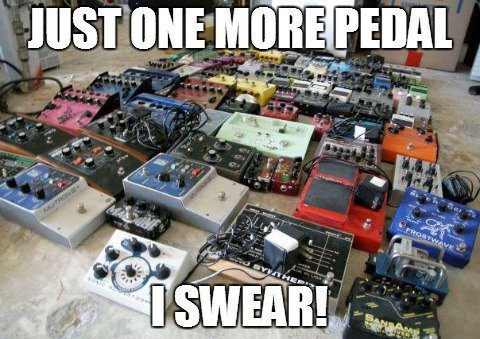
The days when a cranked tube amp was the main ingredient of a good guitar sound are all but over. For many guitarists, amps mainly serve as pedal platforms these days. And with a well-designed pedalboard, you always have your signature sound with you, whether in front of a tube amp, modelling amp, or audio interface.
The “ideal” effects chain …
… does not exist! In the end, it always comes down to your own taste, and many legendary guitar sounds have been created by deliberately ignoring the rules. Nevertheless, a few rules of thumb have emerged over the decades as popular, practical, and good-sounding. Incidentally, these rules don’t just apply to hardware pedals, but also to the effect blocks in your modelling amp or software amp simulation.
1. Tuner / Vintage Fuzz
To function properly, a tuner needs a signal that is as clean as possible. That’s why it belongs at the beginning of the signal chain.
Some classic fuzz circuits react sensitively to the input impedance of the signal and prefer to “see” the passive pickup of your guitar, so they also like to be at the beginning. Experiment with your fuzz to find out how it behaves.
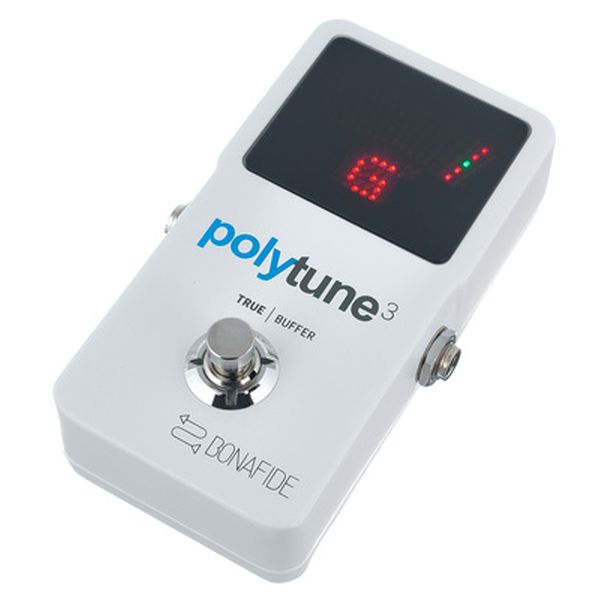
tc electronic
PolyTune 3 Tuner/Buffer
(A floor tuner with integrated buffer, ideal for the beginning of the effects chain)
2. Dynamic Effects / Pitch Shifting / EQ
Dynamic effects react to your input signal (volume or velocity) and therefore belong near the beginning of the signal chain. These include compressors, volume pedals, and noise gates (although the latter can also be useful after the distortion).
Pitch shifters, octavers, and whammy pedals generally require a clean signal to deliver their best results and should therefore be placed before the distortion. However, exceptions prove the rule …
Static EQs (graphic, parametric) and moving EQs and filters (wah wah, touch wah, envelope follower) are also usually inserted before the distortion, but also work with an already distorted signal. A matter of taste!
3. Distortion
Overdrive, distortion, and fuzz effects not only distort the signal but also act as compressors or sustainers. Most guitarists prefer to insert them before the time-based effects such as reverb and delay.
4. Modulation
In most cases, modulation effects such as chorus, flanger, phaser, vibrato, or tremolo work best post-distortion. However, chorus and phaser in particular are also very popular in front of a distorted amp or drive pedal. Try it!

Boss
CH-1 Chorus
(Chorus, phaser, and flanger can be inserted pre- or post-distortion)
5. Delay
A delay should ideally generate repeats of a “finished” sound. If it is used before the gain stages, each repeat will be distorted and compressed again, resulting in an overloaded effect. But perhaps that’s just what you want!
6. Reverb
Reverb tails sound most natural when they aren’t further amplified, modulated, or repeated. Therefore, the reverb usually belongs at the end of the signal chain, as would always be the case with an amp with built-in reverb.
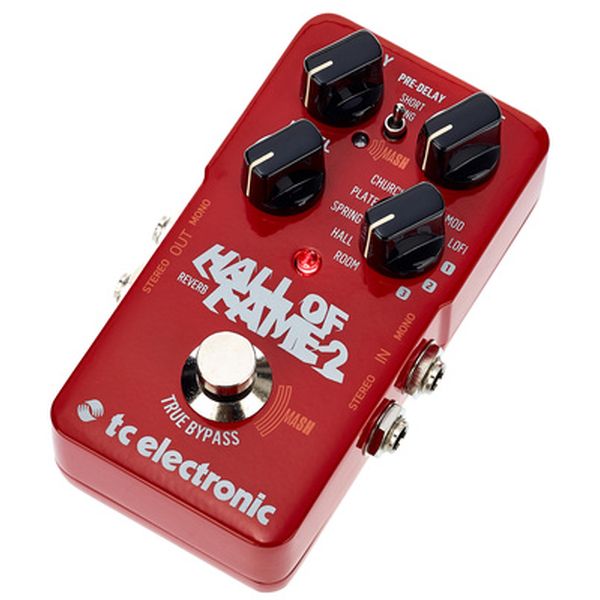
tc electronic
Hall of Fame 2
(The reverb usually belongs at the end of the effects chain)
7. Looper
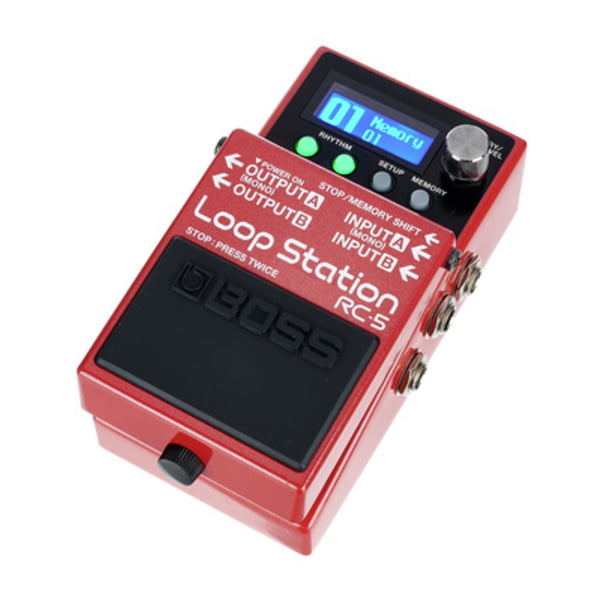
A looper (https://www.thomann.de/blog/en/loopers-endless-possibilities-for-your-live-performance/) should be at the end of the signal chain if you want to have flexible access to all sounds of your pedalboard. Let’s say you play a clean chord sequence with chorus and reverb, but want to use a lead sound with phaser and delay in the next overdub. This only works if the looper is behind all the effects. However, a looper can be used at the beginning of the signal chain to test subsequent pedals “hands-free” with a recorded loop – very practical!
Boss
RC-5 Loop Station
(Loopers make the most sense after the effects)
Which pedals belong in the FX loop?
The loop-in path (also known as the effects loop or FX loop) can be described as the link between the preamp and power amp stages of an amplifier. Think of the FX send jack as the output of your preamp and the FX return as the input of your power amp. An FX loop is particularly useful if you use the preamp of your amplifier to distort the signal. In this case, you can think of the preamp as a drive pedal. The FX loop allows you to insert all modulation, delay, and reverb effects post-distortion. So do you really need an amp with an FX loop? No, most common effect chains work just as well in front of a clean amp without a loop.
What is the 4-cable method?
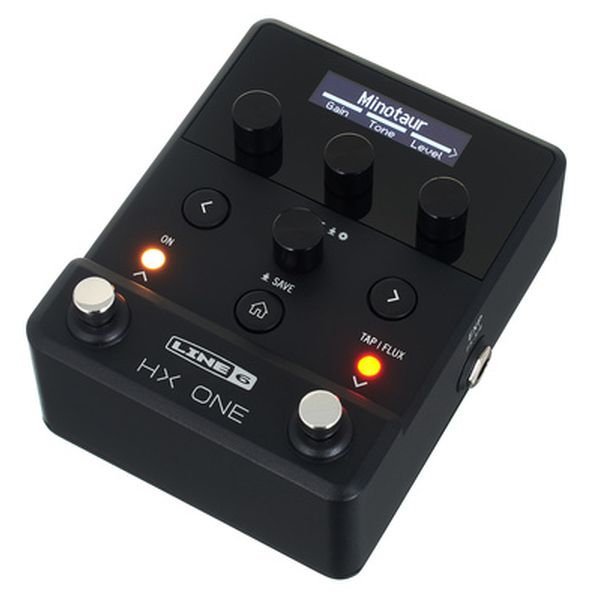
If you have a multi-effect pedal and an amp that both offer an FX loop, the so-called 4-cable method is a great way to combine them for maximum flexibility.
Cable 1: Guitar -> multi-effect input
Cable 2: Multi-effect send -> amp input
Cable 3: Amp send -> multi-effect return
Cable 4: Multi-effect output -> amp return
The 4-cable method allows you to place the effects of your multi-effect before and after the preamp without having to reconnect a cable each time. It is the ideal test setup to experiment with different effects chains.
Line6
HX One
(Multi-effects such as the Line 6 HX One support the 4-cable method)
How to organize effects on the pedalboard
The pedalboard
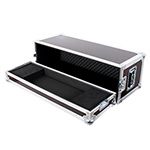
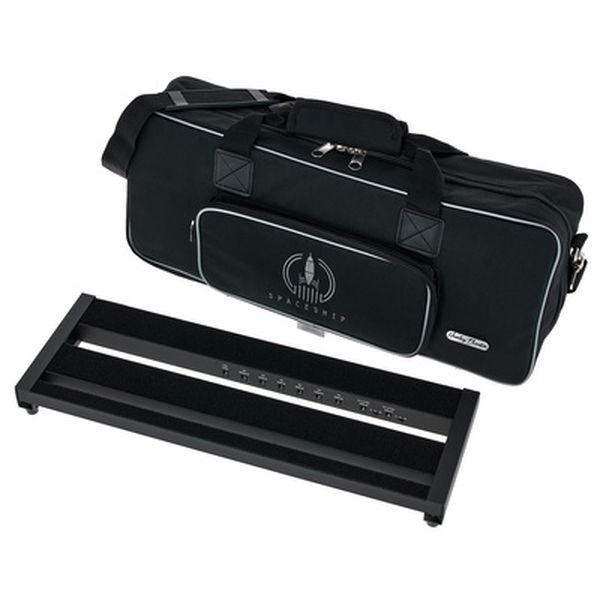
A pedalboard is a great way to create a secure and portable effects setup with a clear and consistent layout. If you have more than just a couple of pedals, a hard-wired board can save a lot of time during setup on stage. But a pedalboard can also be useful at home, especially if you need to organize a lot of pedals. Pedals are usually held in place with self-adhesive Velcro tape, so that you can swap them or change the order at any time.
Harley Benton
Spaceship Power 50M
(The Harley Benton Spaceship Power 50 is a pedalboard with integrated power supply)
Cables
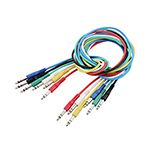
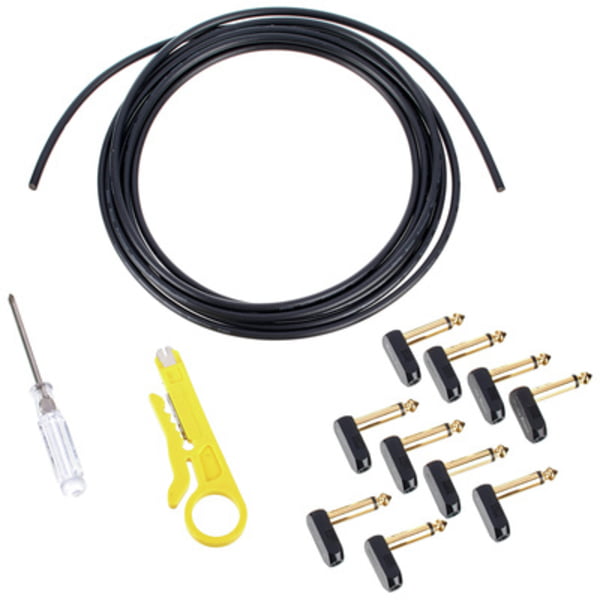
Patch cables are available in different lengths and with a choice of plugs (including angled, extra shallow, and flexible variants). You can also get solderless DIY kits. Don’t skimp on quality when it comes to cables. Searching for a defective cable on a large board can take a lot of time. And a clean signal flow also makes all the difference in terms of sound.
Harley Benton
Solder-Free Patch Cable KIT
Power supply
If you have three or more pedals, and especially when combining digital and analogue effects, you should consider a power brick with multiple outputs. With isolated outputs, selectable voltages (e.g. 9V, 12V, 18V), and plenty of amperage, these are a great all-in-one solution for powering multiple pedals on your pedalboard. Many of them are small enough to disappear underneath the board. You can find out more about using a power brick supply in this article. (einfügen!)
Loop switchers are used to organize and manage complex effects setups while ensuring an optimum signal flow. They allow you to place your effects in separate loops and control them remotely via footswitches. Many loop switchers let you save and recall various configurations and combinations of effects. And some even come with an integrated multi-power supply.
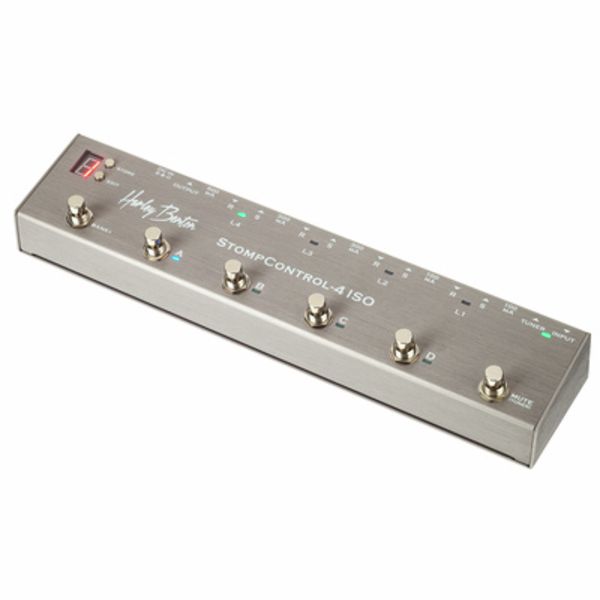
Harley Benton
StompControl-4 ISO
(The Harley Benton StompControl-4 ISO offers four programmable effect loops + power supply)
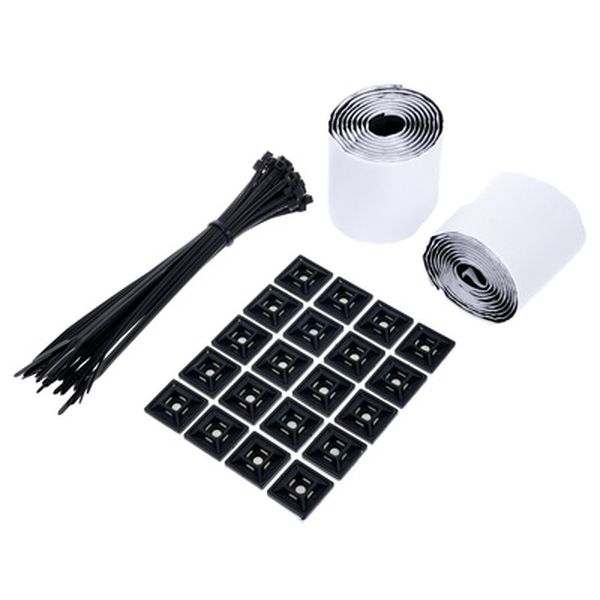
Harley Benton
Pedalboard Organizer Kit
(An organizer kit helps to keep the pedalboard tidy)
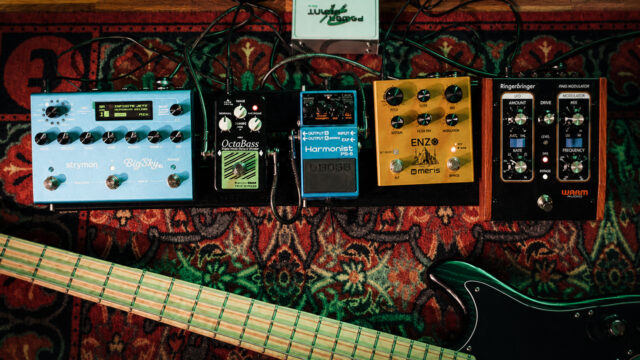
Feedback: How do you organize your pedalboard?
How do you organize your pedalboard, and why? Let us know in the comments!
Describe us your pedalboard and share with us the mods and additions you added to it!








Comments 15