















Hardly any other scene is as riddled with myths as the music industry. Some of them are deliberately started, others have been around for decades. Here are a few examples of the myths surrounding musicians and the business.👇
1. Age makes or breaks a music career
One of the most notorious myths in the music industry is probably the idea that age is a determining factor for a possible career in the business. It’s high time we realised that age is just a number and that you can be successful at any age.
The music industry has produced stars like 14-year-old Grace VanderWaal and 91-year-old Lata Mangeshkar, India’s most popular singer until she died in 2022. It’s not how old you are, it’s whether your fans like you.
You are currently viewing a placeholder content from YouTube. To access the actual content, click the button below. Please note that doing so will share data with third-party providers.
2. You have to have a natural talent
Although we musicians may not necessarily want to hear this, it’s a great misconception that only those who are naturally talented can make it as musicians. Talent can certainly be helpful, but on the other hand it can also hold you back.
After all, a music career above all requires hard and consistent work. Nobody simply falls out of bed and sells millions of albums. Those who rely on what they were born with can easily be overtaken by the hard-working, ambitious, and constantly learning.
3. I only need one hit
Many think that a one hit wonder is enough to “make it” financially and live carefree until the end of their music career. Even if this may be true for certain mega hits, one hit is no guarantee of a lasting career.
For the vast majority, one hit is not enough to retire. The success or failure of musicians depends on knowing what the next steps are. Especially in our fast-moving times, the hype fades away quicker than yesterday’s snow.
You are currently viewing a placeholder content from YouTube. To access the actual content, click the button below. Please note that doing so will share data with third-party providers.
4. Big amps mean a big sound
Rock concerts often feature huge walls of stacked speakers and amps. Or at least that’s what the fans are led to believe – after all, lots of amps must produce a powerful sound, right? Most likely, however, those walls aren’t what really delivers the big, venue-filling sound. The truth is that most amp walls are nothing but dummies.
With a wall of amps blasting away on stage, it wouldn’t be possible to create a proper monitor mix and the musicians wouldn’t be able to play. Smaller amps can also be driven into saturation more quickly. Nowadays, the “real” backline usually consists of much smaller amps and the front-of-house loudspeakers are typically suspended (“flown”) in front of the stage at large events.
5. The worst band in the world
Rolling Stone regularly publishes best-of rankings, for example of the best songs or best bands in history. But what about the worst band in the world? While the Leningrad Cowboys, for example, market themselves quite successfully as the worst band in the world, the search engine algorithms would like to differ.
Ask Google, Bing, or Yahoo, and you’ll find acts such as Nickelback and even the much-loved band Pink Floyd described as the worst bands in the world. Are they being serious? Does this finally prove that algorithms can’t be musical? And what does “of all time” actually mean? We’re nowhere near the end yet.
You are currently viewing a placeholder content from YouTube. To access the actual content, click the button below. Please note that doing so will share data with third-party providers.
6. Who played the solos
John Lennon and Paul McCartney were responsible for many of The Beatles’ greatest hits. However, there are also songs that George Harrison put his stamp on. “While My Guitar Gently Weeps” is a prime example of this. The song is considered his masterpiece and cemented his reputation as a guitar hero.
However, he didn’t actually play the solos on this classic track. Instead, they come from a certain Eric Clapton, who had written some parts at his friend’s insistence and recorded them on Harrison’s guitar. Clapton confirmed much later what Beatles biographers had already written.
You are currently viewing a placeholder content from YouTube. To access the actual content, click the button below. Please note that doing so will share data with third-party providers.
7. As if we had known: Elvis is alive
One of the longest-running myths is the claim by die-hard fans of the King of Rock’n’Roll that Elvis Presley is alive. He died on 16 August 1977, found in his girlfriend’s bathroom, lying face down in his vomit. Doctors diagnosed his death at 3.00 pm. However, according to the conspiracy theorists, this was only faked. They claim that a wax figure was allegedly buried in his coffin. An air conditioning system is even said to have been installed in the coffin to prevent the wax figure from melting. Fans be brave, but such nonsense clearly belongs in the realm of myths.

However, according to the conspiracy theorists, this was only faked. They claim that a wax figure was allegedly buried in his coffin. An air conditioning system is even said to have been installed in the coffin to prevent the wax figure from melting. Fans be brave, but such nonsense clearly belongs in the realm of myths.
You are currently viewing a placeholder content from YouTube. To access the actual content, click the button below. Please note that doing so will share data with third-party providers.
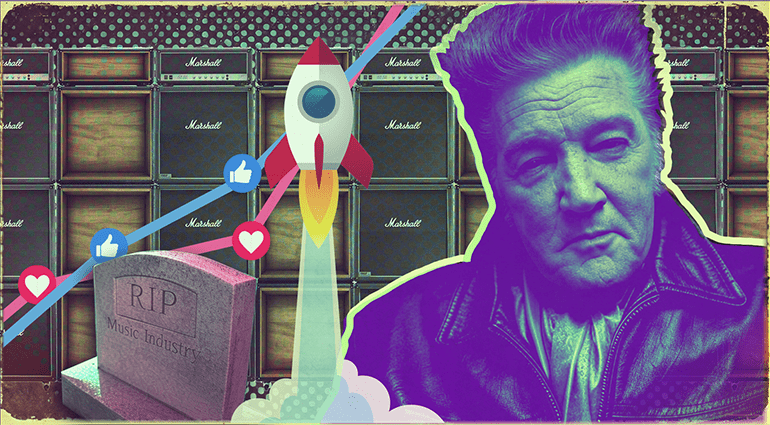
8. The music industry is dead
The claim that the music industry is dead has been around for decades. Okay, album sales have plummeted. But in fact, the demand for good music is higher than ever before. While they’re without a doubt controversial, streaming services have significantly increased music consumption, expanded people’s listening habits, and therefore even increased the likelihood of physical recordings being sold.
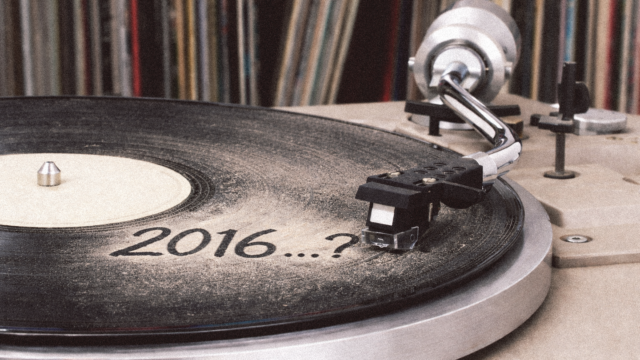
Even music that was created hundreds of years ago is making a comeback in the digital age. Mozart, for example, had some of his highest record sales ever in 2016. Despite claims that say otherwise, the music industry is alive and kicking.

9. Likes automatically lead to ticket sales
Social media platforms have long since established themselves as the easiest way to build a fan base and market music from the comfort of your couch. This is precisely the reason why so many bands, musicians, and artists use it.
Adele, for example, is a prime example of this. In reality, however, popularity on social media does not automatically lead to ticket sales. It’s much more important to build up a strong base of genuine fans than to have useless – possibly even bought – followers.
10. Streaming portals are active in the music business
Streaming services such as Spotify, TikTok, and YouTube are often said to be in the music business. Although many artists (particularly Generation Z acts) actively use them to promote songs, their approach is actually quite different. This is because these companies aren’t really in the music industry, but in the data business.

They use algorithms and AI on a large scale, in particular to sell their advertising. They also collect demographic, behavioural, and contextual data about their users. Unfortunately, the payouts to the artists are extremely low, but it’s important to know that the share these companies rake in from your music isn’t actually their core business.
Music Myths: your feedback
Do you know of any other untenable myths in the music scene? We look forward to your comments and a lively debate about fake facts!











Comments 2