










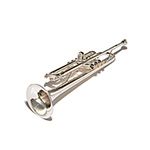
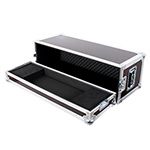


Spring is just around the corner, and with a new season approaching it makes sense to keep our instruments optimally playable. Give your instrument some love, ❤️ whatever instrument you play, if you treat it right and take care of it, it will last you a long time, while also retaining its value in the long term. Here are a few care tips for you!
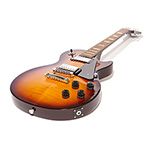
1. Guitar and Bass – deep clean and routine setup
Cleaning this type of instrument is an absolute must. The body of the guitar or bass should be cleaned regularly with a slightly damp cloth. With lacquered instruments, however, you have to be careful not to damage the lacquer. All instruments with a nitro finish are treated with solvent-free care products, and you should also use sensible polishing cloths, not scraps from old T-shirts, which will drive you crazy with their dust and, in the worst case, also cause ugly scratches in the finish.
-

- Gator GW-LP
-
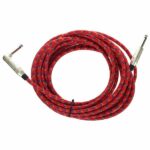
- Harley Benton GC 6 PR
-

- Ernie Ball 2221 Regular Slinky
-
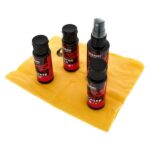
- Daddario PW-GCB-01
Once the guitar or bass has been thoroughly cleaned, you can seal the surface with a special wax: it is the same principle used in sealing car finishes (although with different products!). While you’re at it, why not check and correct the neck curvature by adjusting the truss rod, the string action, the saddle guides and tighten up those loose screws? You can then finish by working on the height adjustment of the pickups, a task that is often neglected. And by the way, have you put on a set of fresh strings yet?
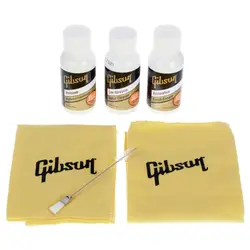 The best cleaning products for Bass and Guitar
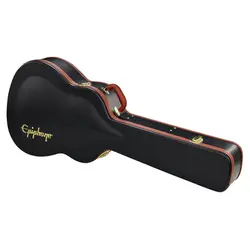
Bags, cases and hard shells – find them here
👉 Check out all Guitar and Bass accessories 🎸 👈
You are currently viewing a placeholder content from YouTube. To access the actual content, click the button below. Please note that doing so will share data with third-party providers.
🎥 Explore the YouTube series “Guitar Tech Tips” with Kris and learn to be your own guitar tech
2. Woodwinds – be careful with moisture!
Woodwind instruments must be dried urgently after each playing to prevent the wood from swelling. You can easily wipe off fingerprints, sweat and dust residue with a damp cloth. Special care should be taken with a small application of water. The instrument must never be soaked, nor wiped excessively wet, even if it is varnished: hairline cracks in the paint could allow moisture to penetrate the wood and cause it to swell.
The saxophone and the flute also belong to the woodwind instruments family, and the same applies here as with the brass instruments: depending on the finish, the body can be washed off with water and treated with appropriate paint care. For silver-plated surfaces, use silver polish or a silver cleaning cloth. Cork connections, like leather elements, are regularly greased so that they do not become brittle and break.
-

- Hercules Stands DS530B
-
- Gewa Gigbag for Tenor Horn
-
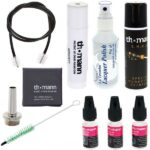
- Thomann Perinet Trumpet Big Care Set L
-
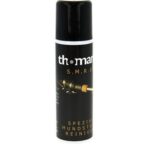
- Thomann Mouthpiece Cleaning Spray
3. Brass instruments – clean every change of season
About every three months, the brass instrument must be completely disassembled and broken down into its component parts, then placed in a plastic tub of lukewarm—not hot—water. During the next step you need to soak the parts in detergent and clean them with the appropriate cleaning brushes. As soon as everything has dried properly, all relevant parts are first freshly greased and the valves oiled. Then it’s time to assemble. However, there are maintenance processes that cannot wait that long. You should wipe the surface of the instrument completely with a soft cloth immediately after playing. Residues such as hand perspiration, environmental dust, saliva and the like must be meticulously removed. Make sure that there are different cleaning cloths for different materials and that the mouthpiece is kept hygienically clean with a mouthpiece cleaner.
-

- Thomann Fibertech Trombone Blue
-

- Monster Oil Trumpet Care and Cleaning Kit
-
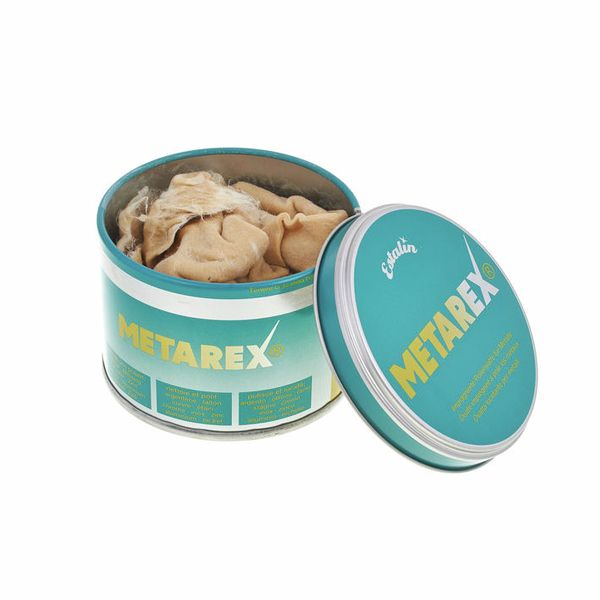
- Metarex Polierwatte
-
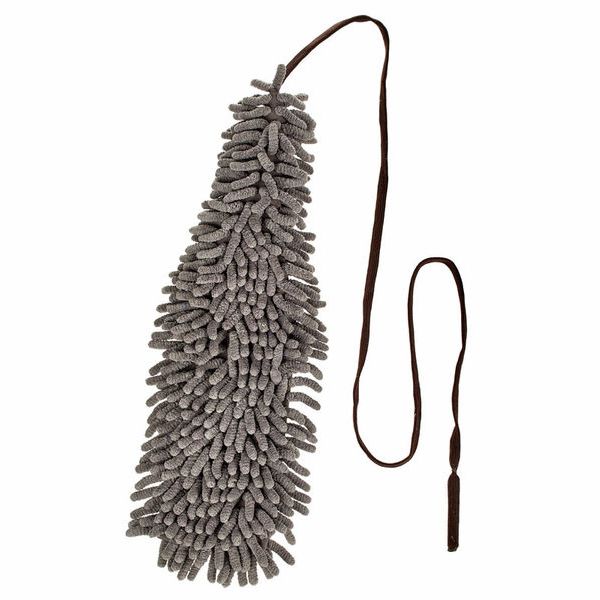
- Thomann Anfree Swab DB41 Tenor
👉 Check out all Woodwinds and Brass accessories 👈
4. Drums and percussion – cleaning and maintenance
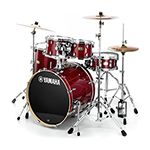
It’s pretty easy: virtually all components of conventionally varnished or foiled drum sets can be cleaned with lukewarm soapy water and then wiped dry with a soft cloth. In addition to the shells, this also applies to the hardware and most cymbals. But beware: the surface treatment is crucial.
-
- Vic Firth 5A American Classic Hickory Drumsticks
-

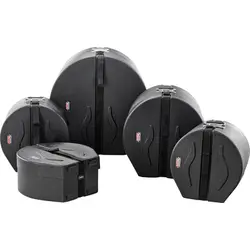
- Hardcase Drum Case Set HFusion
-

- Ahead Sex Wax
-

- Thomann Sticky Practice Pad
This is not possible with waxed or satin-matt wood surfaces, natural and stained wood, or shells with special or even unpainted surfaces. It makes sense to care for the moving parts, bearings, springs, screws and threads with acid-free oil, special care oil or silicone spray. The screw connections will benefit from a firm tightening and the set will thank you if you tune it with a tuning key. What about changing those snare wires and drumhead too, while you’re at it?
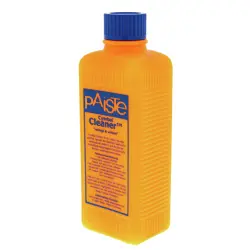
Cleaning products for Drums – find them here
👉🥁 Check out all Drums and Percussion accessories 🥁👈
5. Strings – nothing is more important than regular maintenance
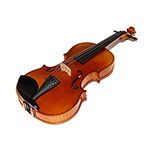
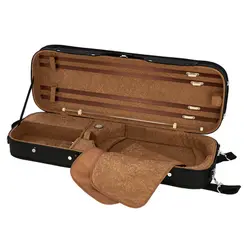
Stringed instruments such as the violin, viola, cello and double bass should be cleaned with a cotton cloth after each practice and musical performance. This carefully removes finger sweat, grease and, above all, rosin abrasion from the instrument. In the case of heavy soiling, you can also lightly moisten the cloth with a solvent-free instrument cleaner. Be carefully to slightly dampen it, and not overdo it!
-

- Harley Benton Violin Strings 4/4
-
- Hidersine 3V Rosin Violin / Viola
-

- Pirastro Evah Pirazzi Gold Viola
-

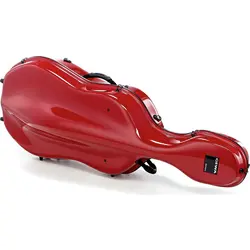
- Gewa Pure Cello Case Polycarb. WH
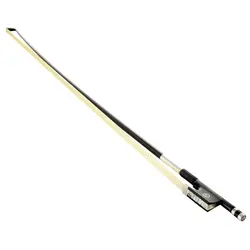
Layers of rosin have surely settled on the strings. They can only be removed with a cloth dampened with pure alcohol. You have to be extremely careful that the alcohol does not hit the instrument itself anywhere. The damage would be immense. You should also wipe down the bow pole and the heel regularly. Pay special attention to the stringing of the bow, although you should not wait too long for a fresh re-string. The problem is that the hair usually breaks on one side; as a result, the bow stick would twist and be permanently damaged. Keep it in check!
Disclaimer: in this article we were only able to roughly outline the numerous tips needed for a proper care of your beloved instrument. If you’re in doubt, consult a professional before potentially ruining your instrument. With that said, we wish you a lovely day of cleaning, maintenance and general care: your instrument deserves a special treatment!











Comments 0
No comments yet.