

The Birth of a Legend: Osaka, 1980
Osaka, 1980: In Roland’s labs, engineer Tadao Kikumoto developed a new drum machine. The goal was to realistically replace drummers – perfect for musicians without a band. But memory chips for real samples were prohibitively expensive, so analog circuits were used for the kick, snare, and handclaps. The result sounded nothing like real drumming. As product manager Sean Montgomery put it: “They did their best, and it sounded terrible.” Yet it was precisely this artificial sound aesthetic that would later make the Roland TR‑808 legendary.

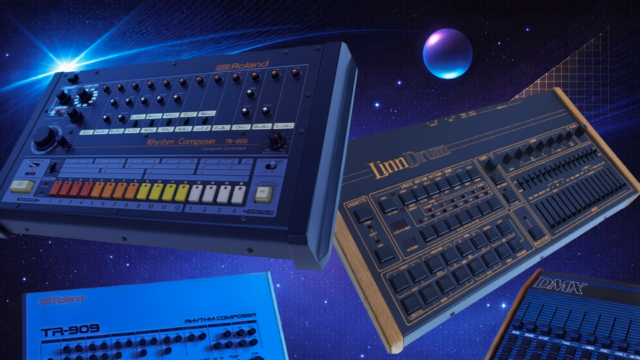
The TR‑808 hit the market in 1980 but stayed in production for only two years. Around 12,000 units were built before a specific transistor (2SC828‑R) – which gave the kick drum its distinctive bite – went out of production. Manufacturing ended in 1983. Commercially, it wasn’t a success. The LinnDrum, with its real samples, sounded more contemporary. Critics complained about the unnatural sound, and some drummers even feared for their jobs. But soon, that synthetic tone became the 808’s greatest strength.
Analog Over Realism: From Flop to Cult Sound
After production ended in 1983, something unexpected happened: used TR‑808s began showing up in pawnshops, often selling for under $100, compared to their original $1,200 price. Suddenly, young musicians could afford the machine. They weren’t looking for realistic rhythms – they wanted new sounds and fresh beats. Just as it was discontinued, the 808 took on a life of its own in the hands of a new generation.

Its greatest asset? Distinctive sounds over realism – a deep, booming bass drum, a crisp snare, sharp handclaps, sizzling hi‑hats, and the legendary cowbell. Everything was tweakable: extend the kick decay, make the snare snappier, tune the toms. This made the 808 a true instrument in its own right. Its 16‑step sequencer with colorful buttons allowed intuitive programming, a feature Roland called “TR‑REC.”
Producers quickly realized that precisely because the 808 didn’t sound like real drums, it was exciting. As Deutschlandfunk Kultur put it: “It didn’t sound like drums, and that’s what made it interesting.” The 808 delivered futuristic grooves – an electronic foundation for electro‑funk, synth‑pop, and the musical revolution of the 1980s.
Product Overview
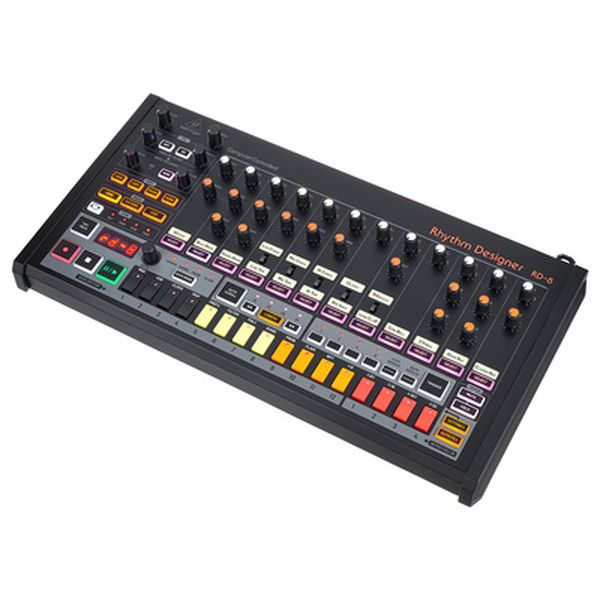
Behringer
RD-8 MKII
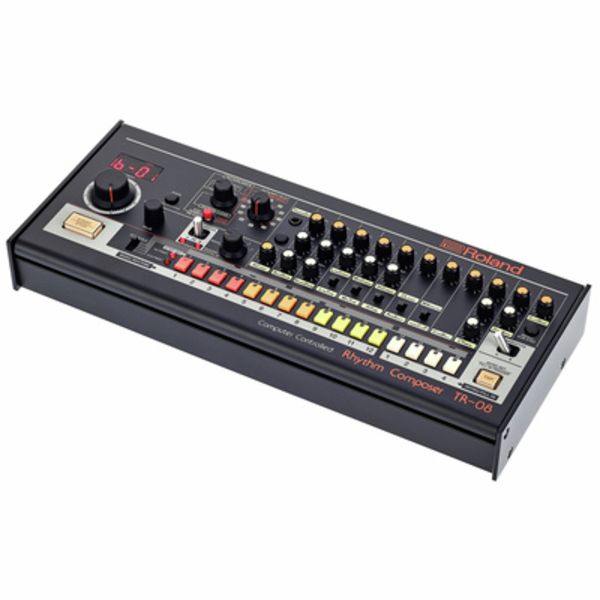
Roland
TR-08
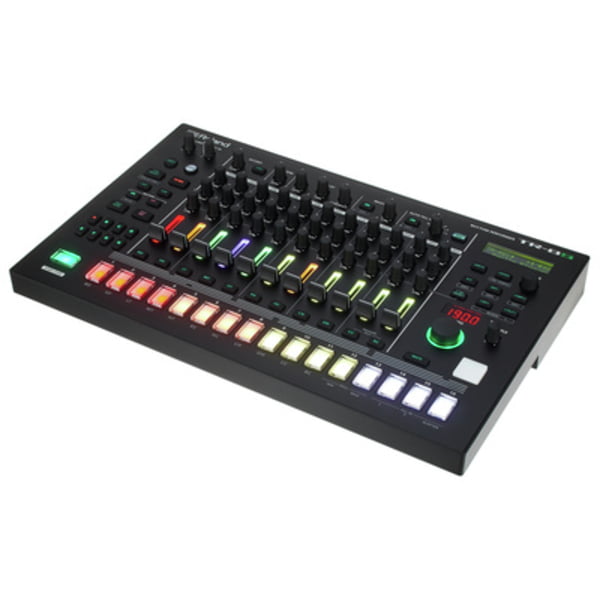
Roland
TR-8S
First 808 Beats: From Marvin Gaye to Cybotron
One of the TR‑808’s first big appearances came in 1982 in a genre Roland likely didn’t expect: Soul/R&B. Marvin Gaye used the drum machine for his hit “Sexual Healing.” Its minimal, driving 808 beats gave Gaye’s vocals a futuristic edge. The song became a worldwide hit, topped the charts in 1982, and won two Grammys in 1983. The Rock & Roll Hall of Fame included it in their list of “500 Songs that Shaped Rock and Roll” – especially for its innovative rhythm track. The TR‑808 had gone mainstream.
Meanwhile, another revolution was happening in New York. Afrika Bambaataa, a pioneer of the Bronx hip‑hop scene, blended soul and funk with the electronic sounds of Kraftwerk. The result: “Planet Rock” (1982), produced by Arthur Baker – a milestone in electro‑funk. Its fast 808 beats and innovative bassline made the track groundbreaking for hip‑hop. Many rappers were skeptical at first, but this newness is exactly what made the song revolutionary. The TR‑808 became the electronic foundation of hip‑hop.
At roughly the same time in Detroit, future techno pioneer Juan Atkins began experimenting with the 808. Inspired by visions of a technological future, he produced “Clear” in 1983 with his project Cybotron – a track combining funky basslines with machine‑like rhythms. This hypnotic groove heavily influenced Detroit techno. Atkins praised the 808 for its creative freedom: the ability to set patterns and build new structures. This approach became foundational for techno and house.
Hip‑Hop and Trap: The Heartbeat of the Beat
In the late ’80s and early ’90s, the TR‑808 became the heart of hip‑hop. Especially in West Coast electro and Miami bass, its powerful kick was indispensable. Artists like Egyptian Lover built entire tracks around the 808 bass drum and even used it live on stage. The machine evolved from a studio tool to a performance instrument capable of moving entire crowds.
Hip‑hop producers soon discovered the signature “808 boom” – tuning the kick lower and lengthening it so it acted almost like a bassline. In the U.S. South, especially in Miami bass and later Dirty South, these deep, vibrating basses became beloved.

By the 2000s, the 808 found renewed fame through trap music. This Atlanta‑born style defined itself almost entirely through the 808: pounding kicks, ultra‑fast hi‑hats, sharp clap snares. Producers like Lex Luger and Metro Boomin built beats almost entirely from 808 elements. The term “808” became synonymous with heavy electronic bass in hip‑hop. Kanye West even immortalized it in his 2008 album “808s & Heartbreak.” To this day, the 808 shapes modern hits – like Drake’s “God’s Plan.”
From Techno to Footwork: 808 in the Electronic Underground
The 808 remains a mainstay not just in hip‑hop but across countless electronic genres. Early techno and house tracks of the ’80s used either the TR‑808 or its successor, the TR‑909 – often both. The 909 had a harder‑hitting kick drum, while the 808 sounded “softer” and “more feminine,” as Graham Massey of 808 State described it. The warm cowbell tone and rolling conga toms shaped ’80s dance hits – from the club‑friendly R&B of the SOS Band to early Chicago house tracks.
In Europe, the 808 quickly spread as well. In Manchester, post‑punk bands fused their music with 808 rhythms, while in London, young producers experimented with the drum machine. According to Massey, the 808 transcended genres and social boundaries: industrial, synth‑pop, R&B – everyone used its magical sound. To this day, many dance tracks deliberately avoid realistic drums, a trend the TR‑808 helped inspire.
In 2010, British producer Addison Groove released “Footcrab,” making waves in the UK bass scene. Inspired by Chicago’s footwork style – which relies almost exclusively on 808 sounds – he combined them with the tempo of British dubstep. “Footcrab” featured minimalistic 808 grooves that instantly became a scene hit. Groove noted that the 808 sound was perfect for being present in both clubs and small speakers – clear and assertive at the same time.
In minimal techno, Ricardo Villalobos paid tribute to the 808 with his track “808 The Bass Queen” (2003). The deep kick takes center stage in a stripped‑down arrangement, showing how the machine can have a huge impact even in minimalistic settings.
Lasting Presence: Plugins, Reissues, and the 808’s Legacy
Today, the original TR‑808 is a coveted collector’s item, fetching high prices. But its sound lives on digitally: 808 samples are standard in modern production. As early as the mid‑’90s, the first software emulation, ReBirth RB‑338, appeared. Now there are countless plugins, virtual instruments, and even official hardware reissues like Roland’s TR‑08 (2017) and the expanded TR‑8S. In 2019, Behringer released the RD‑8, an analog clone.
The TR‑808 has become almost invisible – hidden in laptop software – yet its influence remains audible, whether in nostalgic retro tracks or today’s trap beats. Fans even celebrate “808 Day” every year on August 8th.
Product Overview
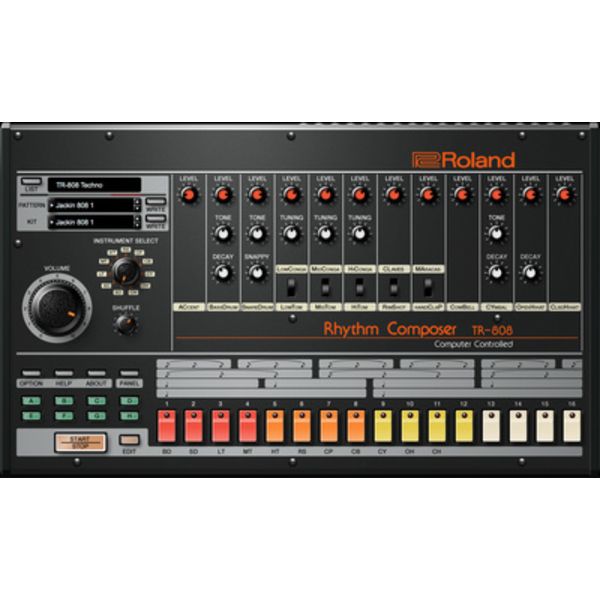
Roland
Cloud TR-808 Download
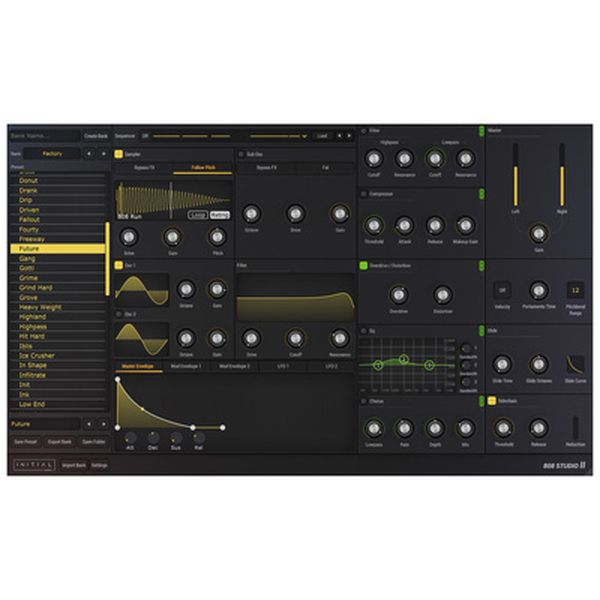
Initial Audio
808 Studio Download
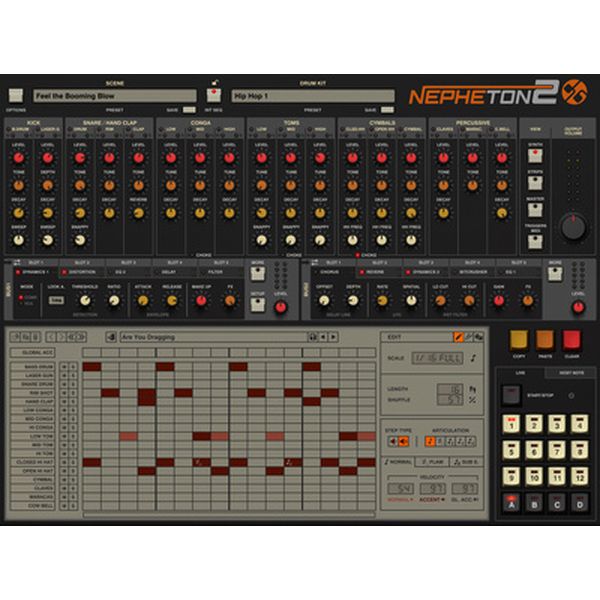
D16 Group
Nepheton 2 Download
Many musicians still express their love for the 808. Egyptian Lover, the West Coast electro legend, owns several units and affectionately calls them “his children.” Phil Collins appreciated the TR‑808 for its inspiring patterns and the open atmosphere it brought to his songs. For many artists, the machine is more than just an instrument – it’s a source of inspiration and an entire sonic universe.
Over 40 years after its introduction, the TR‑808 has shaped music styles, pushed creative boundaries, and influenced countless artists. Originally intended as a realistic drum replacement, it became legendary precisely because of its unreal sound. From the dancefloors of the 1980s to today’s streaming playlists, the 808 continues to resonate: boom … tsshh … the legend lives on.







Comments 0
No comments yet.