
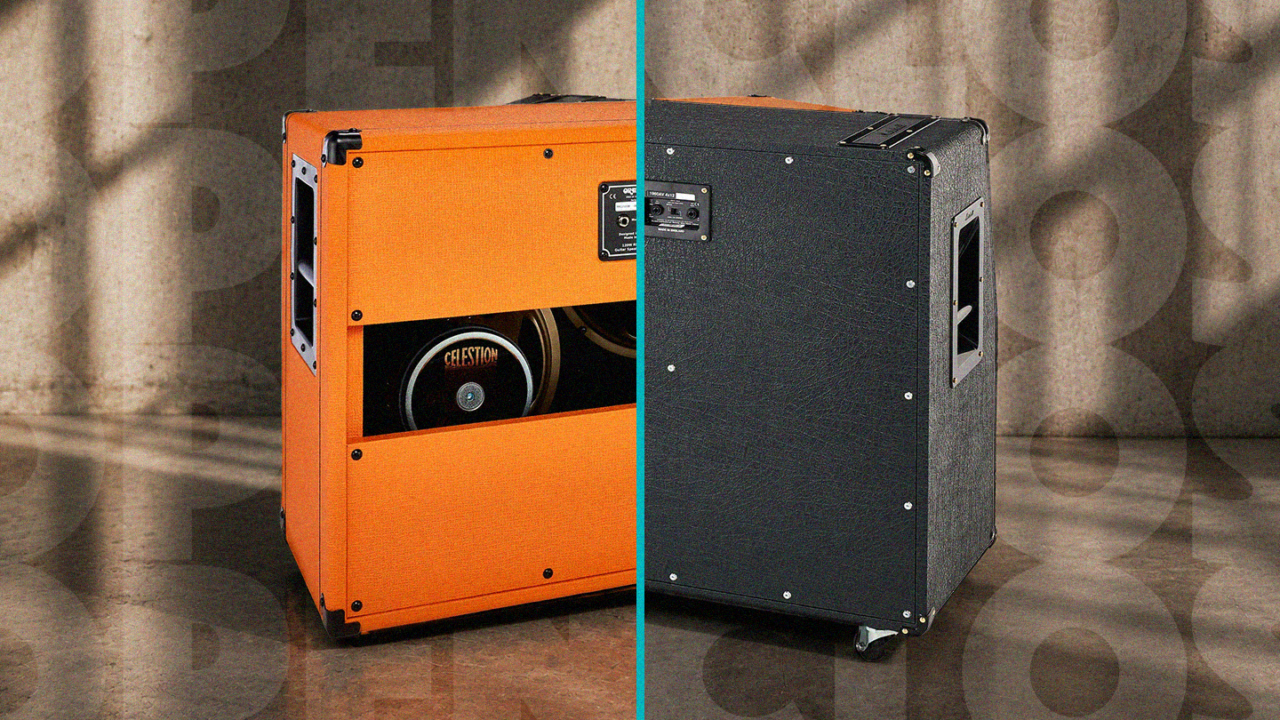

We’re going to get a bit nerdy again here and focus on the difference between closed back and open back guitar cabs and their sonic effects. At first glance, the back of a guitar cab may not seem important – after all, the speaker sits at the front and radiates to the front. So what does the back of the amp have to do with the sound? Quite a lot, especially when it comes to how the cab sounds in the room. You’ve guessed it, it has to do with the propagation of sound waves and various frequency cancellations. But don’t worry, we won’t be getting overly technical here.
Guitar Cab: Closed Back vs. Open Back – Quick Facts
- Closed back: the guitar cabinet is closed at the back
- Open back: the guitar cabinet has an opening at the back
- Closed back: powerful sound with tighter bass, clear dispersion angle
- Open Back: fuller sound in the room, spreads out more, slight treble reduction
Guitar Cab: Construction
A guitar cabinet or cab is a speaker cabinet that is optimised for guitar sounds and equipped with one (or more) specific guitar speaker(s). The design is quite simple: it is a wooden box with four side panels, a rear panel, and a front panel where the guitar speaker is mounted. Typically, the front panel is protected by a grille or a layer of sound-permeable fabric. Depending on the make and model, the rear panel can be either completely closed or partially open. This is what the individual parts of a 4×12 guitar cab look like:

The most important thing for the sound is, of course, the type of speaker. But other components also contribute to the sound:
Number of speakers
Guitar cabs are commonly available with one, two, or four speakers. As a rough guide, the more speakers there are, the “fuller” the sound. Of course, the size (diameter) of the speakers also matters. Here, too, the general rule is: the bigger, the more powerful. Guitar cabs are primarily equipped with 12-inch speakers, but there are also models with 10-inch or 8-inch speakers.
Wood type and thickness
The term wood thickness refers to the thickness of the wood used for the side and rear panels. A speaker generates vibrations. The wood of the cabinet should ideally resonate with the speaker and enhance its vibrations. Most guitar cabs are made of durable plywood; the industry standard is 18-millimeter birch plywood. This wood resonates better, especially with closed cabs. It is important that there is no air between the layers of wood to prevent the cabinet from rattling.
Guitar Cab: Closed Back
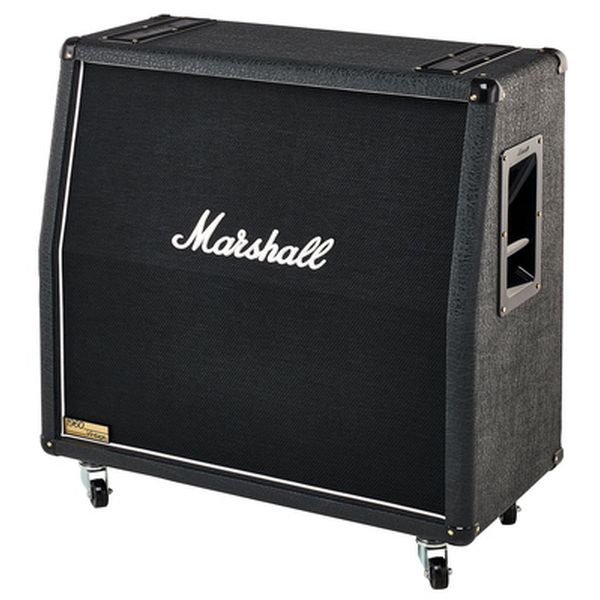
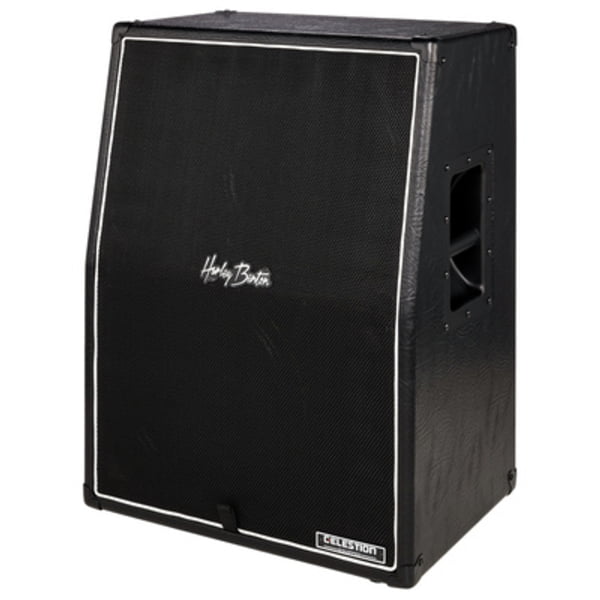
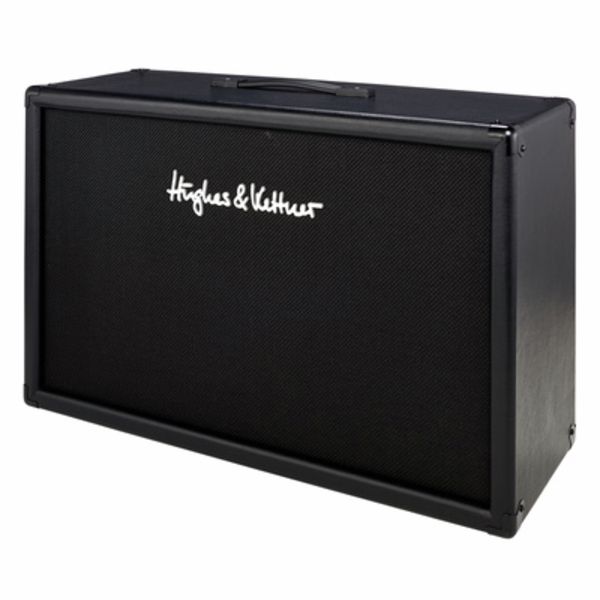
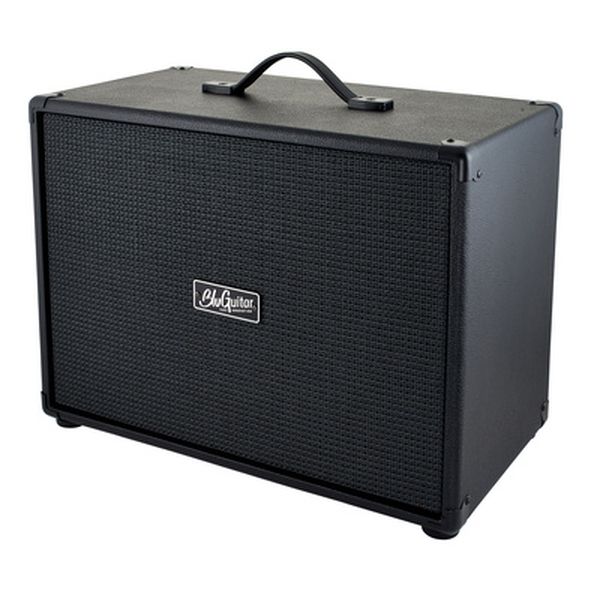
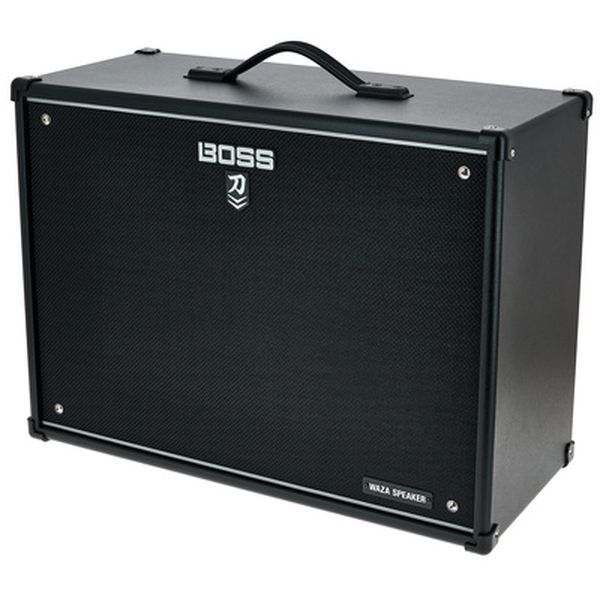
In a closed cabinet, all the sound is “pushed” forwards, as there is nowhere else for it to exit the cabinet. As a result, the sound from this type of guitar cab is very focused and reaches the listener directly. The basses are clear, tight, and defined and the mids are also slightly more pronounced. This type of cab is best suited for holding your own in a band. For the most part, 4×12 cabs are designed with a closed back. The same goes for most 2×12 cabs.
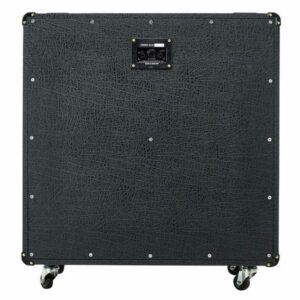
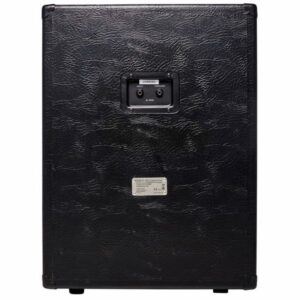
Guitar Cab Closed Back Models
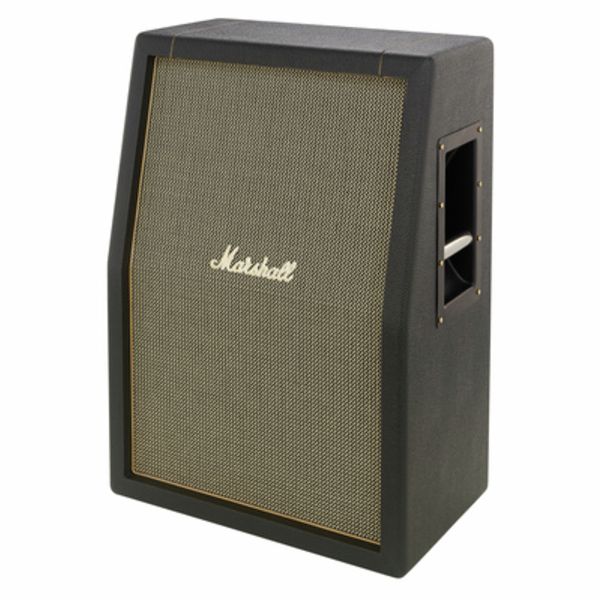
Guitar Cab: Open Back
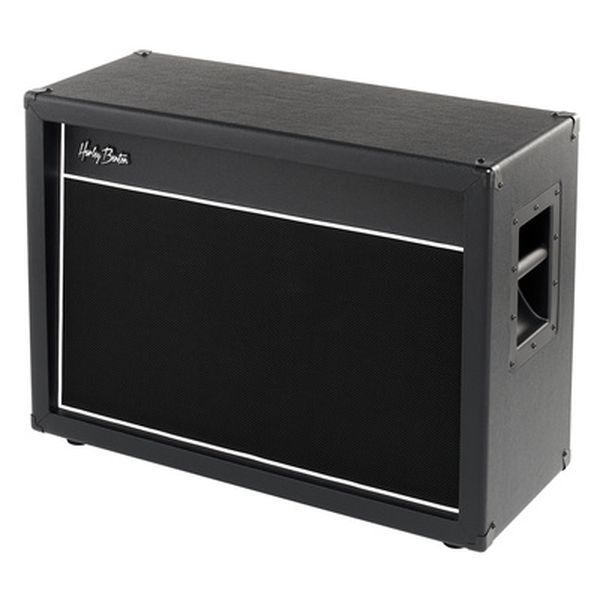
An open back guitar cab has an opening in the rear panel. Most open back cabs have partial rear panels at the top and bottom, one of which also houses the connectors. Between them is a gap, through which you can see the speaker(s). Depending on the size of this gap, more or less sound can escape towards the rear.
This reduces the sound pressure level at the front and makes the sound more open and less focused. Simply speaking, a closed cab delivers a beam of sound to the front, while an open back cab creates more of a cloud of sound around the cab. The sound is distributed over a larger area in the room because it is also emitted to the rear.
Don’t forget! If you place an open back cab directly against the wall, this sound cloud will be smaller than if the cab is placed a little further away from a wall and the sound can spread over a larger area. The sound is somewhat warmer with a slightly reduced treble range. This is due to the cancellation of frequencies that occurs because the sound escapes both to the front (forward movement of the speaker) and to the rear (backward movement of the speaker). The bass range is also slightly softer.
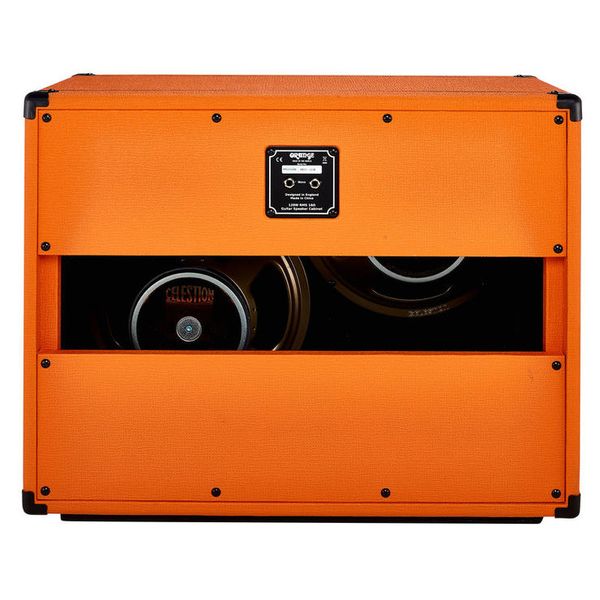
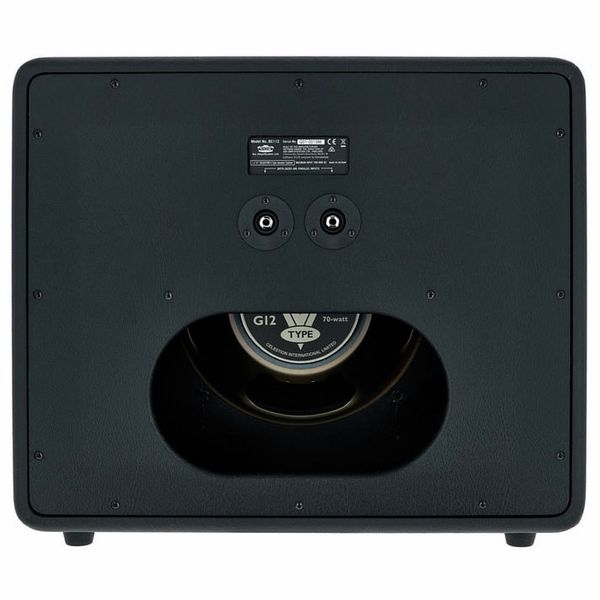
In the 1950s and 1960s, combo amps often had an open-back design to reduce weight. Guitarists placed them on stage to project sound to the audience and hear themselves through the back. For recording, engineers sometimes used a second microphone at the back for a warmer sound mix. These amps, typically made of lightweight pinewood, have less critical vibration characteristics due to their open-back design.
Open Back Guitar Cab models
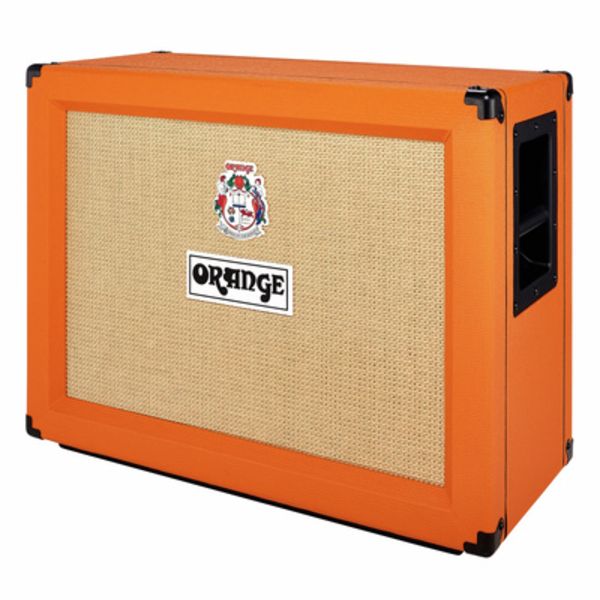
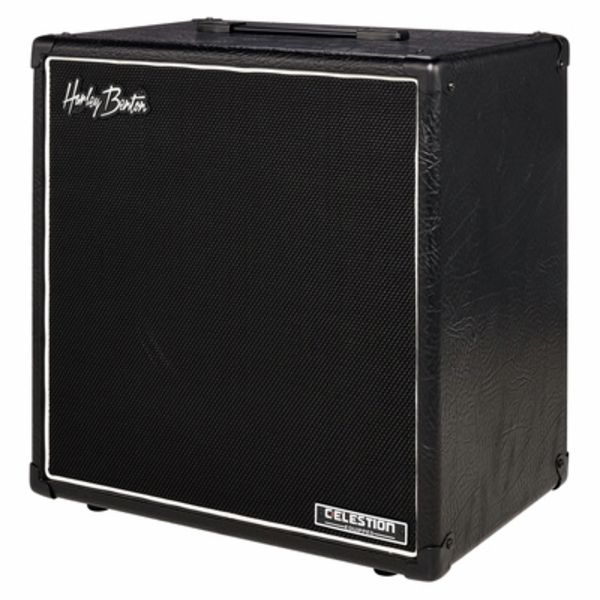
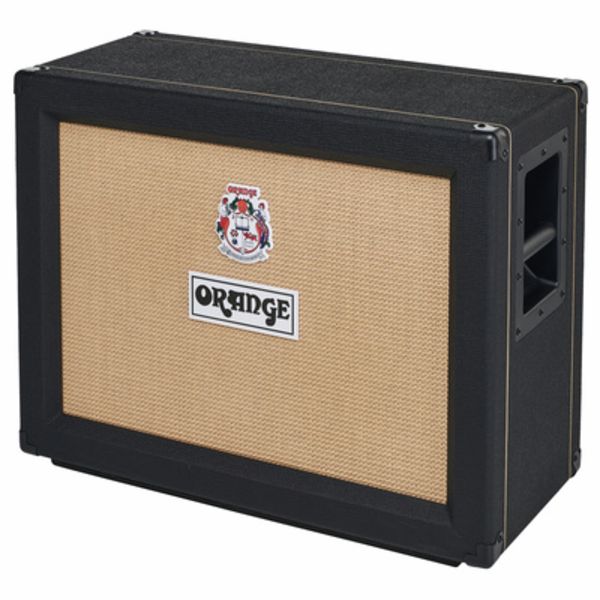
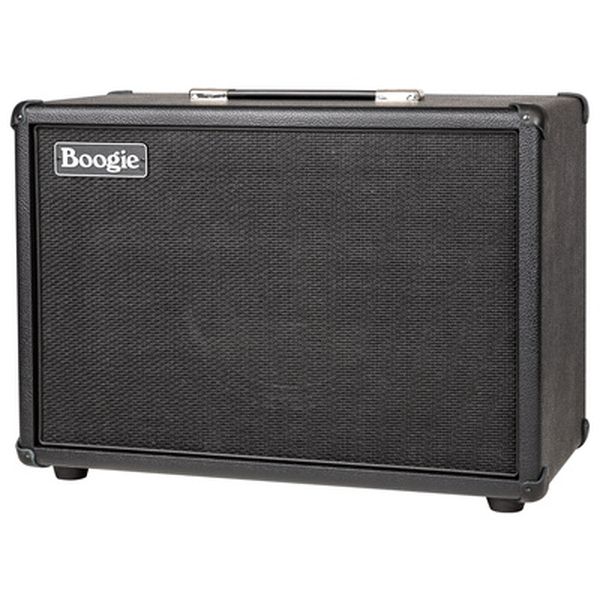
Guitar Cab: Variable Models (Closed Back & Open Back)
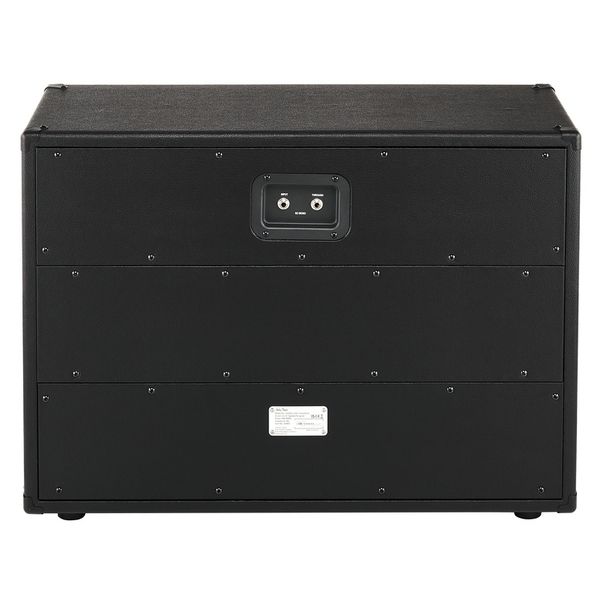
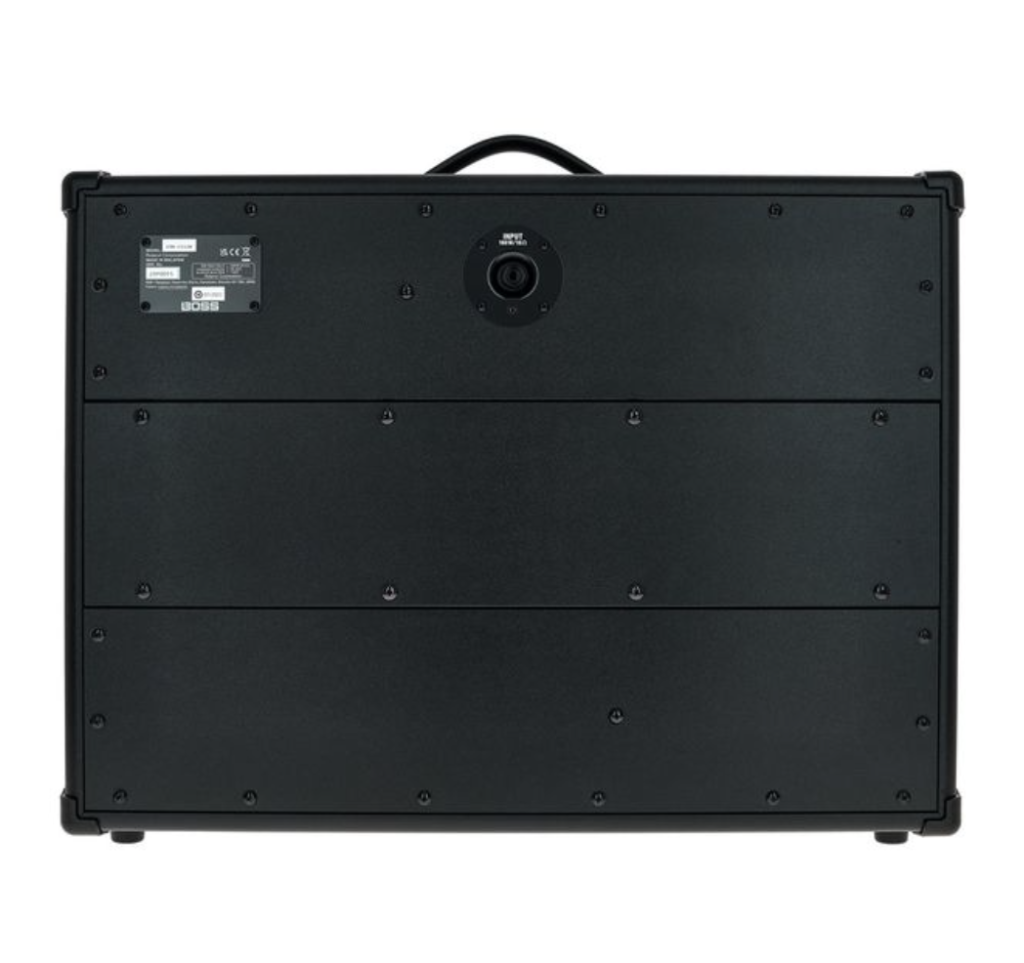
Final thoughts
There is no better or worse when it comes to closed back versus open back guitar cabs. As always, it’s a matter of taste. But you can roughly narrow things down: If you like drop tunings and tend to play in the high-gain range, a closed back guitar cab will certainly give you more pleasure and pressure on stage. If a closed back 4×12 cab sounds a little too harsh, you should try a 2×12 cab with an open back, which sounds a little more airy in the room. The issue of open back vs. closed back is less important during recording or if the speaker is close-miked – but there is a slight difference. As soon as a room microphone comes into play, you will definitely hear it.
Here’s an interesting video with Kris and Guillaume on this topic.
What’s your favourite guitar cab variant and why? Let us know in a comment! 👇



Comments 0
No comments yet.