
1

4.4 out of 5 stars from 356 customer ratings
€238


Double Basses

Electric Double Basses

Acoustic Cellos

Child/Youth Cellos

Electric Cellos

Acoustic Violins

Lefthanded Violins

Child/Youth Violins

Acoustic Violas

Electric Violins and Violas

Master Class String Instruments

Double Bass Accessories
Cello Accessories

Violin Accessories

Viola Accessories

String Instrument Sheet Music

Wooden Music Stands
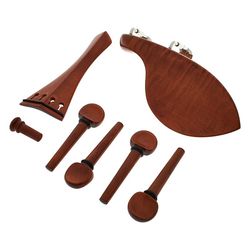
Component sets incuding chin rests, tuning pegs etc.
4.4 out of 5 stars from 356 customer ratings

4.5 out of 5 stars from 300 customer ratings

4.7 out of 5 stars from 455 customer ratings

4 out of 5 stars from 53 customer ratings

4.4 out of 5 stars from 17 customer ratings

4.5 out of 5 stars from 318 customer ratings

4.4 out of 5 stars from 85 customer ratings

4.7 out of 5 stars from 167 customer ratings

4.7 out of 5 stars from 248 customer ratings
4.4 out of 5 stars from 356 customer ratings
4.4 out of 5 stars from 17 customer ratings
4.5 out of 5 stars from 300 customer ratings

4.9 out of 5 stars from 45 customer ratings

5 out of 5 stars from 1 customer ratings

3.8 out of 5 stars from 29 customer ratings

4.2 out of 5 stars from 22 customer ratings

4.6 out of 5 stars from 42 customer ratings
4.7 out of 5 stars from 455 customer ratings

4.4 out of 5 stars from 17 customer ratings

4.2 out of 5 stars from 4 customer ratings

4.6 out of 5 stars from 11 customer ratings

3.7 out of 5 stars from 4 customer ratings

4.7 out of 5 stars from 384 customer ratings

5 out of 5 stars from 2 customer ratings
4.7 out of 5 stars from 248 customer ratings

4.1 out of 5 stars from 18 customer ratings

4.5 out of 5 stars from 61 customer ratings

4.3 out of 5 stars from 23 customer ratings
4 out of 5 stars from 53 customer ratings

4.4 out of 5 stars from 50 customer ratings

4.8 out of 5 stars from 20 customer ratings

4.6 out of 5 stars from 11 customer ratings

4.8 out of 5 stars from 25 customer ratings


4 out of 5 stars from 53 customer ratings
4.4 out of 5 stars from 17 customer ratings
4.5 out of 5 stars from 300 customer ratings
4.1 out of 5 stars from 18 customer ratings

4.6 out of 5 stars from 8 customer ratings

4.3 out of 5 stars from 9 customer ratings

4.6 out of 5 stars from 5 customer ratings

4.8 out of 5 stars from 16 customer ratings

4.6 out of 5 stars from 6 customer ratings

5 out of 5 stars from 1 customer ratings

4.2 out of 5 stars from 9 customer ratings

5 out of 5 stars from 12 customer ratings

5 out of 5 stars from 8 customer ratings

5 out of 5 stars from 3 customer ratings

4.4 out of 5 stars from 174 customer ratings

4.4 out of 5 stars from 19 customer ratings

4.7 out of 5 stars from 12 customer ratings

4.7 out of 5 stars from 4 customer ratings


5 out of 5 stars from 2 customer ratings

4.2 out of 5 stars from 10 customer ratings

4.2 out of 5 stars from 16 customer ratings


4 out of 5 stars from 1 customer ratings


4.3 out of 5 stars from 34 customer ratings


String instruments are one of the most diverse categories of musical instruments. From the highest, ethereal notes down to the deepest, elemental bass, from the crystal-clear sounding upper strings of the violin to the growling low strings of the double bass: String instruments are used across the entire musical spectrum, from Classical and Jazz to Folk, Country, and World music. This means you'll always be able to find the right musical equipment for every range and register, for every style, and for every taste.
Are you a beginner and looking for a violin or a cello to get you started? Are you a more advanced student, in need of a high-quality instrument that will allow you to perform to the very best of your ability? Or do you already have a lot of experience as a professional string musician, trying to find a string instrument that meets your exacting requirements for your work in an orchestra, chamber music ensemble, or big band – or for recording in the studio? At Thomann, you are guaranteed to find the instrument of your dreams. A huge selection is just waiting to be discovered: From the beginner's violin which offers unbeatable value for money to the unique instrument made by a master builder at an unsurprisingly high – yet still reasonable – price.
More good news: Thomann's experts are always happy to share their extensive knowledge and many years of experience with you, whatever questions you have about our string instruments. Here's how to reach the strings department at Thomann: by phone on +49 (0)9546-9223-370, by e-mail at streicher@thomann.de**, or by WhatsApp (during opening hours) on +49 (0)9546-9223-66.
Best of all, buying a string instrument from Thomann is an entirely risk-free affair: Our 30-Day Money-Back Guarantee and the 3-year Thomann warranty ensure you stay relaxed both while buying and enjoying your wonderful new instrument.

String instruments are most common in Classical music, and are chiefly responsible for the characteristic sound of orchestras and chamber music ensembles. However, string instruments are also a familiar sound in popular music, Folk or Jazz bands, and salon orchestras. String instruments are also deeply rooted in the musical culture of the Balkans, as well as in traditional Arabic, Persian, Indian, and Far Eastern music.
By far the most common way musicians produce sound on a stringed instrument is to draw a bow across the strings, causing the string to vibrate continuously. Less frequently, this family of instruments may be plucked, much like a guitar; the technical term for this approach is "pizzicato".
The most common string instruments in orchestras today are the violin, the viola, the violoncello, or cello for short, and the double bass. Electric versions of these string instruments are also popular – especially with Jazz and Rock musicians. These electric violins, electric violas, electric cellos, and electric double basses don't usually have a resonating body, but instead resemble an electric guitar, in that they transmit their sound by means of an integrated pickup.
For the most part, string instruments are widely available in different sizes, such as 4/4, 3/4, and 1/2, right down to 1/16 or even 1/64 models, so that players of all sizes and ages can find the right instrument for them. But what are the key differences between the four best-known string instruments?
❯ The violin is the instrument with the highest pitch in the string instrument family. It usually has four strings, each tuned a fifth apart to the notes G3 – D4 – A4 – E5. In the context of folk or popular music, it's not unusual to hear it referred to as a fiddle, although this term may also encompass other, sometimes historical string instruments.
❯ The viola looks similar to the violin, albeit slightly larger and pitched a fifth lower – its role can be thought of as the alto voice in the orchestra. The strings of the viola, like the violin, are also tuned in fifths to the notes C3 – G3 – D4 – A4. Overall, the sound of the viola is at once fuller and softer than that of a violin. Like violinists, viola players hold their instruments between shoulder and chin.
❯ The cello has the much same form as the violin and viola, but it has a much larger body, so this instrument – whose full name is the violoncello – is almost invariably played sitting down. The neck of the cello points upwards and the instrument is held between the legs; the cello itself stands on an extendable endpin, or spike. The cello is also tuned in fifths, to the notes C2 – G2 – D3 – A3. As you might be able to tell from the little numbers, the cello is tuned exactly one octave lower than the viola. Not least because of its sonorous, warm sound, the cello is popular both as part of the orchestra and as a solo instrument.
❯ The double bass is the largest and lowest-pitched string instrument. The double bass is an essential fixture not only in classical orchestras, but also in Jazz ensembles and Rockabilly bands. In contrast to the violin, viola, and cello, the strings of the double bass are tuned in fourths, namely E1 – A1 – D2 – G2. Five-string double basses with a low string tuned to B0 or C1 are also common, especially in classical orchestras, as compositions here often require notes below the low E1. The double bass is played either standing up or sitting down, usually on a suitably proportioned stool.
By the way: In centuries past, orchestras and ensembles included many more different string instruments than the traditional four still in use today. In addition to the violin, viola, cello, and double bass, string instruments such as the viola da gamba, which has become a rarity today, often complemented the orchestral sound. If you are interested in unusual string instruments, it's well worth taking a look at our traditional and historical string instruments.
Violins for beginners are available for less than 100 euros; a full set with a solid wood 4/4 violin including case, bow, and rosin for coating the bow hair (see "Practical tips for string instruments" above) can be had from Thomann for under 150 euros.
For viola players, we also offer a number of solid wood instruments in this price range – like the Thomann Student Pro Viola Set 13". Like all Thomann string instruments, this viola will be fully prepared for playing in Thomann's string workshop right here in Germany, so that you can enjoy it right out of the box.
The Thomann Student Cello Set 4/4 is a beginner's cello set that looks good and sounds good – for under 500 euros, including all the usual accessories. In the double bass section, entry-level models start at under 900 euros for an instrument made of laminated wood. Solid wood instruments such as the Thomann 33 4/4 Europe double bass, made in Europe and finished in our workshops, start at under 2,000 euros.


